Field briefing
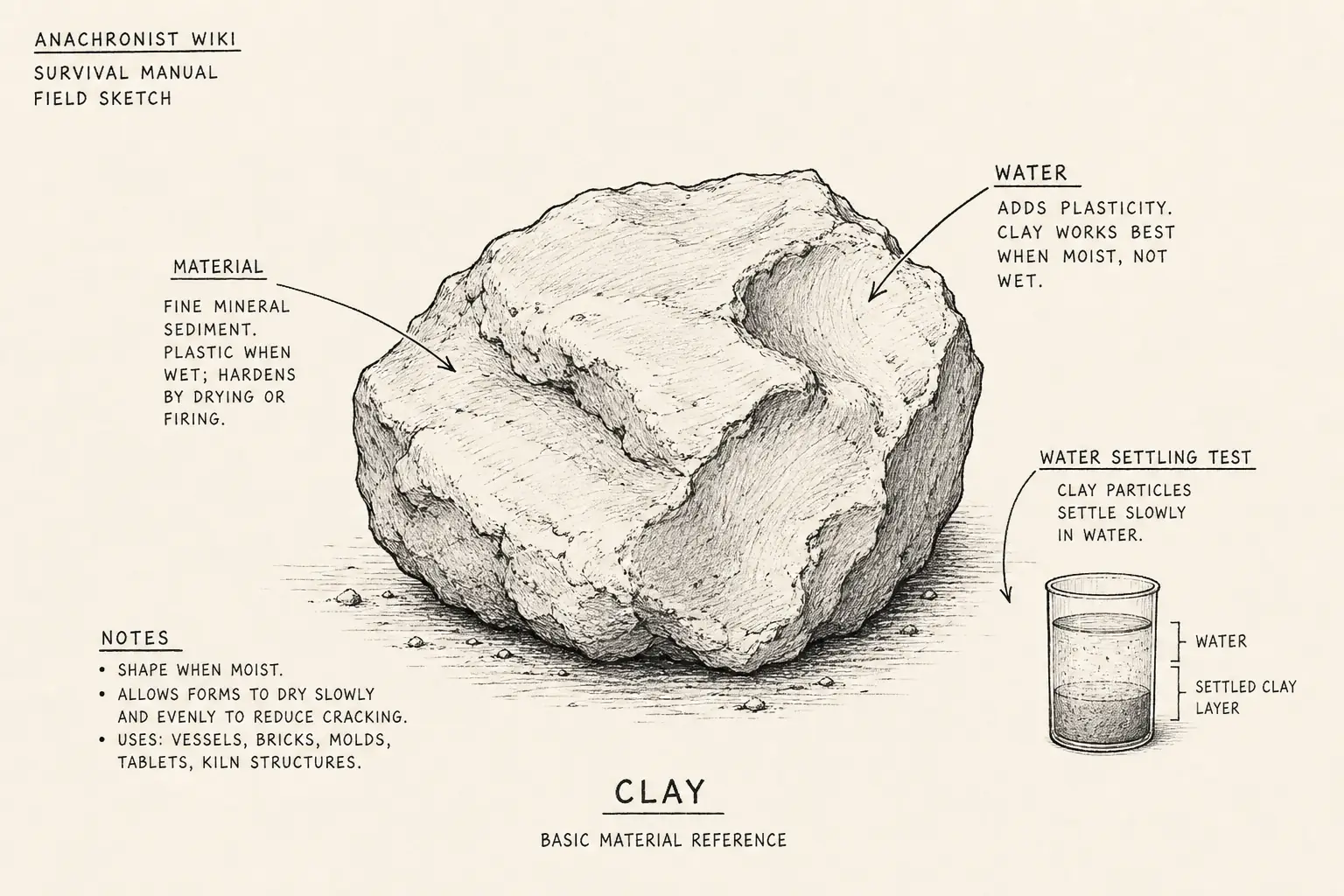
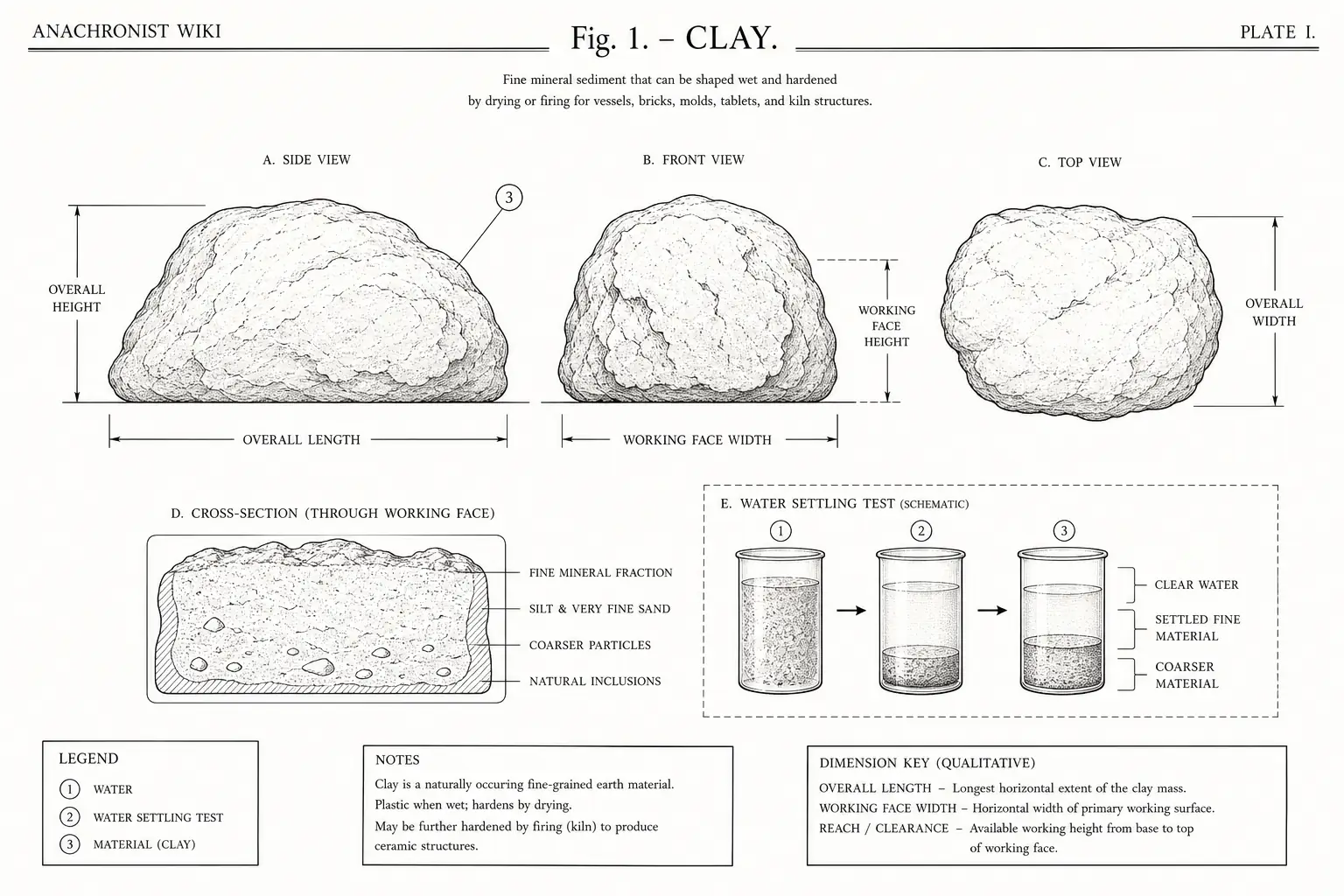
Clay is not just dirt. It is a workable mineral supply chain for containers, bricks, molds, tablets, and kiln parts.
What you are trying to make
Find sediment fine enough to hold shape when wet, dry without falling apart, and survive the intended use after drying or firing.
Minimum viable version
A hand-formed test tile or small pinch pot can prove whether a local deposit is worth further work.
Better versions
Better clay bodies blend plastic clay with sand, grog, shell, or other temper to manage shrinkage and cracking.
Prerequisite tree
- Water and containers for slaking and settling.
- Counting and marks for labeling test batches.
- Kiln for repeatable firing once simple dried forms are understood.
Materials and sourcing
Look along stream banks, floodplains, pond edges, old pits, and exposed subsoil. Clay-rich material feels smooth or sticky when wet and can roll into a coil without immediately crumbling. Sandy sediment feels gritty and collapses.
In Arthurian Britain-like geography, usable clays are plausible in many regions, but quality varies sharply by deposit. Some areas need travel or trade for better clay.
Recognition tests: make a coil, dry a tile, soak a dried scrap, and compare shrinkage. A good deposit for early ware is not necessarily good for kiln lining.
Tools and workshop requirements
Useful tools are digging sticks, baskets, settling vessels, a smooth board, simple scrapers, drying shelves, and labels for test batches.
Procedure
- Collect small samples from several layers rather than trusting one spot.
- Remove roots, stones, and obvious sand.
- Mix with water and let heavy grit settle first.
- Pour off finer suspended material into another vessel.
- Dry to a workable stiffness and form test pieces.
- Compare cracking, shrinkage, and strength before scaling up.
Mechanism
Tiny flat mineral particles slide when wet and lock together as water leaves. Firing changes the body further, but even unfired clay teaches shaping, drying, and shrinkage control.
Verification and quality control
Keep labeled test tiles. Good working clay forms a coil, dries without severe cracks, and keeps enough strength for the intended use. Test fired pieces separately before trusting vessels or kiln furniture.
Failure modes
| Failure | Likely cause | Fix |
|---|---|---|
| Cracks while drying | Too plastic, too thick, dried too fast | Add temper and dry slower |
| Crumbles | Too much silt or organic matter | Refine by settling or find another deposit |
| Warps | Uneven thickness or drying | Form more evenly and rotate pieces |
| Spalls in fire | Hidden stones or moisture | Refine better and dry longer |
Maintenance, repair, and iteration
Store clay damp and covered. Keep rejected fired fragments as grog for temper after crushing and sorting.
Teaching it to local collaborators
Run side-by-side tiles from different deposits. Labeling and recordkeeping matter: a good clay source is a workshop asset.
Historical plausibility
Clay working is very plausible, but quality ceramic production depends on patient testing, drying discipline, fuel, and firing control.
What this unlocks
Clay unlocks pottery, bricks, molds, tablets, kilns, furnace linings, and many tests for heat-work.
Open questions and uncertainties
- Specific regional clay deposits need human source review.
- The page needs follow-up nodes for temper, grog, and firing tests.
Sources and provenance
Generated seed draft for ANA-13. No source pack was used; specific claims need human source review.