Field briefing
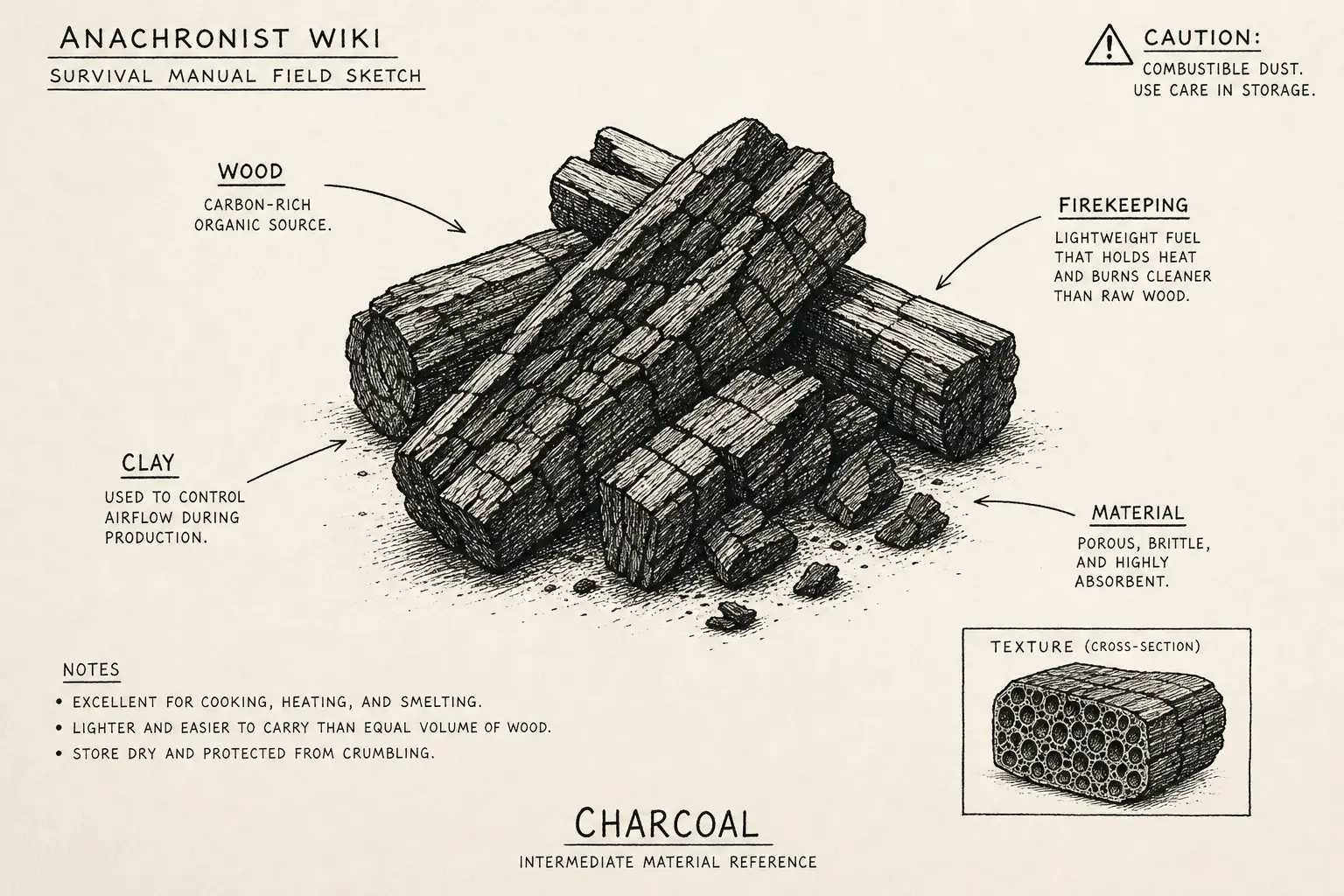
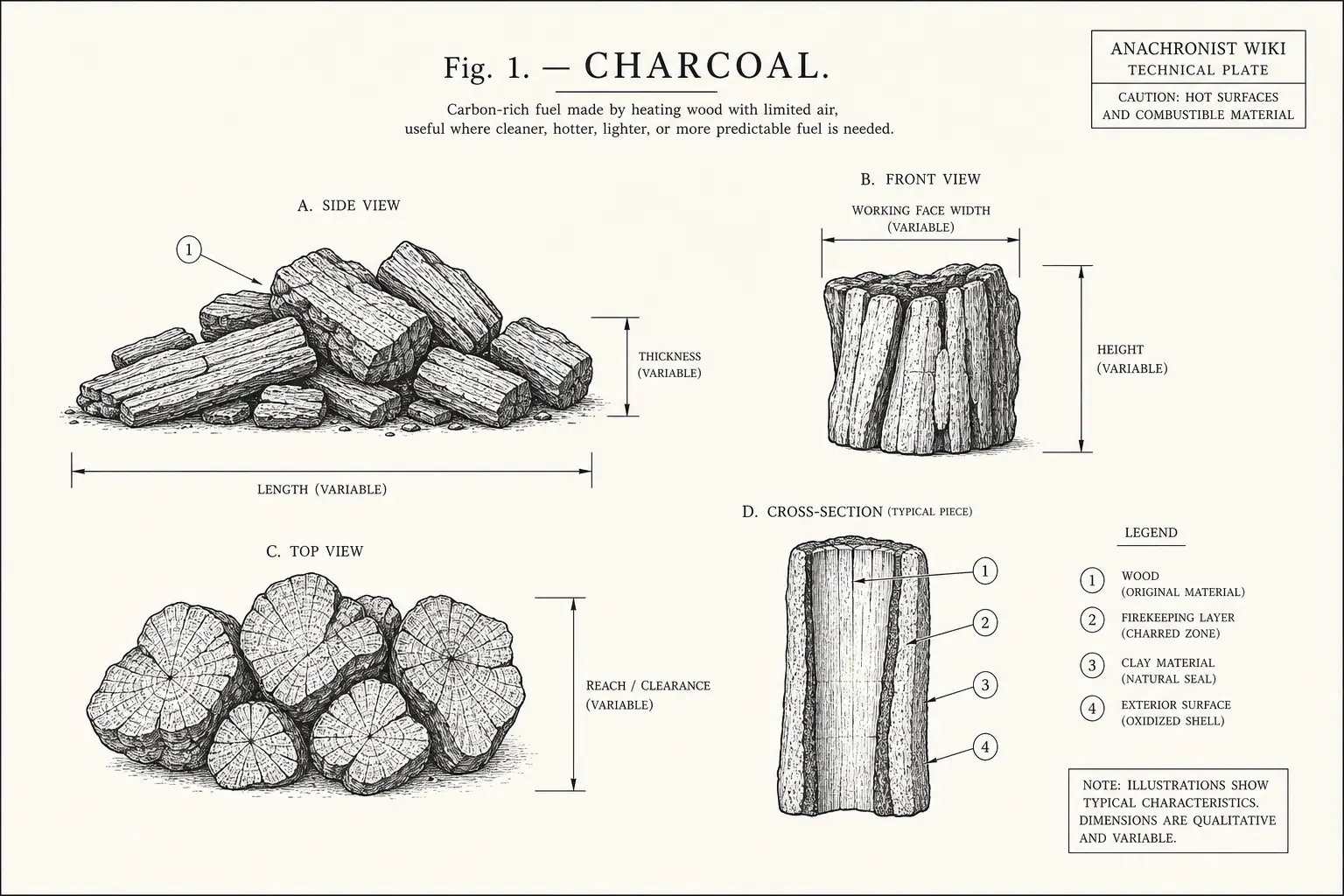
Charcoal is a fuel upgrade and a material supply chain. It is lighter than wood for the heat it carries, burns with less smoke when made well, and supports cleaner workshop heat.
What you are trying to make
Convert wood into carbon-rich fuel by driving off water and volatile material while preventing the whole charge from burning to ash.
Minimum viable version
A small covered pit or mound can make a test batch. The first goal is recognizable black char that burns steadily, not maximum yield.
Better versions
Better production uses sorted wood, repeatable stacks, controlled air leaks, trained watchers, and records of wood species, weather, and result.
Prerequisite tree
- Firekeeping and safe work area.
- Clay or earth for sealing.
- Counting and writing for batch records once production matters.
Materials and sourcing
Wood species, dryness, and piece size matter. Dense hardwood often gives durable charcoal, but local fuel ecology controls what is practical. In damp regions, drying and covered storage can be as important as the burn itself.
Clay-rich soil, turf, ash, or earth can seal a mound. Avoid soil full of roots that can carry fire away from the working area.
Tools and workshop requirements
Tools include cutting tools, digging tools, baskets, rakes, water or soil for suppression, and a clear perimeter. Charcoal making is a watched process and should be treated as a team job when scaled.
Hazards and controls
Charcoal production creates burns, smoke, hidden embers, and invisible toxic gases in confined spaces. Work outdoors, away from dwellings and stored fuel. Do not sleep near a burn. Cool and open batches cautiously.
Procedure
- Dry and sort wood before the burn.
- Build a small test pile or pit rather than starting at production scale.
- Cover with earth or clay-rich material while preserving controlled draft.
- Watch smoke, smell, collapse, and hot spots.
- Seal leaks that turn the charge into open flame.
- Let the batch cool fully before sorting.
Mechanism
Limited air lets heat change wood faster than oxygen can consume all the carbon. Too much air makes ash. Too little heat leaves brown, smoky half-charred wood.
Verification and quality control
Good charcoal is black through the piece, light for its size, snaps cleanly, and burns without excessive smoke. Sort under-charred pieces for reprocessing or ordinary fuel.
Failure modes
| Failure | Likely cause | Fix |
|---|---|---|
| Mostly ash | Too much air | Improve cover and watch leaks |
| Brown smoky pieces | Too cool or stopped early | Use smaller pieces and longer observation |
| Fire escapes | Bad site or roots | Clear perimeter and avoid rooty soil |
| Weak crumbly fuel | Poor wood or overburning | Sort feedstock and adjust process |
Maintenance, repair, and iteration
Keep dry storage for finished charcoal. Track wood species and batch quality so the workshop learns which sources are worth the labor.
Teaching it to local collaborators
Teach with small batches and post-burn sorting. Make the safety perimeter and watcher role part of the craft, not an afterthought.
Historical plausibility
Charcoal is plausible in woodland economies, but sustained use can strain forests and require woodland management, transport, and labor organization.
What this unlocks
Charcoal supports kiln work, metalworking prerequisites, black pigment for ink, and cleaner heat for workshops.
Open questions and uncertainties
- Regional woodland management and species data need review.
- A later page should cover coppicing or fuel institutions.
Sources and provenance
Generated seed draft for ANA-13. No source pack was used; specific claims need human source review.