Field briefing
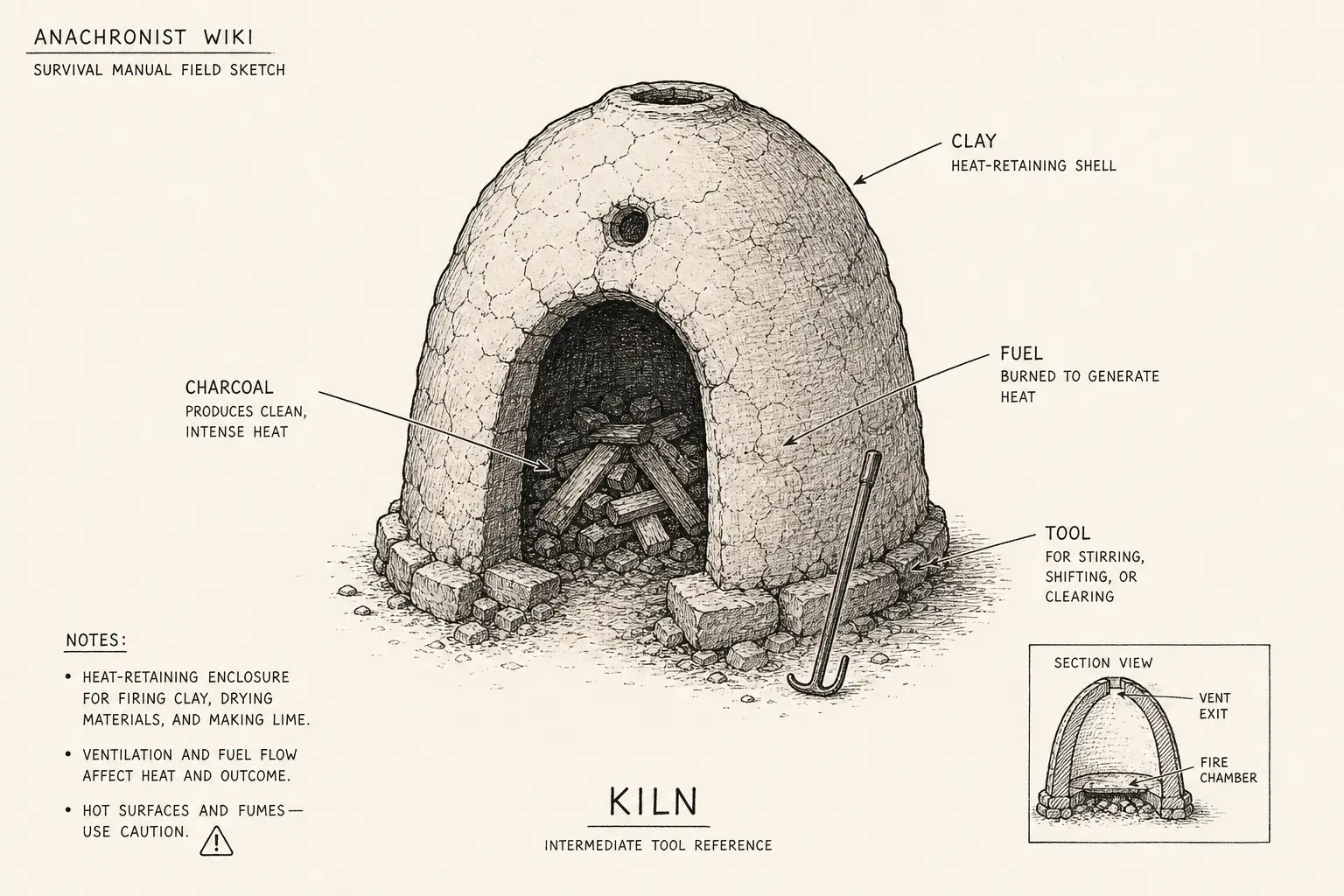
A kiln is controlled heat in a wall. It turns scattered fuel and open flame into a repeatable workshop environment for clay and other materials.
What you are trying to make
Build a chamber that keeps heat around the work, lets draft move through the fuel, and can be tested without destroying a full production load.
Minimum viable version
The earliest useful version can be a pit or clamp firing with clay-rich cover and air gaps. It proves fuel, draft, loading, and breakage patterns.
Better versions
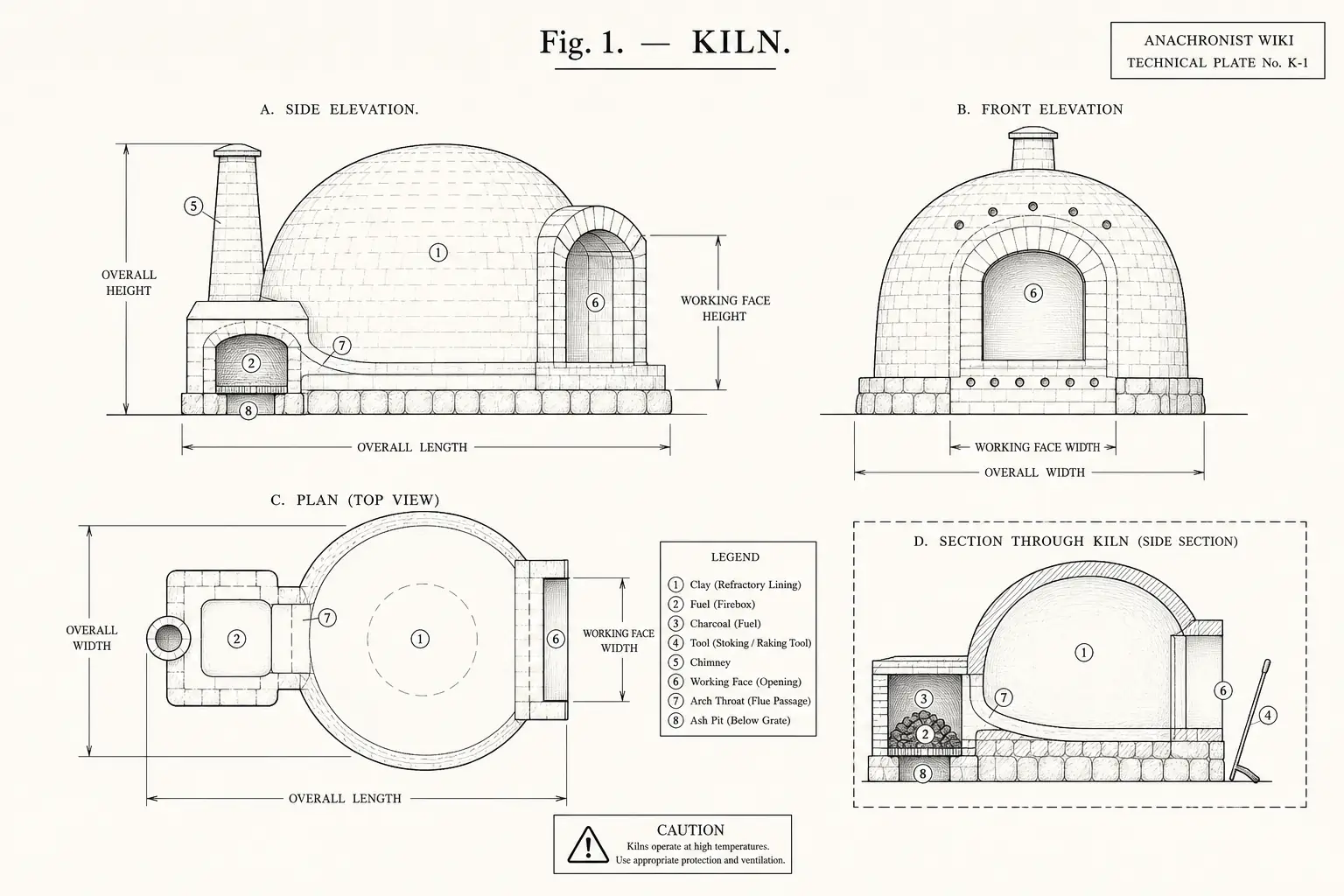
Better kilns separate fuel from ware, add a firebox, improve draft control, use reusable shelves, and keep records of fuel and results.
Prerequisite tree
- Clay for lining and test pieces.
- Charcoal or dry fuel for repeatable heat.
- Counting and writing for batch records.
Materials and sourcing
Use clay-rich earth, stone that tolerates heat, scrap fired clay, and dry fuel. Avoid wet stones of unknown behavior inside the hot zone. Clay for kiln lining should be tested as tiles before committing labor to a larger structure.
Fuel is its own supply chain. Dry wood is easier to start, charcoal burns cleaner, peat and dung may work differently by region. Geography matters: a wet woodland, open pasture, and peatland create different kiln economics.
Tools and workshop requirements
You need digging tools, baskets, clay mixing space, a way to stack ware, and a safe open area downwind of living spaces. A mature workshop needs records, repeatable test pieces, and rules for who tends the firing.
Hazards and controls
Kilns create burns, smoke, structural collapse, and hidden embers. Place the kiln away from buildings and stored fuel. Keep children, animals, and loose clothing away. Treat ash and sealed chambers as hazardous until fully cooled and ventilated.
Procedure
- Test local clay and fuel on small pieces first.
- Build a small enclosure or covered firing pit with stable walls.
- Leave a draft path rather than sealing the chamber completely.
- Fire sacrificial test pieces before production work.
- Record fuel, weather, loading pattern, and failures.
- Scale only after repeatable results.
Mechanism
The enclosure slows heat loss and draft carries oxygen through the fuel. The goal is even heat-work, not merely a large flame.
Verification and quality control
Use witness tiles from the same clay body in every firing. Compare color, ringing sound, cracking, warping, and water resistance. Keep broken samples by batch.
Failure modes
| Failure | Likely cause | Fix |
|---|---|---|
| Ware breaks | Wet pieces or fast uneven heating | Dry longer and load more evenly |
| Firing uneven | Poor draft or crowding | Adjust openings and spacing |
| Wall slumps | Weak clay or poor support | Add temper and improve structure |
| Smoke overwhelms work area | Bad siting or wet fuel | Move downwind and dry fuel |
Maintenance, repair, and iteration
Patch cracks with tested clay mix. Clean ash from draft paths. Save successful firing records and repeat the loading pattern before experimenting.
Teaching it to local collaborators
Teach kiln work as a team routine: fuel handler, fire watcher, recorder, and safety lookout. The recorder is not optional once results matter.
Historical plausibility
Kilns are plausible where clay work, settled labor, and fuel supply exist. The bottleneck is repeatability and fuel cost.
What this unlocks
Kilns unlock better ceramics, fired bricks, heat-durable molds, controlled pigment work, lime processing, and later furnace thinking.
Open questions and uncertainties
- Exact kiln designs should be split into safer specialized pages.
- Regional fuel economics need source review.
Sources and provenance
Generated seed draft for ANA-13. No source pack was used; specific claims need human source review.