Field briefing
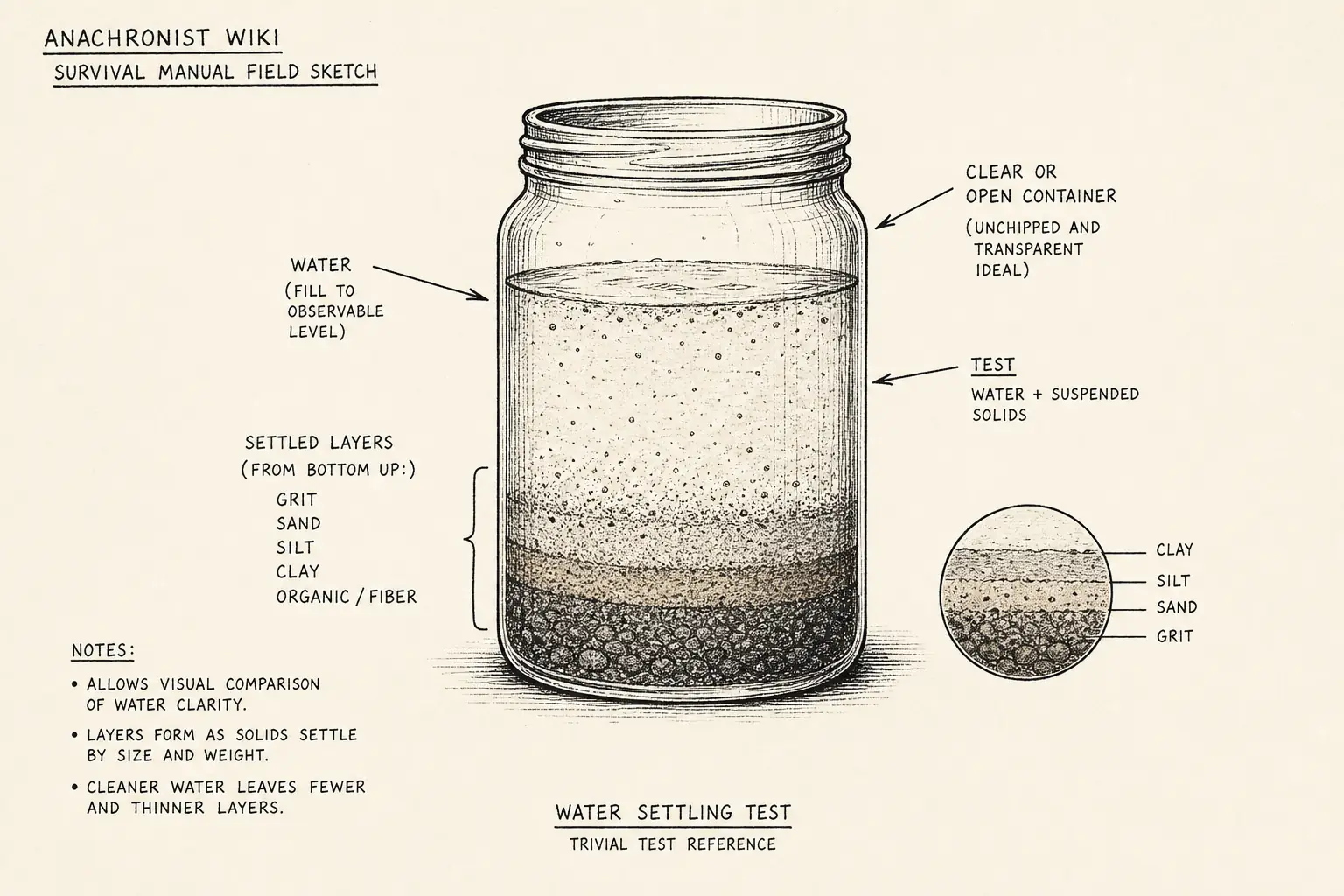
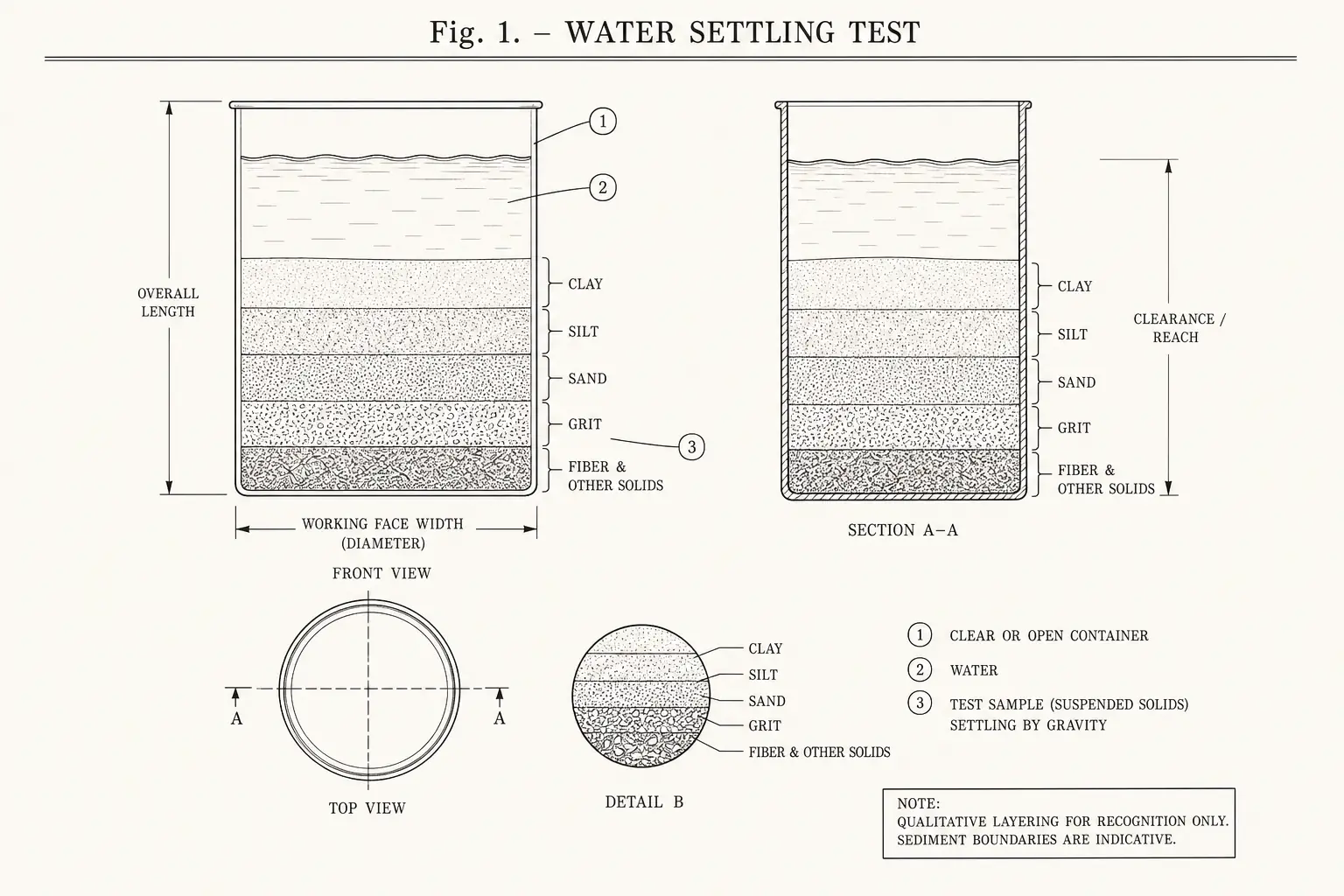
The water settling test is a low-tech way to see what a material is made of. It is especially useful for clay, abrasive grit, and ceramic additions.
What you are trying to make
Create a repeatable habit for mixing a sample with water, letting layers separate, and comparing the result with labeled samples.
Minimum viable version
A jar, pot, or bowl holds water and a stirred sample. After the coarse material drops, the visible layers and leftover cloudy water tell whether the sample is mostly sand, silt, clay, fiber, or mixed debris.
Better versions
Better versions use matched vessels, marked fill lines, side-by-side samples, and written records.
Prerequisite tree
- Water and a vessel.
- Counting for labels and repeat samples.
- Writing for source records when testing many deposits.
Materials and sourcing
The input is whatever fine material needs recognition: stream sediment, clay subsoil, sand, crushed fired clay, ash, or fiber washings. Source several samples from different layers because one bank or pit can hide very different material.
Preparation means removing large stones and roots, breaking clumps, and using enough water to suspend the fines. Substitutes include dry rubbing, hand feel, and test tiles, but settling reveals mixtures that feel similar when damp. Geography matters because floodplains, estuaries, glacial deposits, and uplands sort sediments differently.
Tools and workshop requirements
Use a vessel, stirring stick, labels, a flat resting place, and a place where the vessel will not be disturbed.
Procedure
- Label the sample source.
- Break up the sample in water.
- Stir until the fines are suspended.
- Let coarse material fall first.
- Observe layers, cloudiness, color, grit, and floating debris.
- Compare with known useful and rejected samples.
Verification and quality control
The test is useful when repeated samples from the same source produce similar layers and when those layers predict later work: clay coils, abrasive scratches, or temper behavior.
Sources and provenance
Generated expansion for ANA-37. No source pack was used; specific historical and technical claims need human source review.