Field briefing
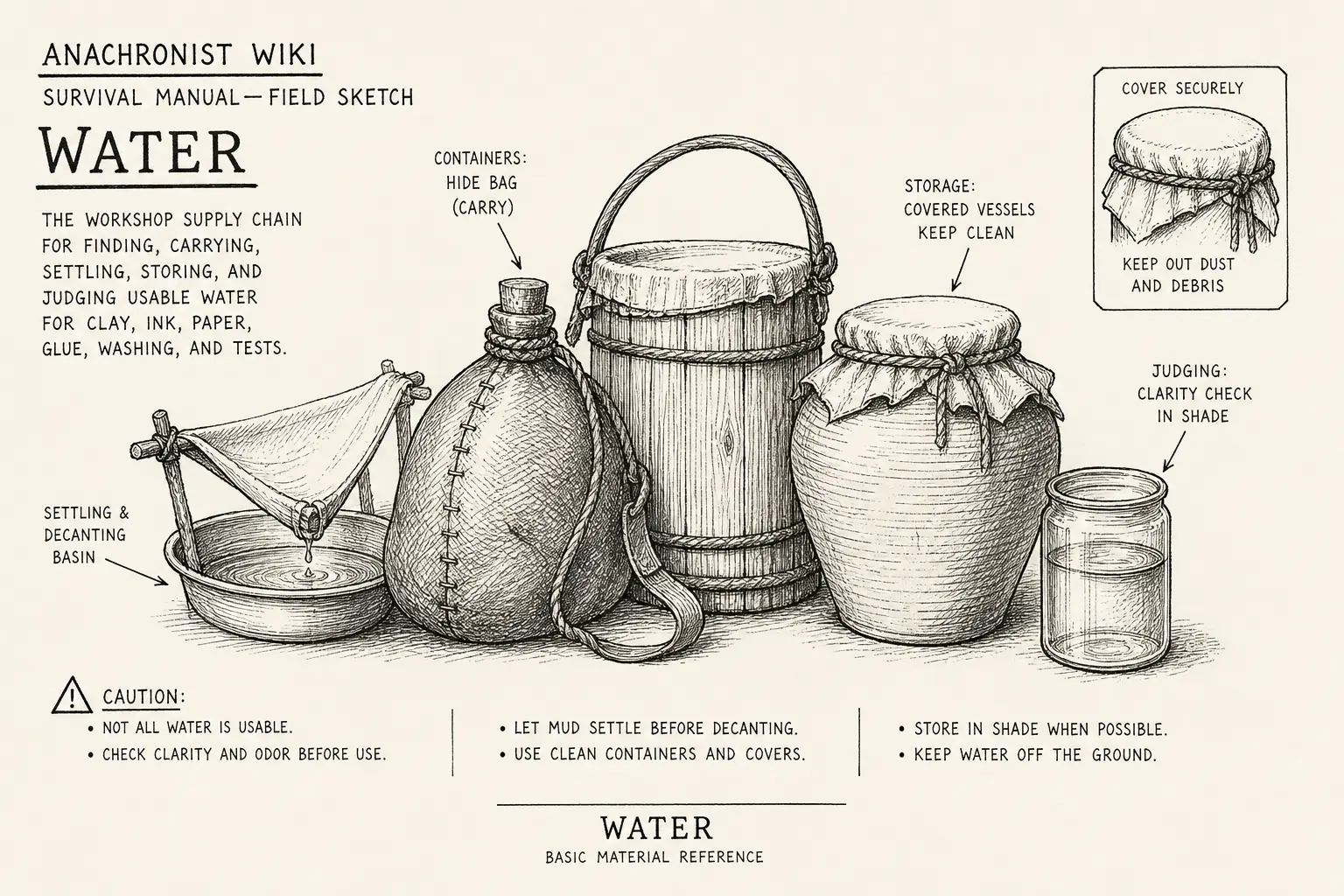
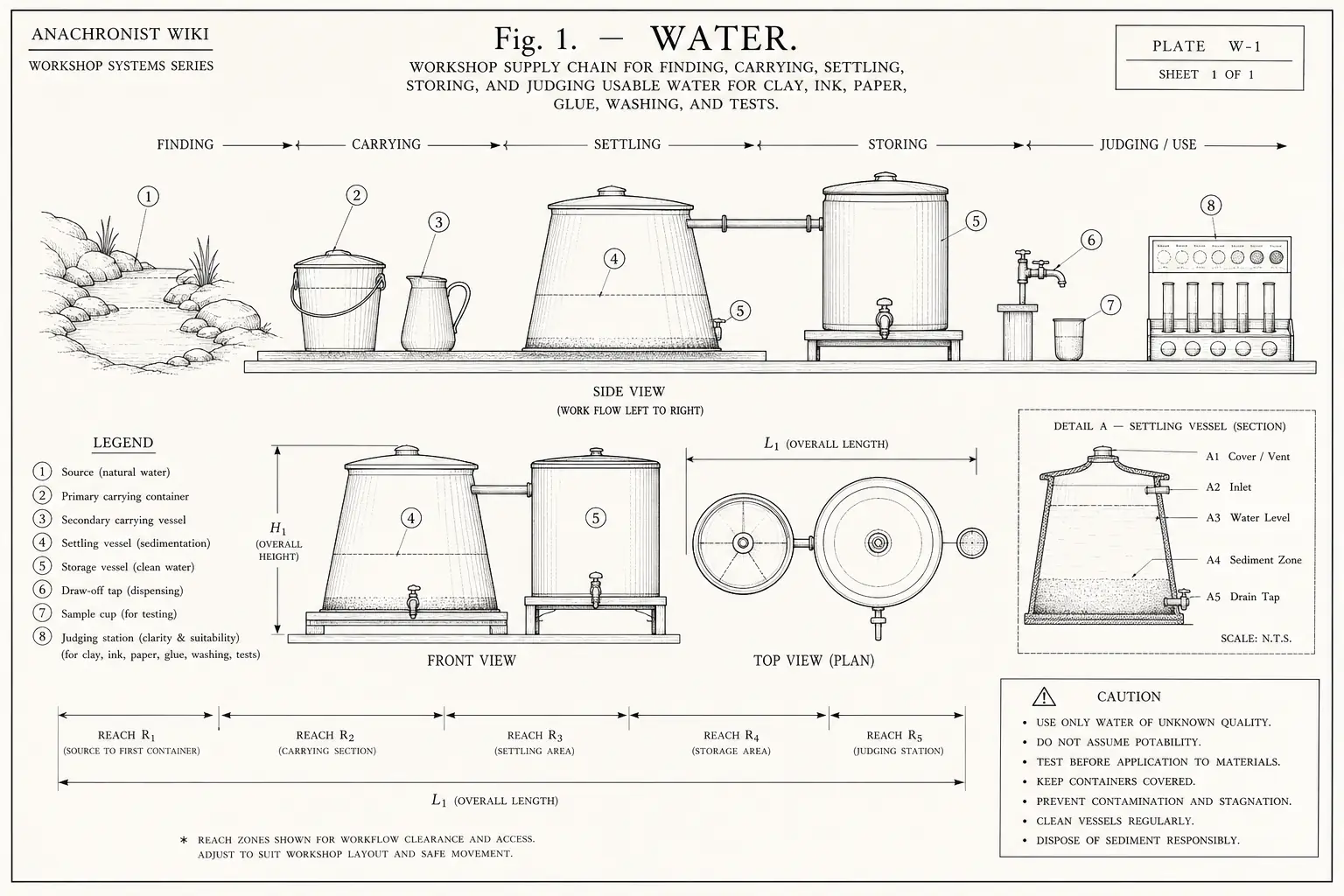
Water is a material supply chain. Workshops need it for washing fibers, levigating clay, making ink, soaking paper pulp, softening hides, and running comparative tests.
What you are trying to make
Create a dependable source of water that can be recognized, moved, settled, stored, and matched to a job.
Minimum viable version
A household version collects water from a spring, stream, pond, well, or rain catchment, lets visible sediment settle, and stores a labeled portion for workshop use.
Better versions
Better versions separate drinking, washing, clay, dye, and glue water; use covered storage; keep records of seasonal changes; and reserve the cleanest supply for fine work.
Prerequisite tree
- Counting for labeling vessels and batches.
- Writing for source records once several sources are compared.
- Water settling tests for judging suspended material.
Materials and sourcing
Source options include rain, springs, streams, ponds, wells, meltwater, and collected roof runoff. Recognition starts with smell, clarity, visible life, oily films, mineral crusts, and whether the same source changes after storms.
Acquisition is a container problem. The best source is useless if vessels leak, contaminate the water, or require more labor than the work can afford. Preparation can be as simple as settling, decanting, and keeping separate vessels for dirty and clean tasks. Substitutes are limited: some washing can use stale or cloudy water, while fine paper or ink work may fail when the water carries too much grit or dissolved material. In an Arthurian Britain-like setting, surface water is common, but clean controlled supply is uneven and seasonal.
Tools and workshop requirements
Useful tools are jars, buckets, troughs, ladles, settling vessels, covers, labels, and a raised storage place away from animals and ash.
Hazards and controls
Water can carry disease, rot supplies, weaken structures, and hide slippery ground. Keep drinking water separate from workshop water, cover storage, drain wet floors, and do not reuse polluted process water for food.
Procedure
- Choose the source for the job, not just the nearest source.
- Collect in a clean vessel.
- Let visible sediment settle.
- Decant without stirring the bottom.
- Label the source and use.
- Compare results across sources before relying on a new supply.
Verification and quality control
Keep a clear settling jar, a smell check, and a sample use test. For clay, compare shrinkage and cracking. For paper, compare staining and fiber behavior. For ink, compare color, flow, and deposits.
Sources and provenance
Generated expansion for ANA-37. No source pack was used; specific historical and technical claims need human source review.