Field briefing
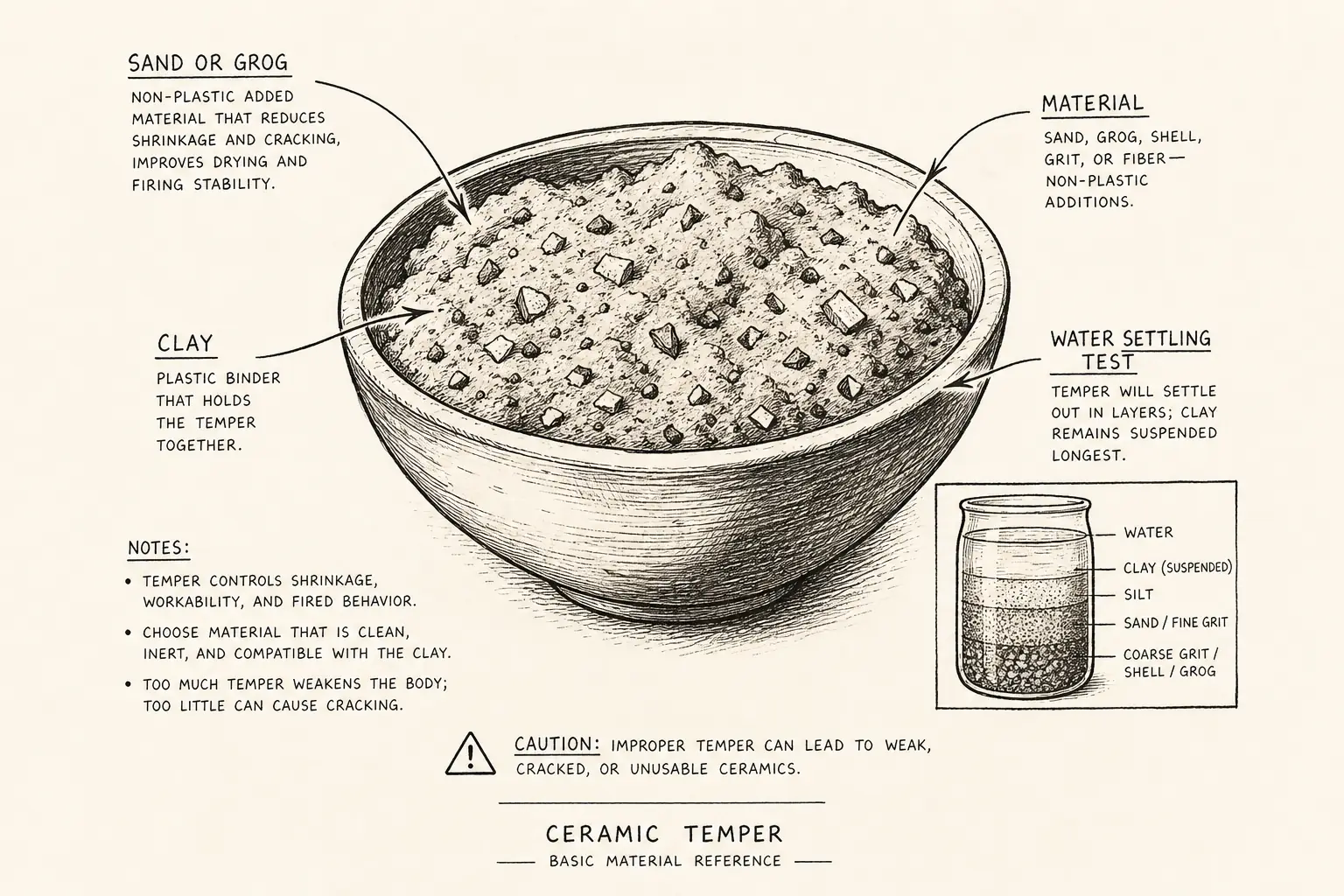
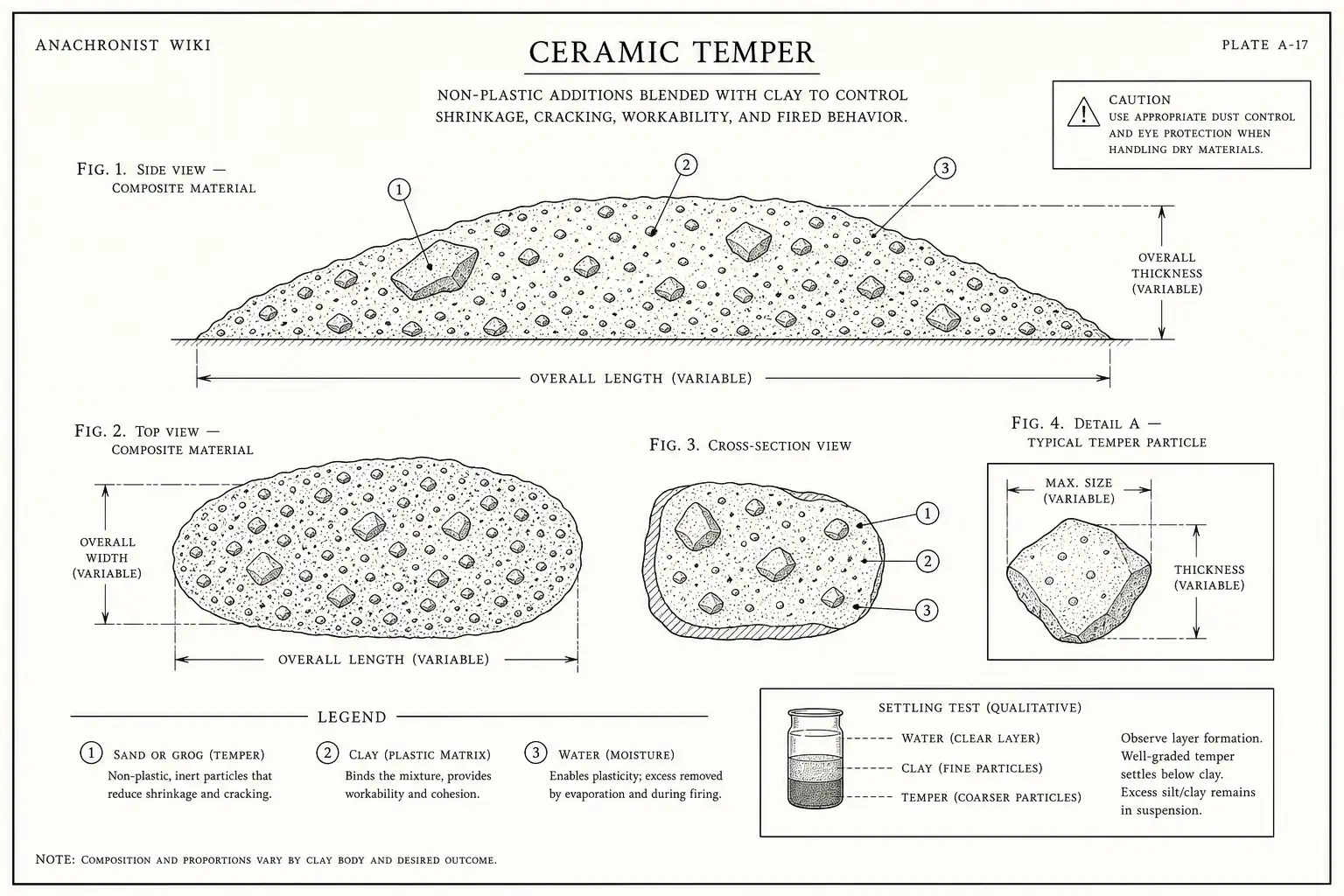
Ceramic temper is the deliberate addition of non-plastic material to clay. It turns a promising deposit into a more workable body for vessels, bricks, molds, tablets, or kiln parts.
What you are trying to make
Find an addition that reduces cracking and improves workability without making the clay weak, leaky, or hard to form.
Minimum viable version
A basic version compares small test tiles using clean sand, crushed fired clay, shell, grit, or plant fiber.
Better versions
Better versions sort particle size, keep source records, match temper to object thickness, and retain fired samples.
Prerequisite tree
- Clay testing.
- Water settling test for sorting.
- Kiln firing test for fired behavior.
Materials and sourcing
Sources include sand, crushed old pots, fired clay scrap, shell, crushed rock, chaff, dung fiber, and trade. Recognition focuses on cleanliness, size, angularity, and whether the addition causes cracking or weakness.
Acquisition is local geology and waste recovery. Preparation includes washing, crushing, sorting, drying, and labeling. Substitutes include changing vessel shape, drying slower, or finding a better clay. Geography controls whether clean sand, shell, volcanic grit, or old sherds are available.
Tools and workshop requirements
Useful tools are mortars, sieves or cloth, settling vessels, drying trays, labels, and test molds.
Hazards and controls
Dust and sharp grit irritate skin and lungs; fired fragments cut. Work damp when crushing dusty materials and keep ceramic grit away from food.
Procedure
- Select candidate additions.
- Wash or crush as needed.
- Make small comparable clay samples.
- Dry slowly and observe cracks.
- Fire test pieces when possible.
- Keep the best and worst samples as references.
Verification and quality control
Good temper improves drying and firing without making the object crumble, leak, or tear during forming. Compare break surfaces and repeated batches.
Sources and provenance
Generated expansion for ANA-37. No source pack was used; specific historical and technical claims need human source review.