Field briefing
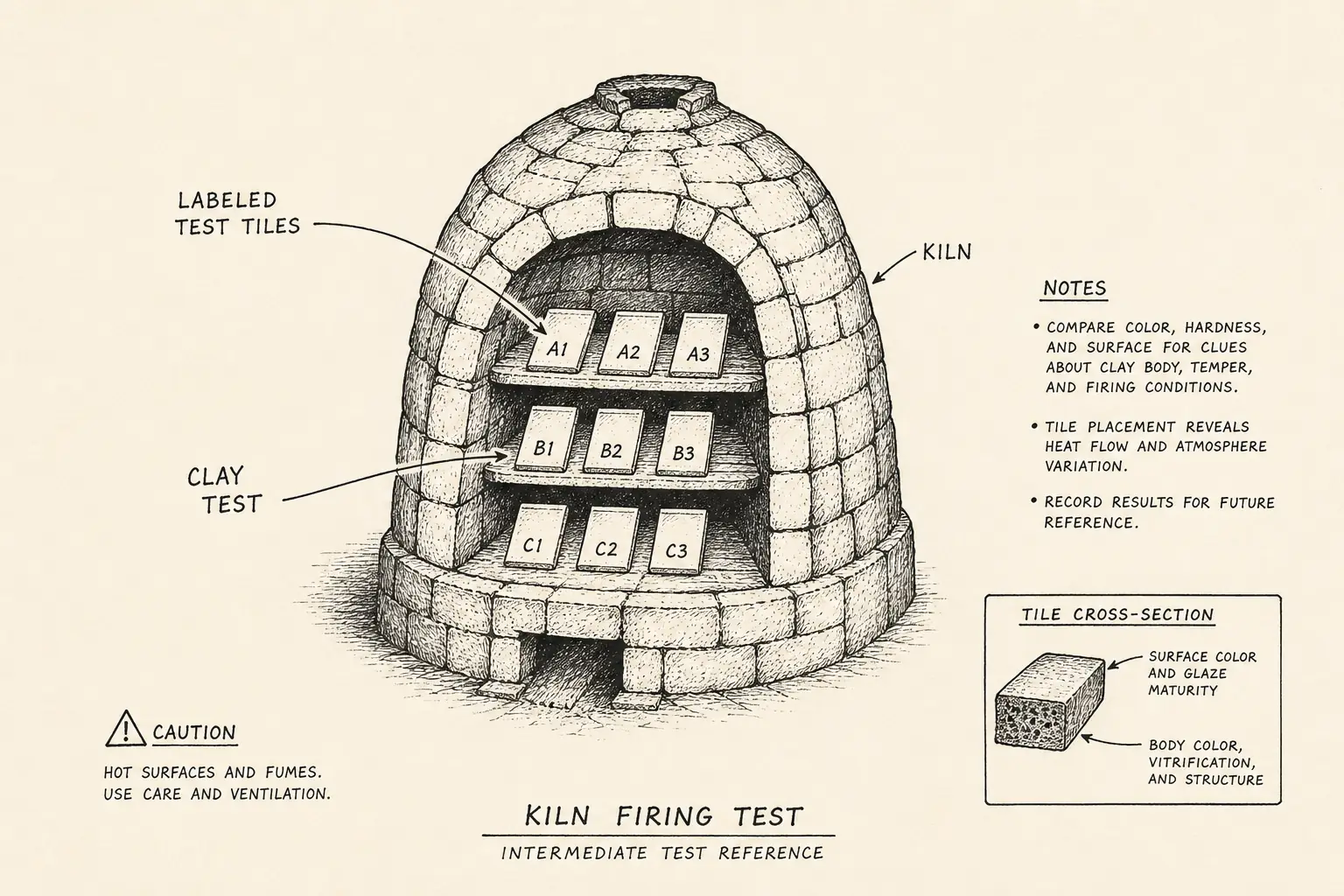
Kiln firing tests make ceramic work observable. Instead of treating each load as a mystery, the workshop compares small labeled pieces before trusting vessels, bricks, or kiln parts.
What you are trying to make
Create small samples that reveal cracking, warping, bloating, weakness, color change, and fit between clay body, temper, fuel, and kiln practice.
Minimum viable version
A basic version makes several small labeled tiles from different clay or temper batches and fires them beside ordinary ware.
Better versions
Better versions use standard shapes, placement maps, repeated batches, written records, and retained reference samples.
Prerequisite tree
- Clay selection.
- Kiln or controlled firing structure.
- Workshop records for comparing results.
Materials and sourcing
The materials are clay bodies, tempers, labels, fuel, and test locations. Source candidate clays from several layers and tempers from sand, grog, shell, fiber, or crushed rock.
Recognition includes wet workability, drying cracks, fired sound, color, break surface, and whether the sample survives handling. Acquisition and preparation are deliberately small: test before committing rare material or labor. Substitutes include open-fire trials and sun-dried tests, but they answer fewer questions.
Tools and workshop requirements
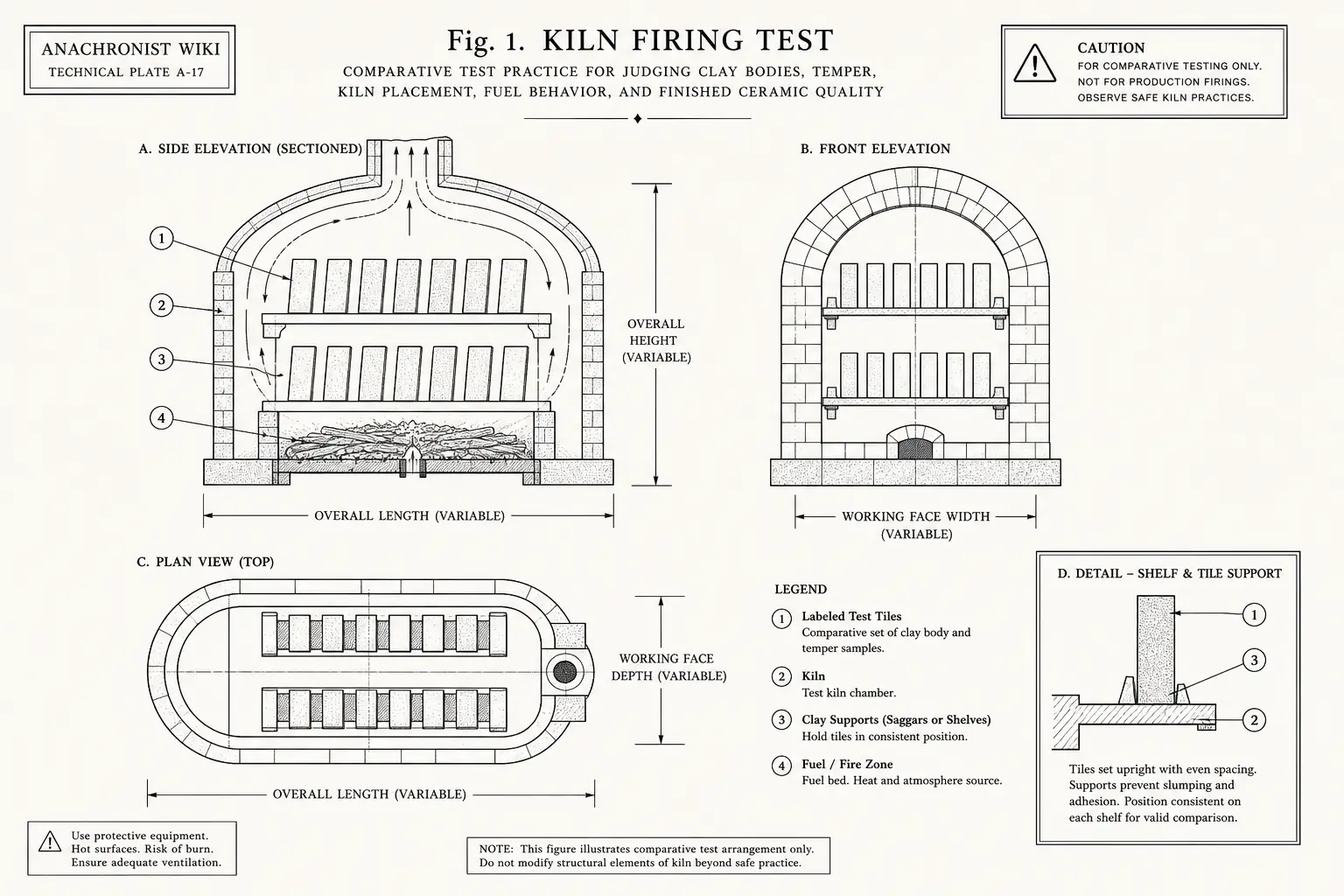
Useful tools are small molds or templates, marks that survive firing, kiln shelves or protected corners, records, and a place to store reference samples.
Hazards and controls
Firing involves burns, smoke, collapse, shards, and delayed heat. Keep bystanders away, handle cooled samples cautiously, and do not reach into hot structures.
Procedure
- Make small comparable test pieces.
- Mark each sample clearly.
- Dry before firing.
- Place samples in known positions.
- Record source and placement.
- Compare results after cooling.
Verification and quality control
Good tests are comparable, labeled, and retained. A useful sample predicts whether the same clay body is suitable for vessels, bricks, kiln lining, or rejection.
Sources and provenance
Generated expansion for ANA-37. No source pack was used; specific historical and technical claims need human source review.