Field briefing
Ochre belongs in the technology tree because it turns local materials and habits into a more repeatable supply. It is intentionally scoped to early, inspectable workshop practice rather than modern industrial production.
What you are trying to make
Create a modest, testable supply for ochre that can be recognized, prepared, used, maintained, and taught without relying on hidden modern infrastructure.
Minimum viable version
The first useful version uses locally available iron-rich earth, simple tools, and a small trial. The goal is evidence that the thing works at all, not elegance or scale.
Better versions
Better versions sort inputs by source, keep records, make reference samples, separate rough and fine work, and teach repeatable checks through Workshop records or demonstration.
Prerequisite tree
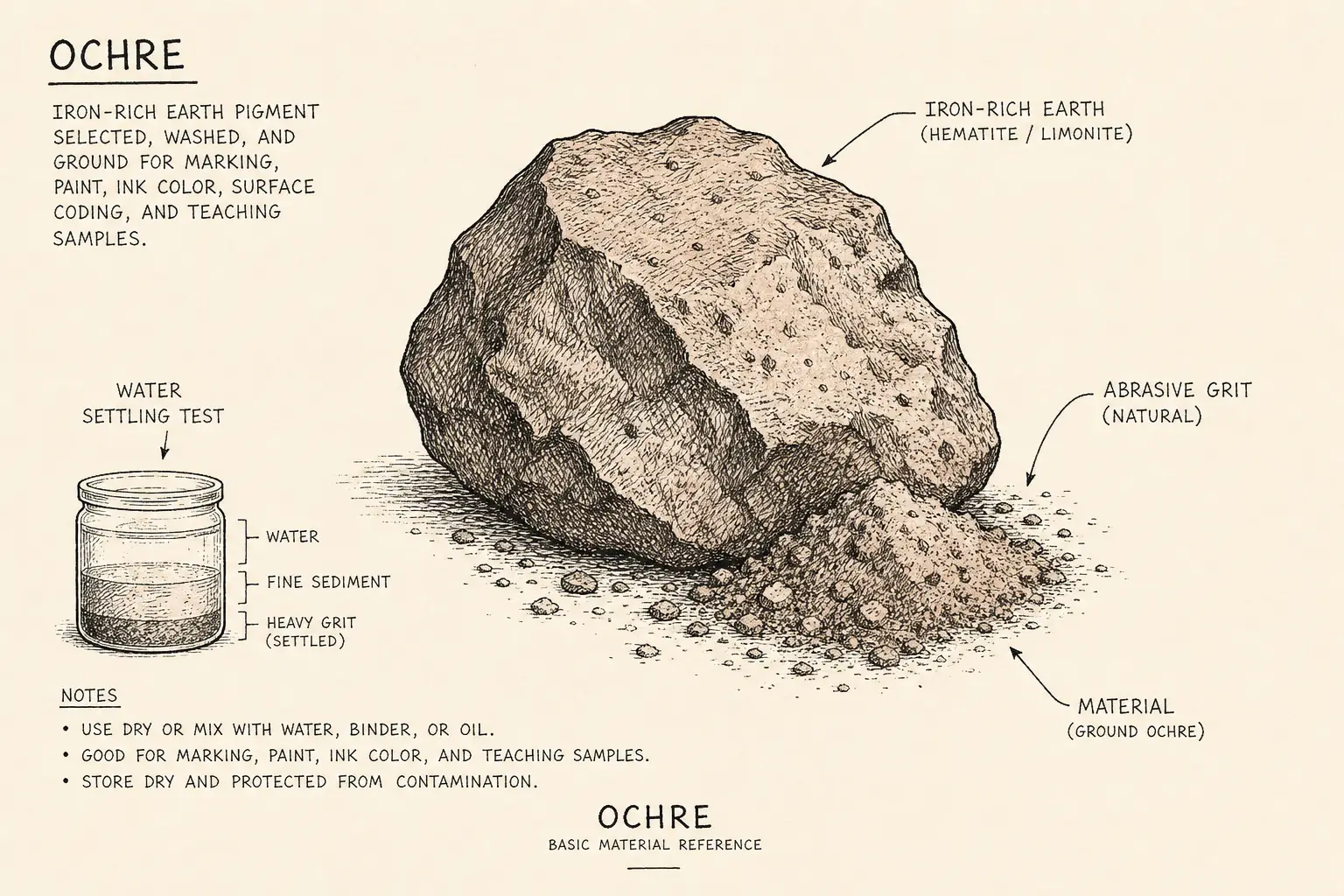
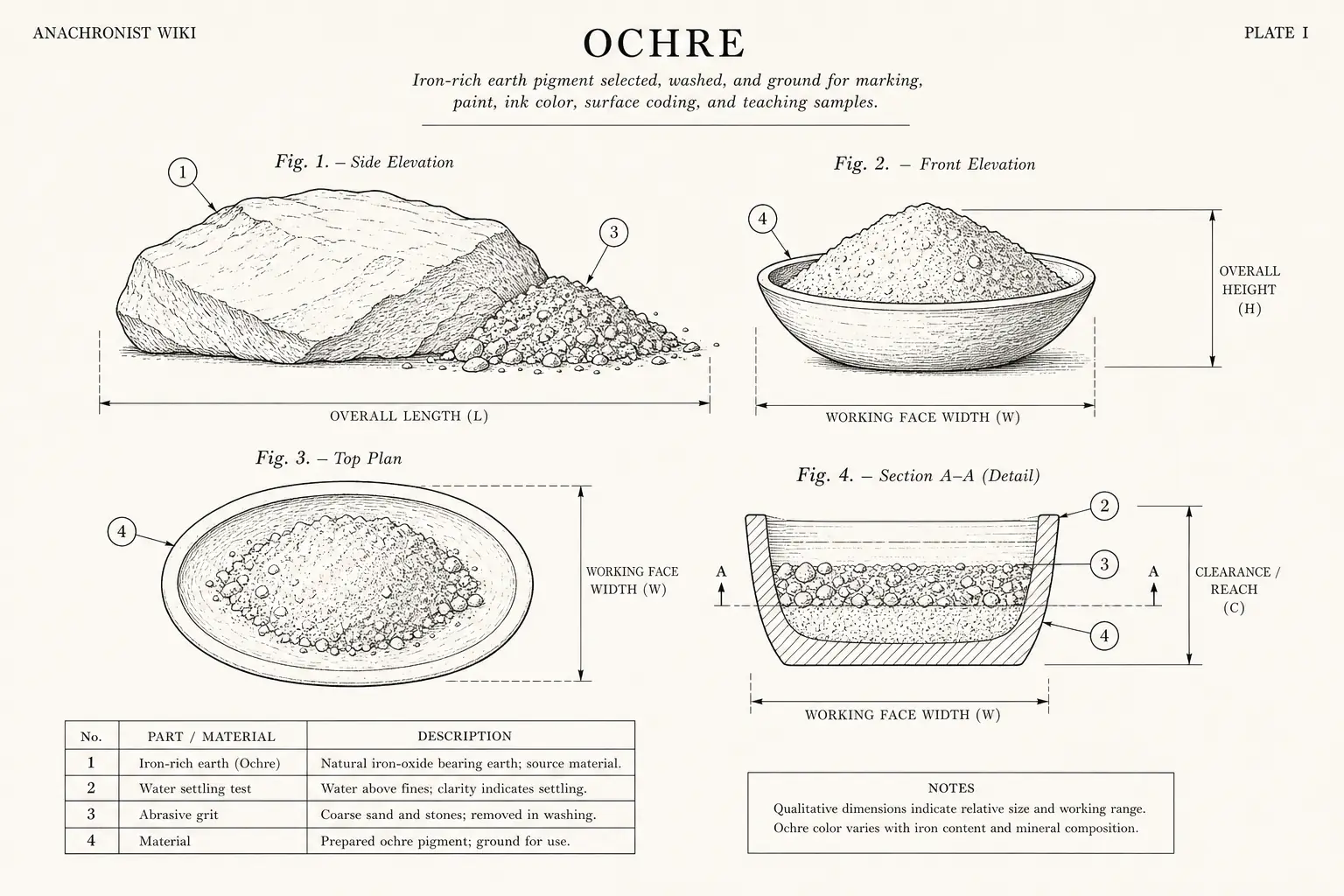
- Water settling test gives the first dependable prerequisite for this work.
- Abrasive grit gives the first dependable prerequisite for this work.
Materials and sourcing
Source iron-rich earth from local deposits, harvest, waste streams, salvage, trade, or household production as appropriate. Recognition starts with visible condition, smell where relevant, texture, soundness, contamination, seasonality, and whether a small sample survives its intended use.
Acquisition includes permission, labor, containers, transport, and storage. Preparation may mean washing, drying, sorting, trimming, crushing, smoothing, labeling, or keeping clean and dirty batches apart. Substitutes should be tested as substitutes, not silently mixed into trusted stock. In Arthurian Britain-like geography, availability depends strongly on local ecology, geology, land rights, and trade routes.
Tools and workshop requirements
A small workshop needs a clean work surface, labels, scrap for trials, basic cutting edges where shaping is needed, containers or racks for storage, and a habit of recording which source produced which result.
Procedure
- Select a small candidate sample.
- Remove obvious dirt, damage, or unsuitable portions.
- Prepare only enough for a trial.
- Use it on scrap or a low-value task.
- Record source, preparation, and result.
- Keep a good sample and a failed sample for teaching.
Verification and quality control
A useful ochre batch or tool gives similar results when repeated from the same source. Check fit, strength, wear, contamination, cracking, loosening, shrinkage, or other visible failure after first use. Compare against a retained reference sample before scaling up.
Failure modes
| Failure | Likely cause | Fix |
|---|---|---|
| Early breakage | Poor source material or hidden defect | Sort better and test smaller samples |
| Inconsistent result | Mixed batches or missing records | Label sources and separate grades |
| Contamination | Dirty storage or wrong tool use | Reserve clean containers and work surfaces |
Maintenance, repair, and iteration
Store working samples where damp, pests, heat, and confusion will not ruin them. Retire failed pieces into teaching stock. Improve the page later with source packs for regional examples and archaeological evidence.
Sources and provenance
Generated follow-up expansion for ANA-37. No source pack was used; specific historical and technical claims need human source review.