Field briefing
Abrasive grit turns hard minerals into a cutting tool made of many tiny points. It supports cutting edges, smoothing, drilling, polishing, and fitting.
What you are trying to make
Find grit hard enough to scratch the work, sort it by roughness, and keep it clean enough that the result is repeatable.
Minimum viable version
A basic version collects gritty sand or crushed stone, washes out mud, and tests it on scrap wood, bone, clay, or stone.
Better versions
Better versions sort coarse, medium, and fine grades; keep separate containers; use different binders or backings; and reserve the best grit for tool edges and bearing surfaces.
Prerequisite tree
- Water for washing and settling.
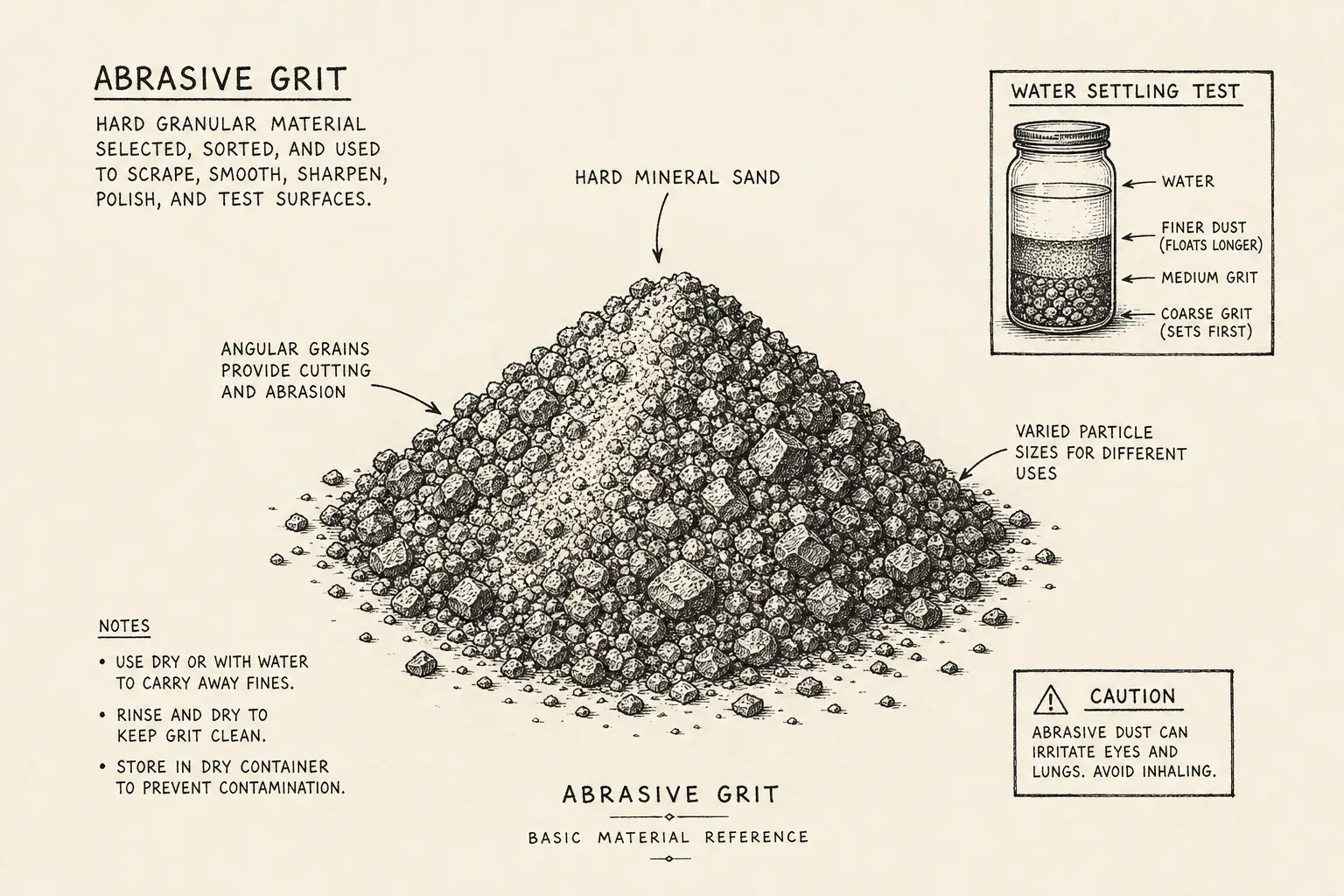
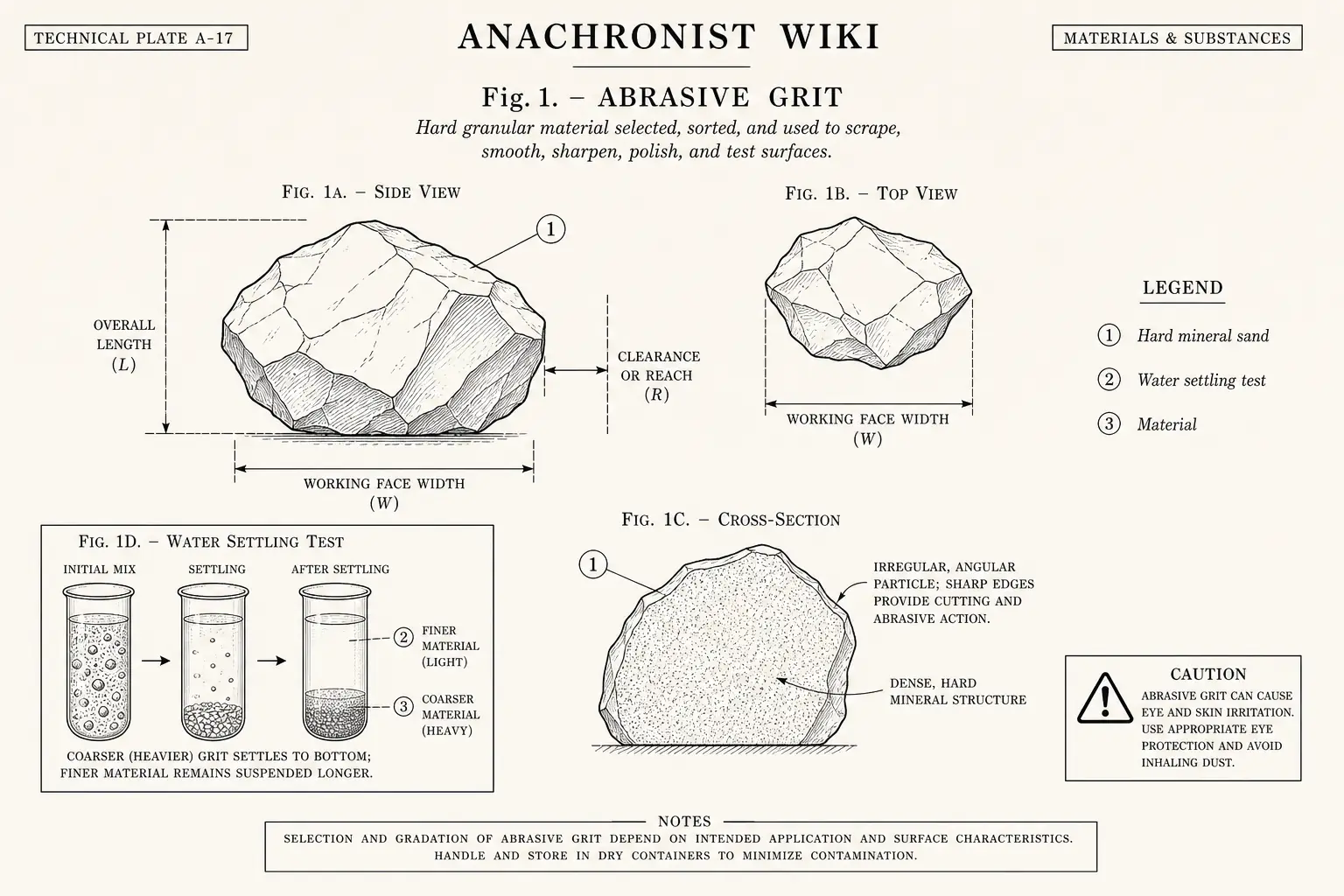
- Water settling tests for sorting sizes.
- Counting and labels for keeping grades separate.
Materials and sourcing
Source from river bends, beaches, sandstone, gravel beds, crushed quartz, old grinding stones, or trade. Recognition is practical: good grit scratches the target material and does not smear like clay. Rounded grains polish more than cut; angular grains cut faster but wear surfaces quickly.
Acquisition is collection, crushing where necessary, washing, and sorting. Preparation includes drying, removing organic debris, and separating grades. Substitutes include rough leaves, sharkskin-like skins where available, metal files in later systems, or hard stone rubbers. Geography matters because soft sediment gives poor abrasives even when it looks sandy.
Tools and workshop requirements
Useful tools are collecting bags, mortars, flat stones, sieves or cloth, settling vessels, drying trays, and labeled jars.
Hazards and controls
Dust irritates eyes and lungs, grit damages finished surfaces, and sharp fragments cut skin. Wet dusty work where practical, keep grit away from food, and clean bearing or glue surfaces before assembly.
Procedure
- Collect small samples from several sources.
- Wash and decant mud.
- Dry and sort by feel and visible grain.
- Test on scrap of the actual material.
- Label grades and uses.
- Discard grit that embeds, smears, or scratches too deeply.
Verification and quality control
Compare scratch speed, surface finish, and contamination. Good grit leaves a predictable surface with less effort than plain rubbing.
Sources and provenance
Generated expansion for ANA-37. No source pack was used; specific historical and technical claims need human source review.