Field briefing
Ink is portable memory. It turns writing and technical drawing into durable workshop practice.
What you are trying to make
Make a fluid or paste that leaves legible marks, sticks to the chosen surface, and stays usable long enough to justify preparation.
Minimum viable version
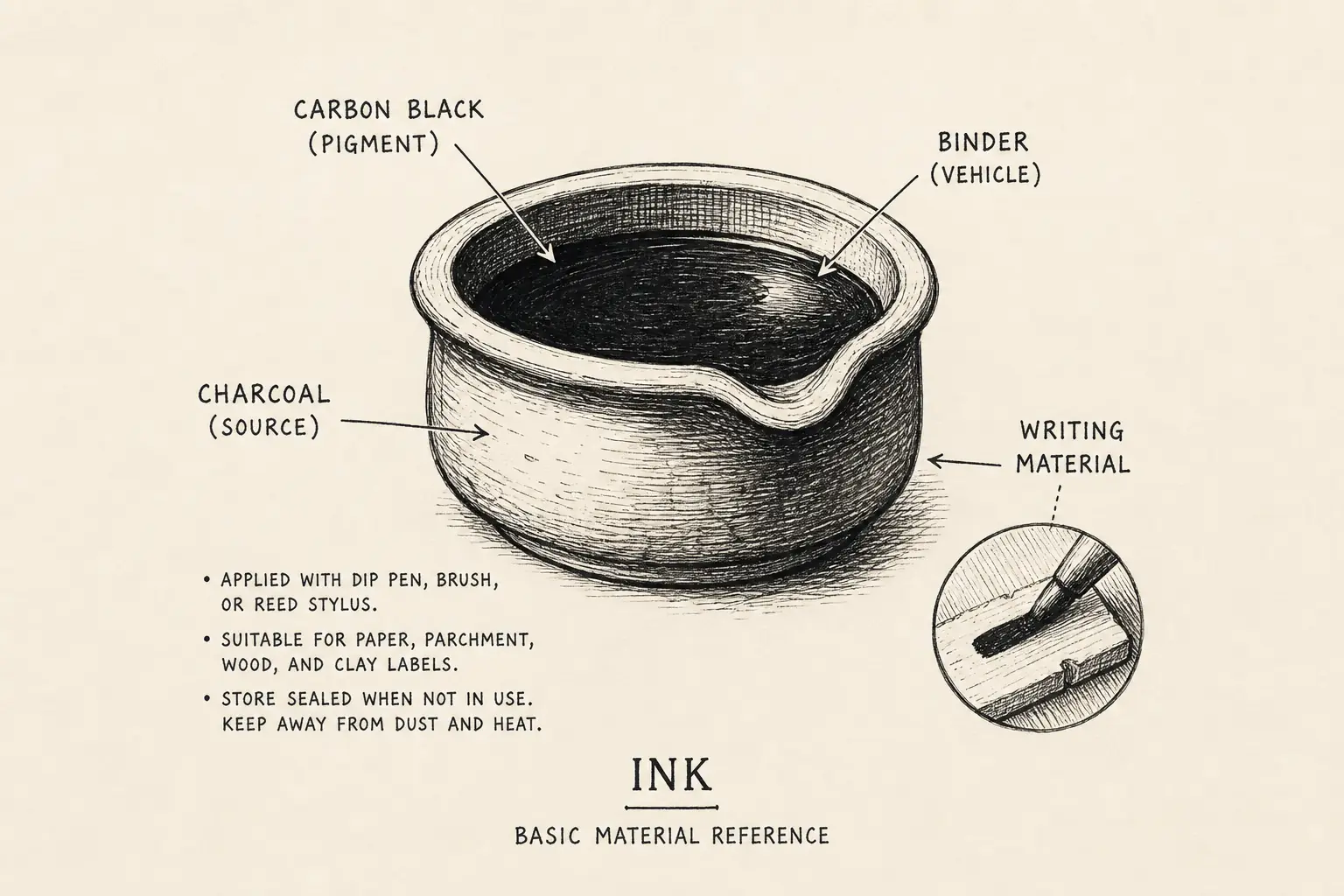
A carbon paste from soot or finely ground charcoal with a simple binder can label containers and make rough records.
Better versions
Better ink has finer pigment, steadier flow, less smudging, better adhesion, and known compatibility with paper, parchment, wood, or clay labels.
Prerequisite tree
- Charcoal or soot collection for black pigment.
- Writing for symbol conventions and training.
- Paper or another surface for compatibility testing.
Materials and sourcing
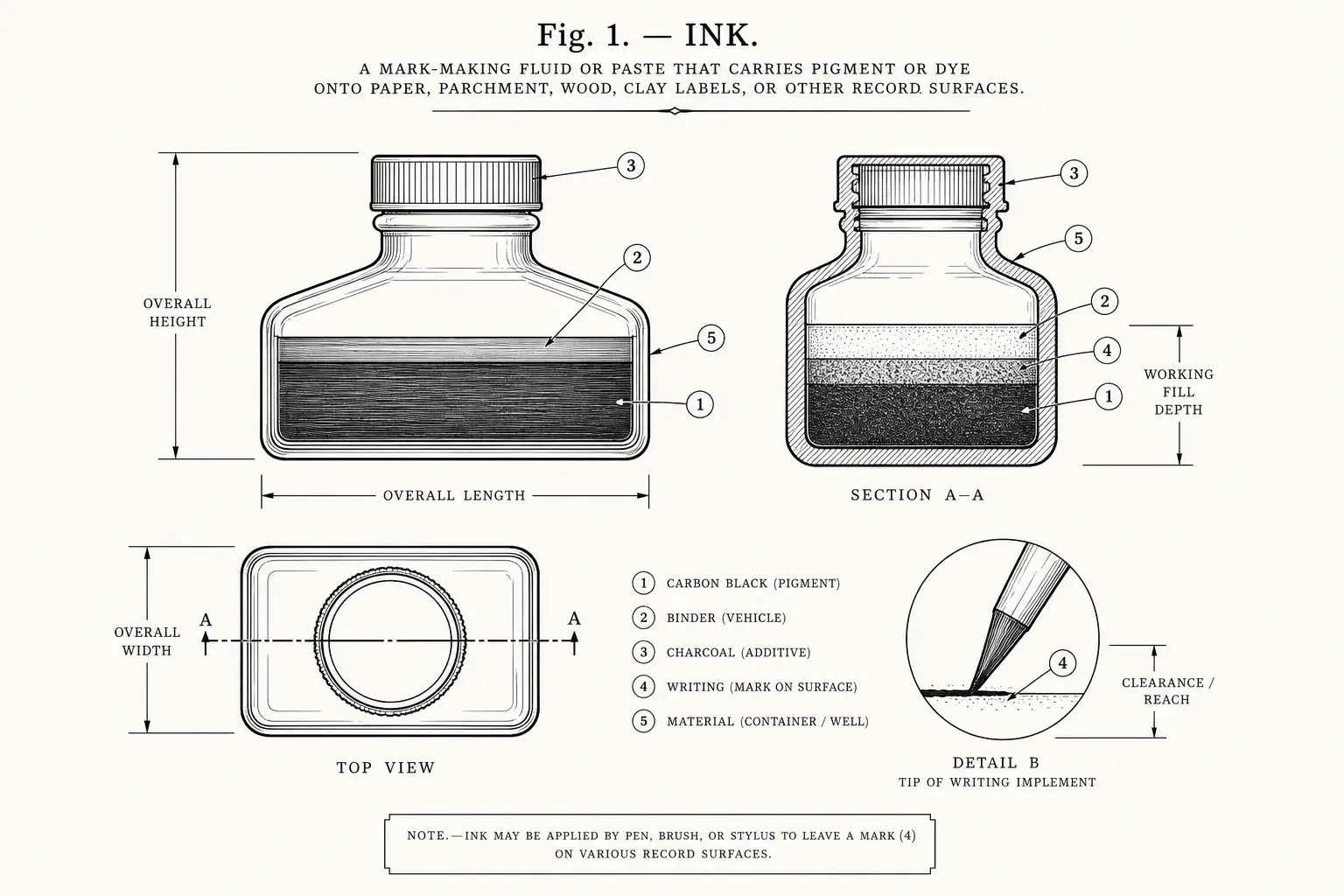
Carbon black can come from soot deposits or prepared charcoal ground very fine. Soot from clean burning is easier to disperse than gritty char. Binder can be plant gum, animal glue, egg, or starch depending on local resources.
Water quality matters. Dirty water introduces grit and mold. Storage vessels should be clean and labeled.
Tools and workshop requirements
Use a grinding stone, small vessel, stirrer, test strips, and covered storage. A mature writing shop keeps sample marks for each batch.
Procedure
- Collect or prepare dark carbon material and remove grit.
- Grind to a smooth powder or paste.
- Mix with a small amount of binder and liquid until it marks evenly.
- Test on the intended surface.
- Adjust for flow, drying, and smudge resistance by experiment.
Mechanism
Pigment provides color. Binder holds pigment to the surface after water or solvent leaves.
Verification and quality control
Make test marks, let them dry, then rub lightly, fold the surface if appropriate, and expose a scrap to damp air. Useful ink stays legible and does not destroy the writing surface.
Failure modes
| Failure | Likely cause | Fix |
|---|---|---|
| Pale mark | Too little pigment or coarse particles | Grind and increase pigment |
| Smears forever | Too much binder or poor drying | Test thinner batches |
| Clogs pen | Grit or lumps | Grind finer and settle |
| Mold or rot | Dirty water or storage | Make smaller batches and clean vessels |
Maintenance, repair, and iteration
Keep ink covered. Label batches by pigment source and surface compatibility. Dried carbon ink cakes may be easier to store than liquid ink in some climates.
Teaching it to local collaborators
Teach ink by making labels for material batches. The feedback loop is immediate: poor ink loses records.
Historical plausibility
Black mark-making media are plausible in many ancient settings. Durable, standardized ink is tied to scribal habits, record demand, and writing surfaces.
What this unlocks
Ink unlocks durable records, technical drawing, page labels, pattern marks, and later printing.
Open questions and uncertainties
- Binders and storage life need source review by climate and material.
- Iron-gall and other reactive inks should be separate pages with safety and material review.
Sources and provenance
Generated seed draft for ANA-13. No source pack was used; specific claims need human source review.