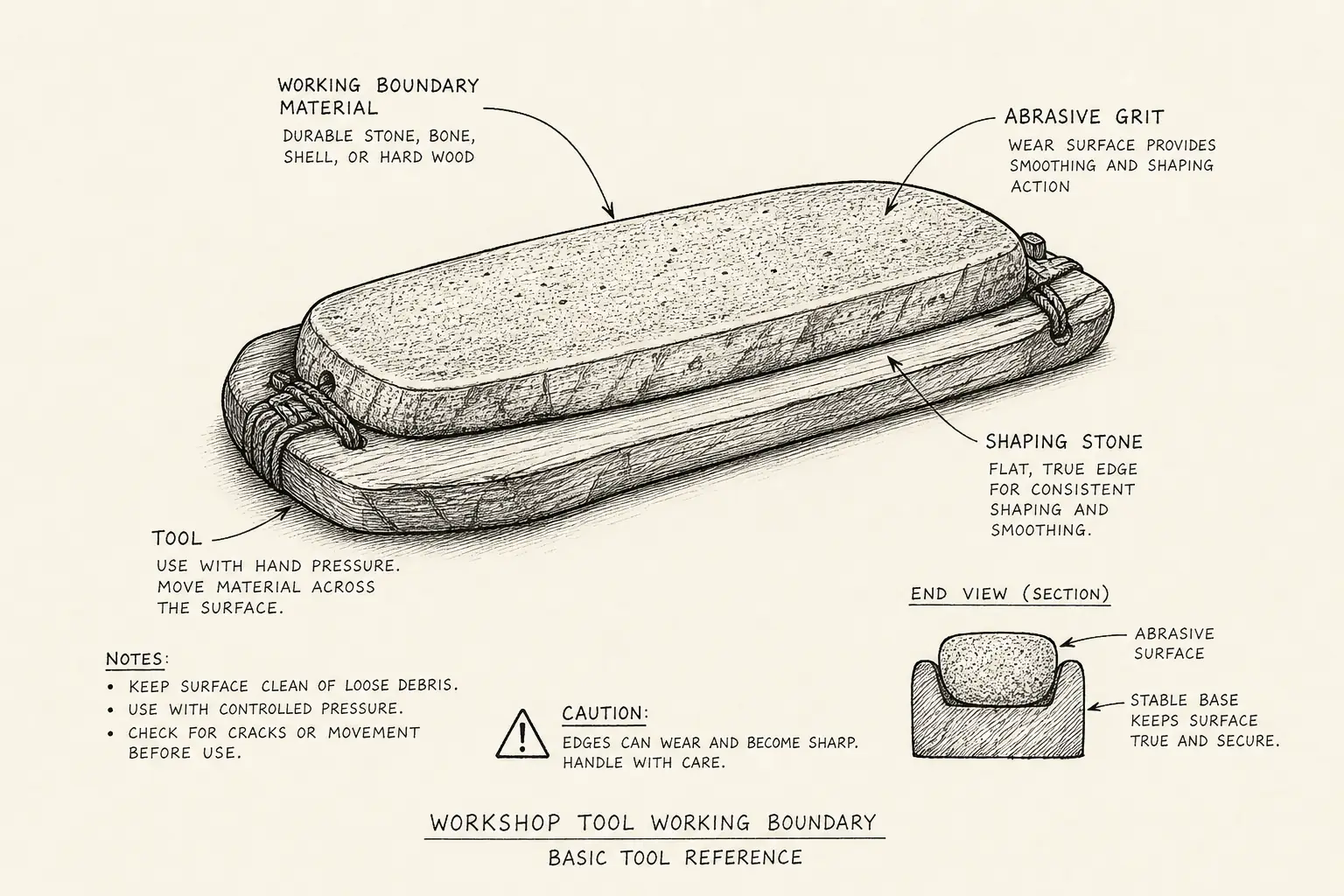
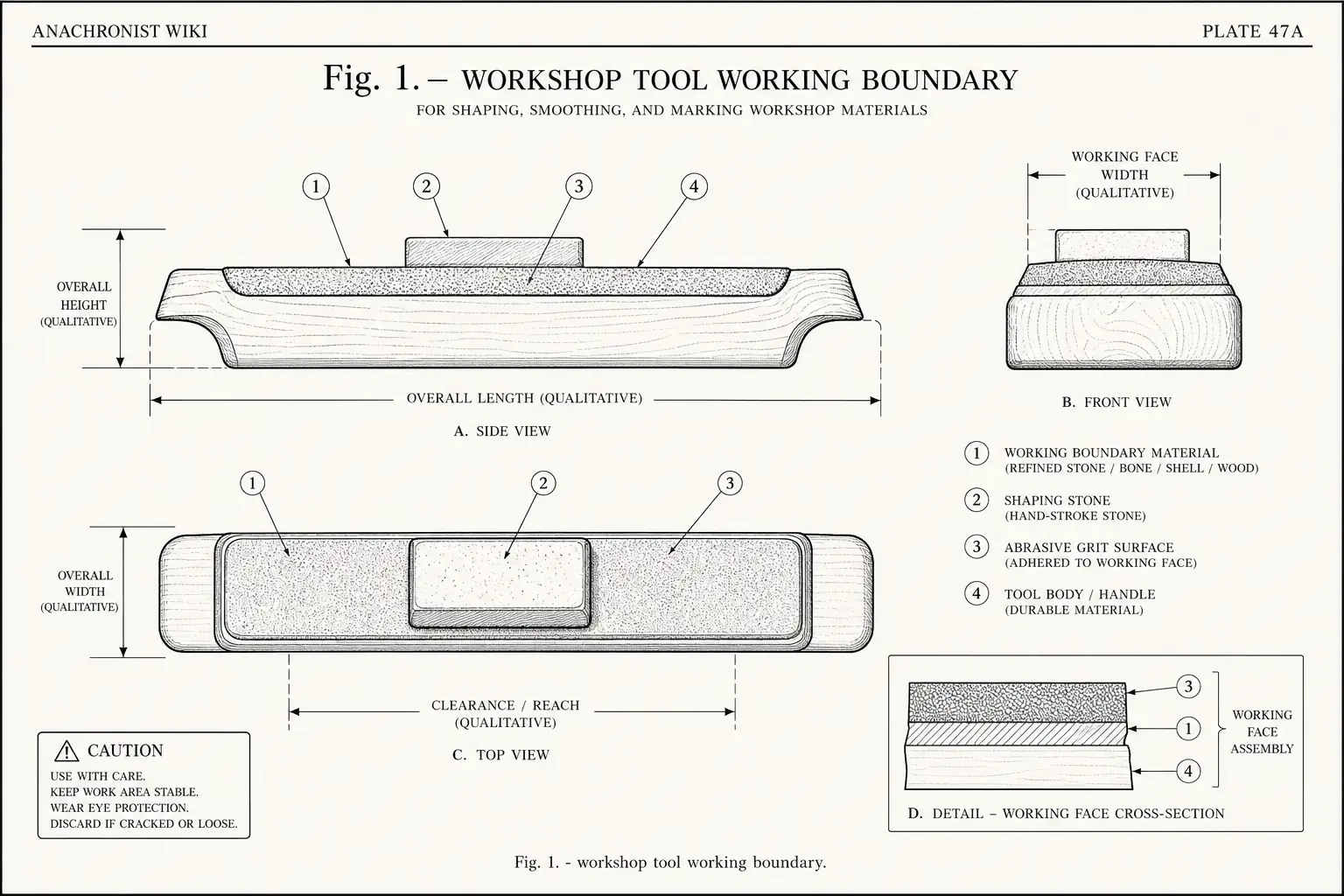
Field briefing
A cutting edge is any controlled sharp working boundary. It may be a flake, scraper, shell, bone edge, metal blade, or sharpened hardwood used to separate material.
What you are trying to make
Make an edge that cuts or scrapes the target material with less crushing and tearing than a blunt tool.
Minimum viable version
A basic edge is a sharp flake or scraped point tested on scrap fiber, hide, wood, or clay.
Better versions
Better versions have handles, known edge angles by habit, sharpening stones, protective storage, and different edges for cutting, scraping, shaving, and piercing.
Prerequisite tree
- Stone hammer for shaping many early edges.
- Abrasive grit for grinding and renewal.
- Tensile testing for judging cut fiber and leather straps.
Materials and sourcing
Sources include knappable stone, hard shell, bone, antler, hardwood, reused metal, and trade. Recognition is by hardness, fracture, edge holding, and how the edge fails on the target.
Acquisition depends heavily on geology and trade. Preparation includes breaking, grinding, scraping, hafting, polishing, and keeping edges dry and protected. Substitutes include tearing, burning, wedging, or abrasion, but these are slower and less precise. In areas without good stone, bone, shell, or imported edges become more important.
Tools and workshop requirements
Useful tools are hammerstones, pressure tools, abrasives, handles, binding fiber, pads, storage wraps, and scrap test pieces.
Hazards and controls
Sharp edges cut skin, flakes fly, and broken tools leave hidden splinters. Cut away from the body, store edges covered, and discard cracked pieces before they fail in use.
Procedure
- Choose edge material for the target.
- Shape or expose a sharp edge.
- Smooth hand contact and hafting areas.
- Test on scrap.
- Renew by grinding, flaking, or replacing.
- Keep different edges for dirty and fine work.
Verification and quality control
Good edges cut the target cleanly, require predictable force, and fail visibly before injuring the worker or ruining the part.
Sources and provenance
Generated expansion for ANA-37. No source pack was used; specific historical and technical claims need human source review.