Field briefing
A stone hammer is the simplest general-purpose striking tool. It can crush clay temper, shape bone and antler, drive wedges, and begin toolmaking.
What you are trying to make
Select a stone that strikes without shattering, fits the hand or handle, and can be replaced when damaged.
Minimum viable version
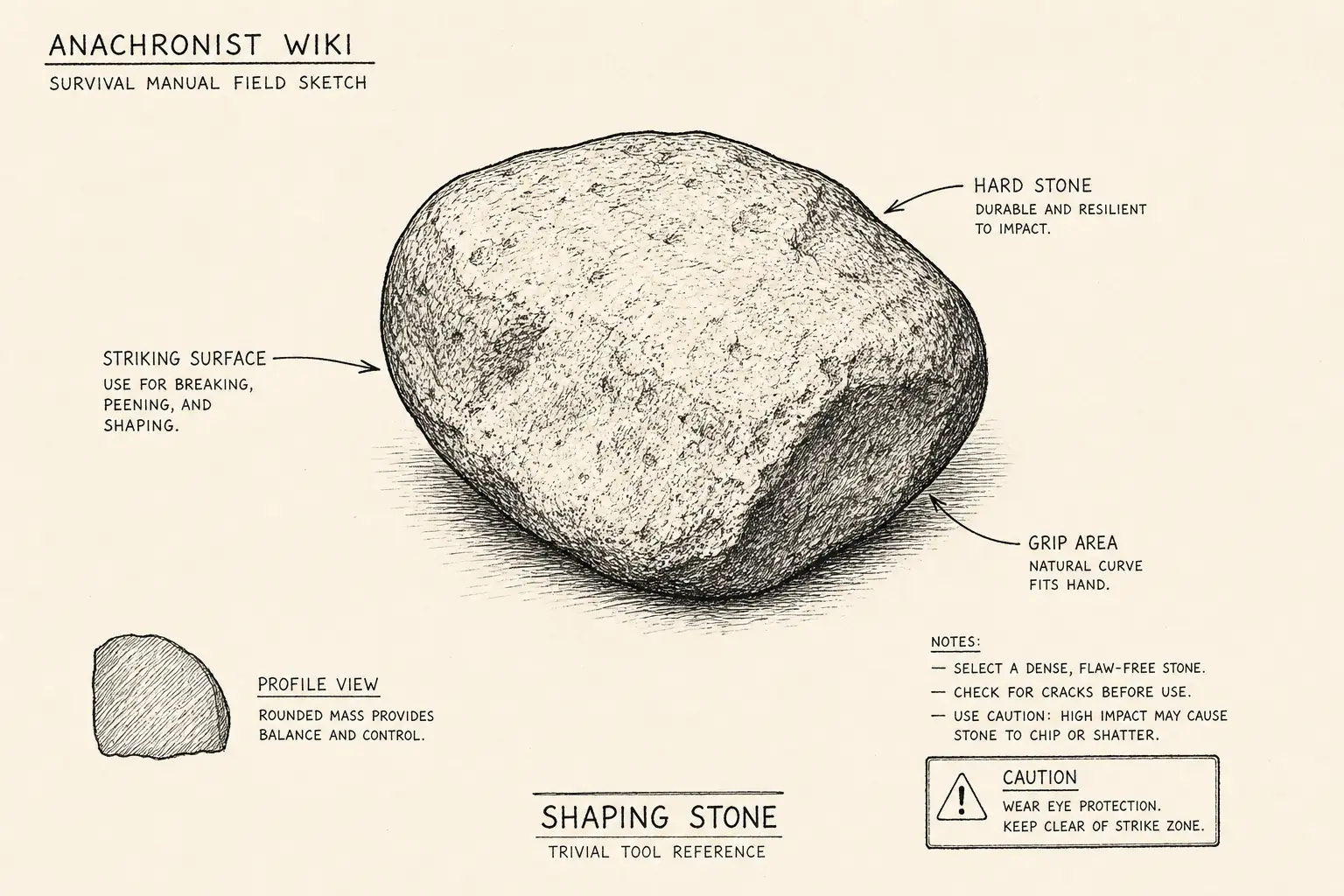
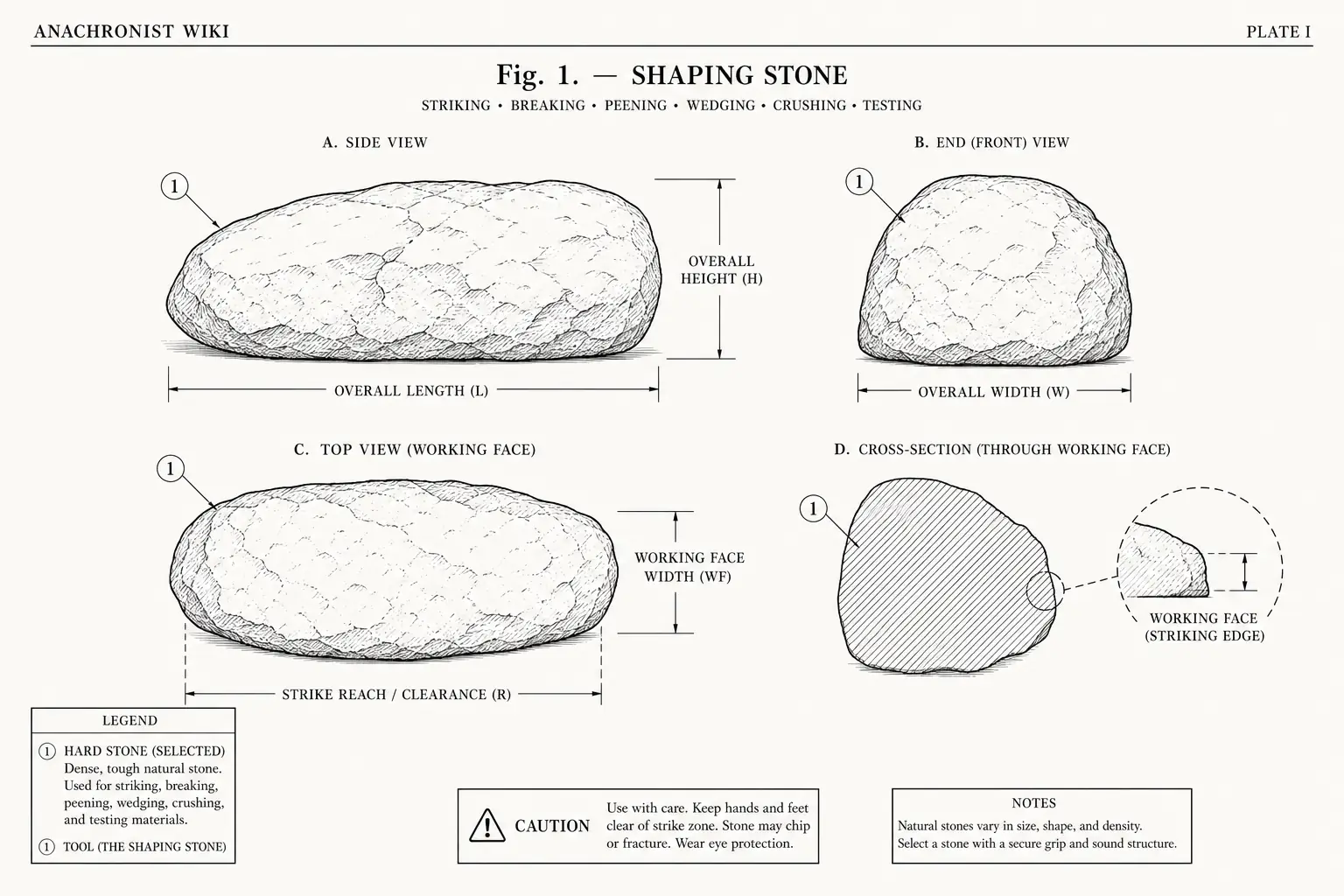
A basic hammerstone is a hard rounded cobble used by hand on scrap material.
Better versions
Better versions choose different sizes for crushing, flaking, peening, and driving; add a handle where useful; and reserve a smooth face for finished work.
Prerequisite tree
- No formal prerequisite beyond material recognition.
- Tensile tests and technical drawing become useful when hammer-made parts must repeat.
Materials and sourcing
Source from riverbeds, beaches, glacial cobbles, scree, old walls, or trade. Recognition is by density, sound, toughness, hand fit, and whether trial strikes chip safely or explode.
Acquisition is simple collection, but good stones are local geology. Preparation includes washing, knocking off weak corners, and choosing a striking face. Substitutes include hardwood clubs, bone mauls, metal hammers later, or fired clay pounders for light work.
Tools and workshop requirements
Use a stable anvil stone, clear floor, eye protection by distance and posture, and scrap for testing.
Hazards and controls
Stone chips can fly, fingers can be crushed, and brittle stones can burst. Strike away from people, keep hands out of pinch points, and reject cracked stones.
Procedure
- Select several candidate stones.
- Test light strikes on scrap.
- Keep the stone that chips least and feels controllable.
- Assign stones by use.
- Retire stones that crack or shed sharp flakes.
Verification and quality control
A useful hammerstone survives repeated trial blows, keeps a controllable face, and does not bruise or slip excessively in the hand.
Sources and provenance
Generated expansion for ANA-37. No source pack was used; specific historical and technical claims need human source review.