Field briefing
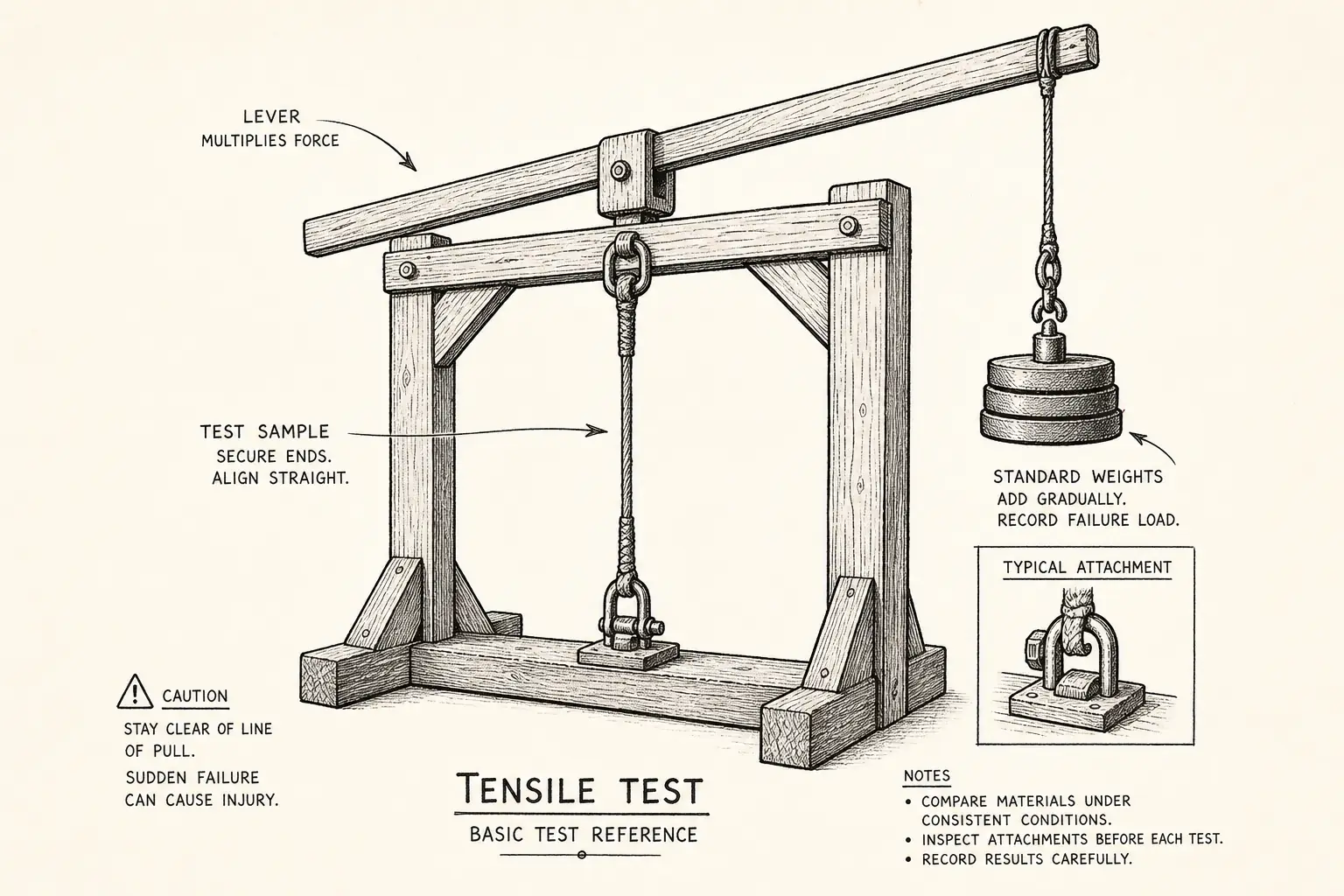
A tensile test answers a simple question: how does this fail when pulled? It supports rope, bindings, straps, fibers, and lifting gear.
What you are trying to make
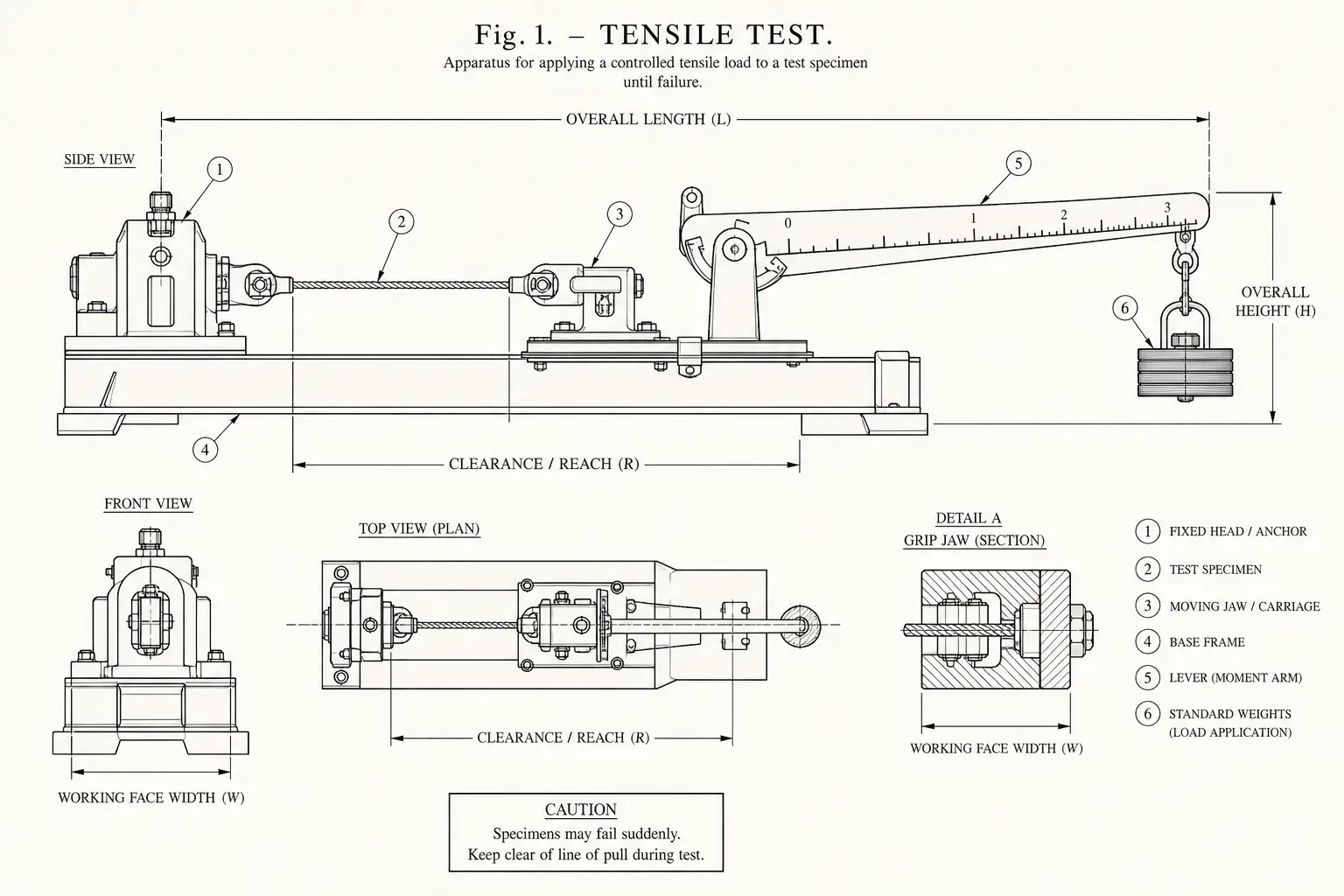
Create a repeatable pull setup that compares samples without putting people in the line of failure.
Minimum viable version
Tie two samples in the same way, pull each with the same basket of stones or body-weight method, and record which breaks first and where.
Better versions
Better tests use standard weights, marked sample lengths, protected test frames, and records by batch.
Prerequisite tree
- Counting for sample counts and results.
- Standard weights for repeatable loads.
- Writing for batch records.
Materials and sourcing
The test consumes samples. Each sample must represent the actual material batch: same fiber, same twist, same dryness, same knots or splices. Test weights can be stones, sandbags, water vessels, or formal weights.
Tools and workshop requirements
Tools include a frame or overhead support, hooks or pins, a shield or clear safety zone, weights, labels, and a recording surface. The support must be stronger than the samples being tested.
Hazards and controls
Breaking samples can whip, drop weights, or shatter fittings. Stand aside, keep faces and hands out of the line of pull, and use low-value loads while learning the test.
Procedure
- Prepare several similar samples from the same batch.
- Mark each sample and record its source.
- Attach without sharp bends unless that attachment is part of the real use.
- Apply load gradually and consistently.
- Record where and how failure occurs.
- Compare batches before approving production use.
Mechanism
Tension reveals weak fibers, poor twist, bad knots, cuts, rot, and uneven load sharing.
Verification and quality control
A useful test produces repeatable failures for similar samples. If results scatter wildly, sample preparation or attachment is inconsistent.
Failure modes
| Failure | Likely cause | Fix |
|---|---|---|
| Sample breaks at hook | Sharp attachment | Use smoother pins or test the knot separately |
| Frame moves | Weak support | Rebuild the test frame |
| Results vary wildly | Uneven samples | Standardize length and preparation |
| Recorder cannot compare | No labels | Mark every sample before testing |
Maintenance, repair, and iteration
Inspect hooks, pins, and frame after each break. Keep failed samples tied to their records when possible.
Teaching it to local collaborators
Break bad rope on purpose in a safe test area. The lesson is better remembered than a warning.
Historical plausibility
Formal tensile testing is later, but comparative pull tests are plausible wherever lifting, cordage, or straps matter.
What this unlocks
Tensile testing unlocks safer rope, pulley systems, harnesses, straps, and quality-control culture.
Open questions and uncertainties
- Exact historical test rigs need source review.
- Later pages should cover compression, bending, abrasion, and water resistance tests.
Sources and provenance
Generated seed draft for ANA-13. No source pack was used; specific claims need human source review.