Field briefing
A hand drill is a rotating cutting tool. It unlocks pegged woodworking, stitched leather, beads, sockets, fixtures, and more accurate assemblies.
What you are trying to make
Make a straight enough rotating shaft with a point that removes material instead of merely polishing it.
Minimum viable version
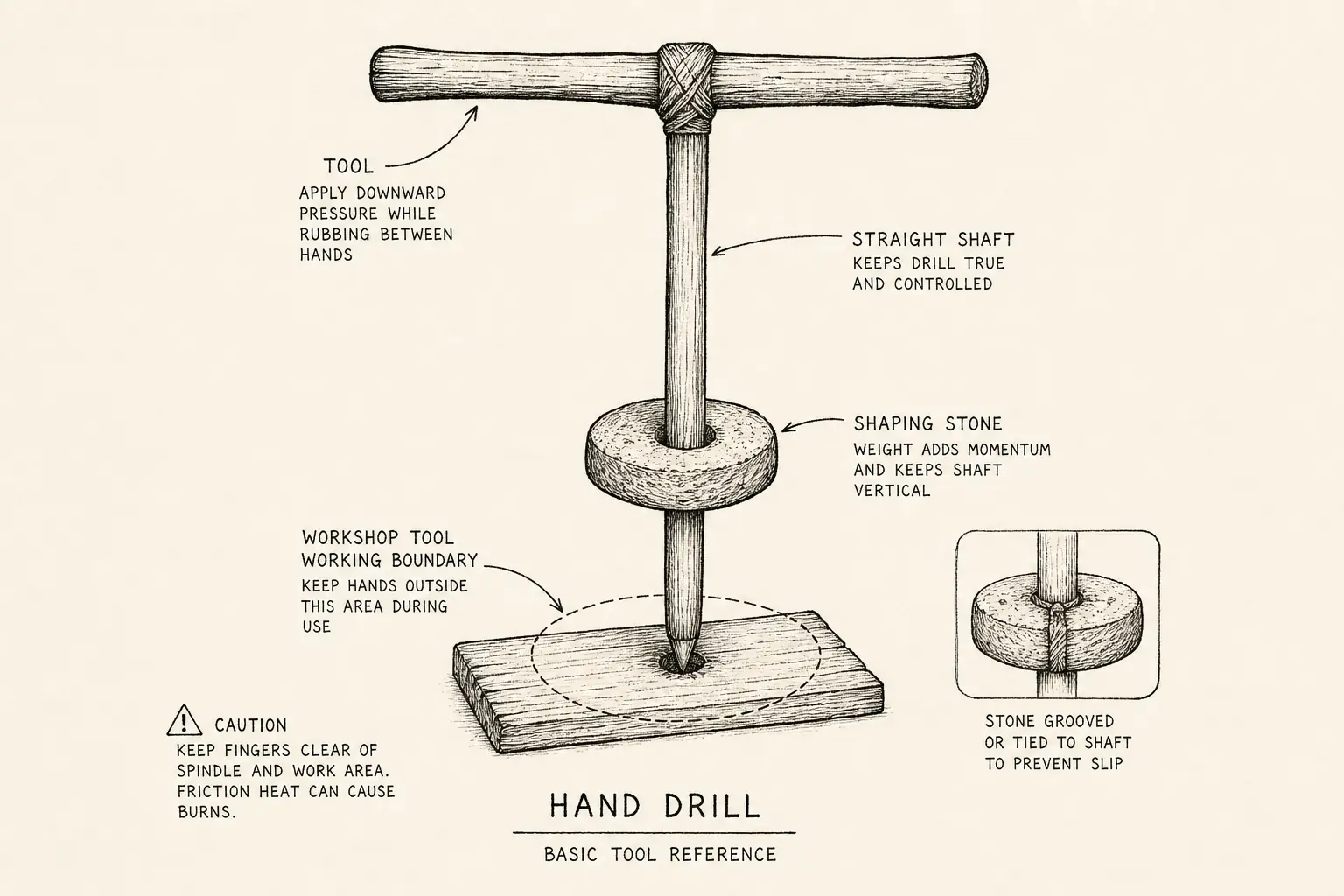
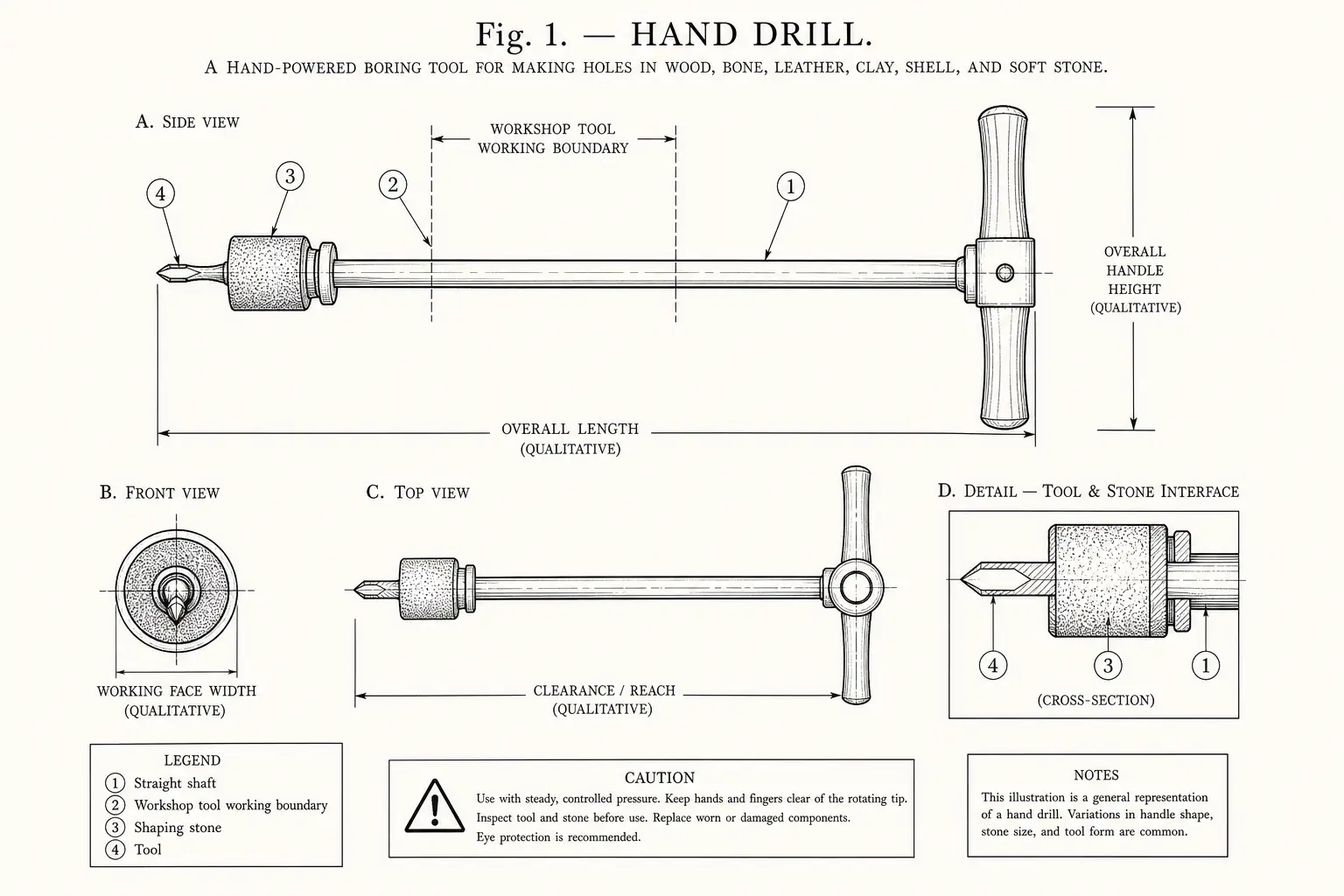
A simple hand-twisted drill uses a straight shaft and a sharpened point tested on soft material.
Better versions
Better versions add a bow, flywheel, socket, replaceable bit, abrasive slurry, or guide block for straighter holes.
Prerequisite tree
- Cutting edges for the bit.
- Stone hammer and abrasive grit for shaping parts.
- Technical drawing for hole location on repeat work.
Materials and sourcing
Sources include straight twigs, reeds, bone, antler, stone points, shell, metal scrap, cord, and whorl material. Recognition focuses on straightness, stiffness, point durability, and whether the bit clears waste.
Acquisition requires suitable small stock and abrasives where cutting is weak. Preparation includes straightening, fitting a point, smoothing the shaft, and making a socket or grip if needed. Substitutes include punching, burning, chiseling, or lashing around a notch. Geography affects access to hard stone, shell, and straight shafts.
Tools and workshop requirements
Useful tools are a knife or scraper, abrasive grit, socket block, cord, scrap material, clamps or helpers, and a safe backing board.
Hazards and controls
Points break, cords snap, and work can spin unexpectedly. Clamp or brace work, keep fingers away from the point, and test on scrap first.
Procedure
- Select a straight shaft.
- Fit or shape a durable point.
- Smooth the grip and contact areas.
- Mark the hole.
- Drill a shallow trial hole on scrap.
- Adjust point shape or pressure before real work.
Verification and quality control
Judge straightness, wall tearing, point wear, and whether the hole fits the peg, cord, or shaft it is meant to receive.
Sources and provenance
Generated expansion for ANA-37. No source pack was used; specific historical and technical claims need human source review.