Field briefing
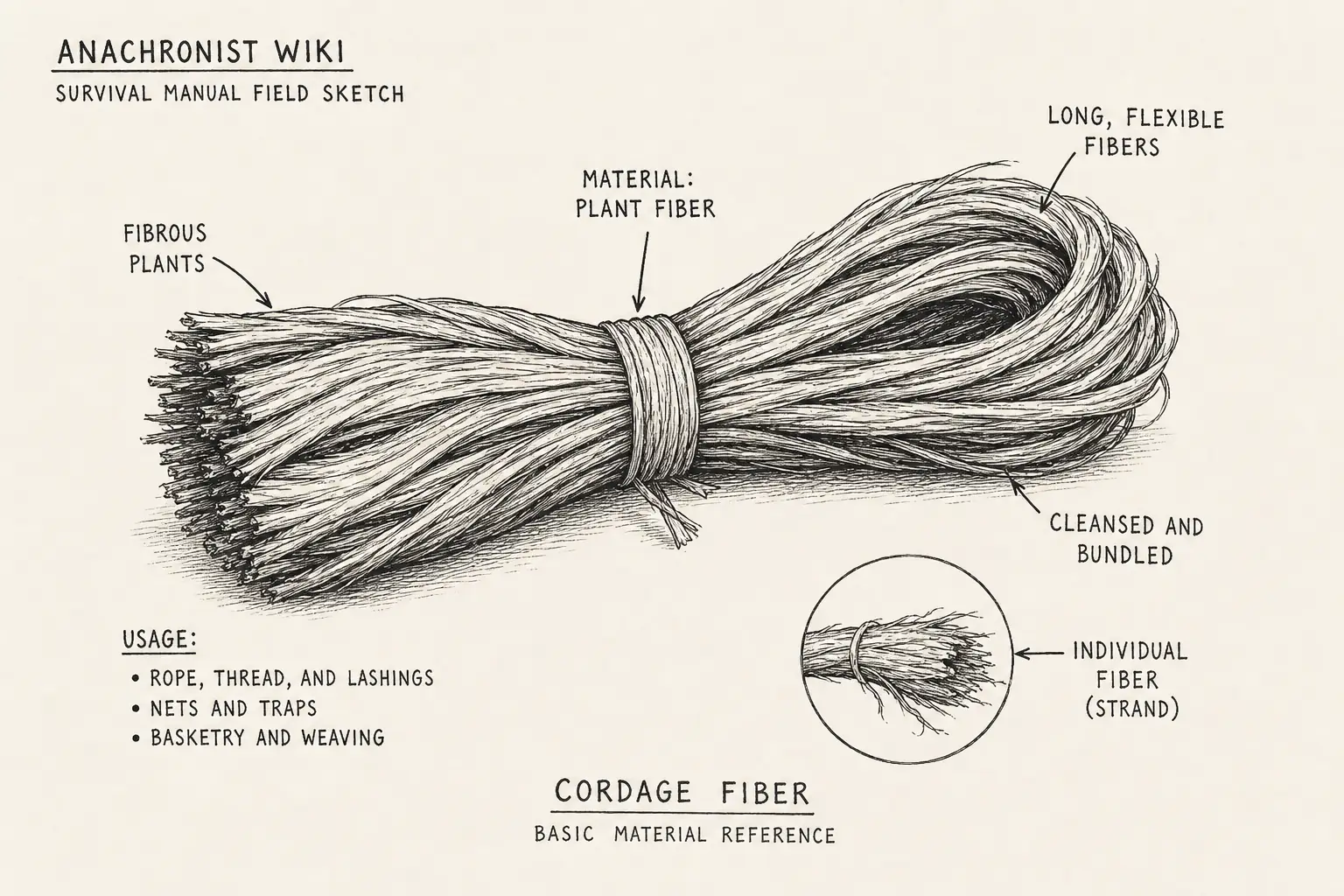
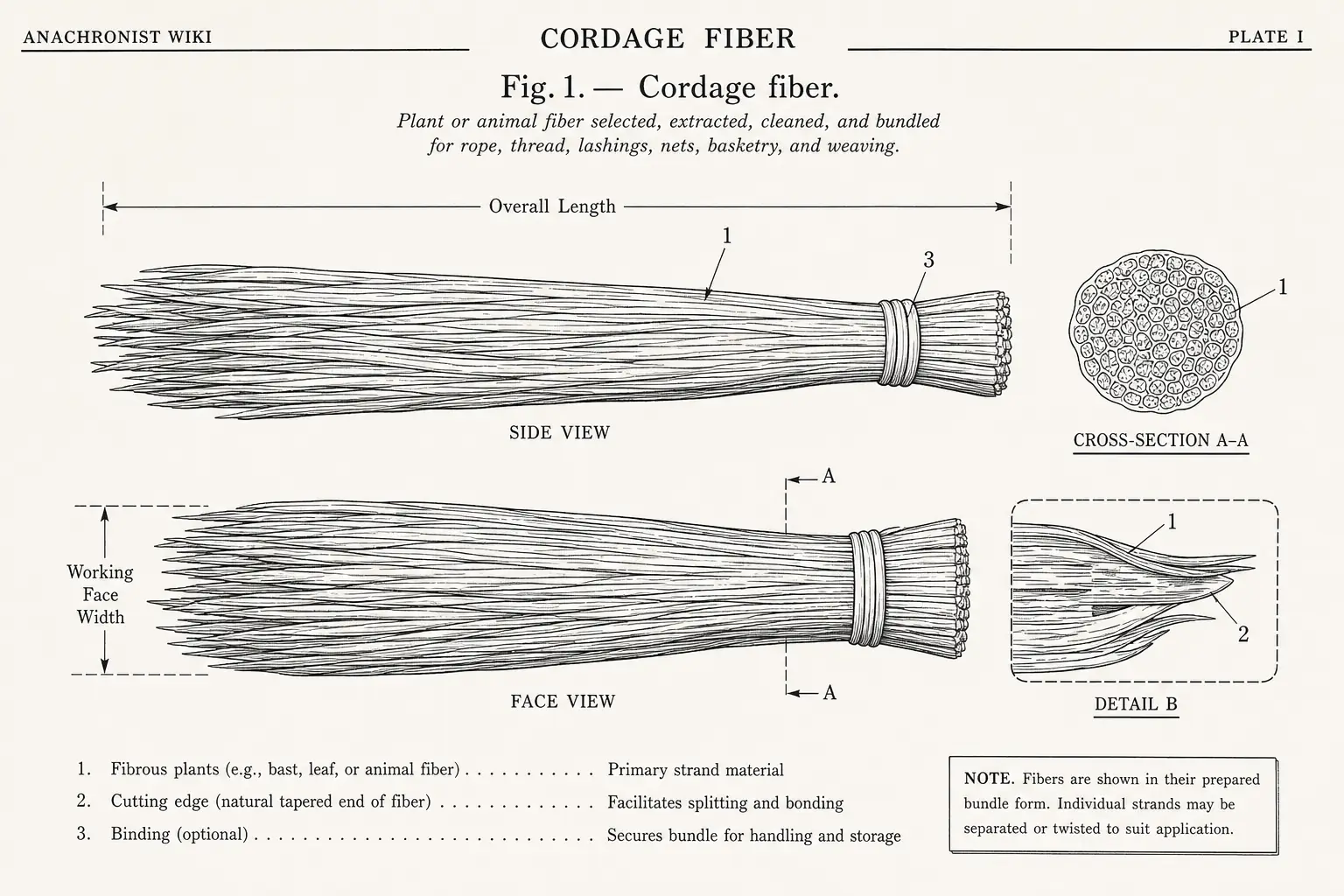
Cordage fiber is the supply chain behind rope, lashings, thread, nets, baskets, and early textiles. The useful technology is knowing which fibers survive twisting and load.
What you are trying to make
Gather fiber that is long, clean, flexible, and strong enough for the intended cord or woven part.
Minimum viable version
A basic version strips fibers from available plants or animal material, dries them, twists a small cord, and pull-tests it by hand or with a simple load.
Better versions
Better versions separate species, harvest time, fiber length, and preparation methods, then reserve the best batches for high-load rope.
Prerequisite tree
- Cutting edges for harvesting and scraping.
- Tensile tests for comparing batches.
- Counting and labels for source records.
Materials and sourcing
Sources include bast plants, nettles, flax, hemp, rushes, grasses, roots, bark, hair, sinew, and leather thongs. Recognition is practical: the fiber must separate, bend, twist, and resist pulling without turning to dust.
Acquisition depends on season and rights to fields, hedges, wet places, or animals. Preparation may include stripping, drying, soaking, scraping, beating, combing, and sorting. Substitutes include rawhide, leather strips, twisted bark, or imported fiber. Geography decides the best source: wetland rushes, upland grasses, cultivated flax, and woodland bark each imply different labor.
Tools and workshop requirements
Useful tools are knives, scrapers, combs, drying racks, baskets, labels, and a clean area where fibers do not tangle or rot.
Procedure
- Collect small samples from several sources.
- Separate the longest fibers.
- Clean away pulp, bark, grit, or grease.
- Dry or dampen to the working state needed.
- Twist a trial cord.
- Test strength and abrasion before scaling.
Verification and quality control
Good fiber twists without breaking, grips neighboring fibers, survives bending, and gives similar results batch to batch. Compare dry, damp, and abraded samples.
Sources and provenance
Generated expansion for ANA-37. No source pack was used; specific historical and technical claims need human source review.