Field briefing
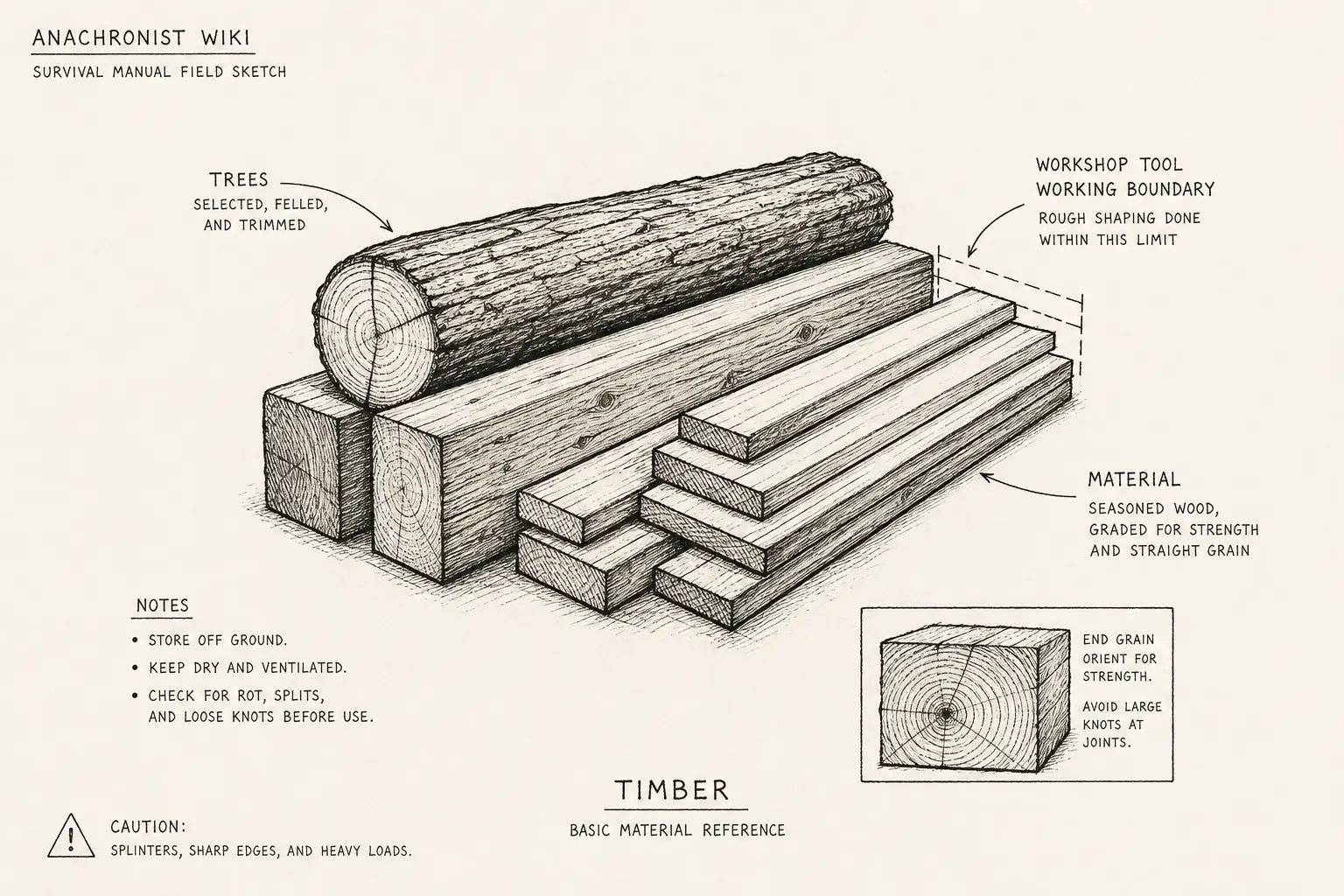
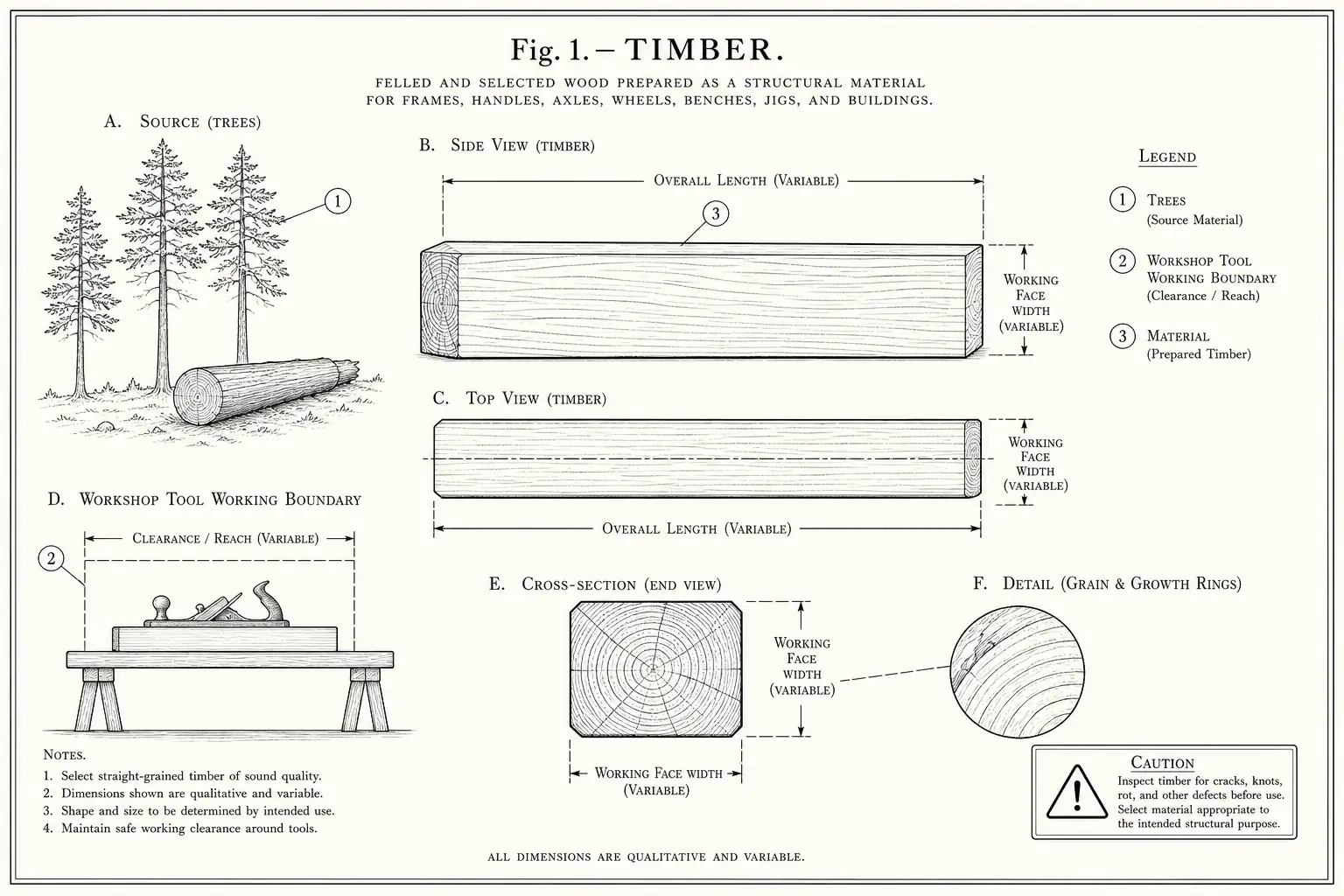
Timber is not generic wood. It is selected tree material whose grain, defects, moisture, and dimensions determine whether woodworking parts hold shape.
What you are trying to make
Create a stock of wood that can be matched to jobs: straight pieces for handles and rails, curved pieces for rims or braces, and disposable pieces for fuel or trials.
Minimum viable version
A basic version identifies sound branches or split billets, removes obvious rot and knots from stressed areas, and keeps pieces off wet ground until use.
Better versions
Better versions sort by species, grain, moisture, and intended load; mark source locations; and reserve the best pieces for wheels, frames, bearings, and tools.
Prerequisite tree
- Cutting edges for trimming and conversion.
- Counting and writing for stock records.
- Timber seasoning for dimensional stability.
Materials and sourcing
Source from woodland, hedgerows, driftwood, managed coppice, old structures, and trade. Recognition means checking straightness, tight growth, cracks, worm damage, rot, twist, knots, and whether the grain runs through the part.
Acquisition is labor, rights, and transport. Large pieces may need a team, rollers, sledges, carts, or trade agreements. Preparation includes debarking where useful, splitting along grain, rough trimming, and storing under cover with airflow. Substitutes include bone, horn, stone, fired clay, or metal for small parts, but timber remains the easiest structural material in many early settings. In Arthurian Britain-like geography, woodland access is plausible but politically and locally variable.
Tools and workshop requirements
Useful tools include wedges, axes, knives, saws where available, cords, levers, storage racks, labels, and a shaded dry place.
Hazards and controls
Felling, splitting, and moving timber can crush, cut, and trap people. Work clear of the fall path, keep bystanders away, brace rolling stock, and treat split pieces under tension carefully.
Procedure
- Choose wood by job and grain direction.
- Reject rot, cracks through joints, and knots at stress points.
- Split or rough-cut oversized blanks.
- Mark source and intended use.
- Store off the ground with air around the piece.
- Test a sample before committing rare stock.
Verification and quality control
Check that a blank is sound, reasonably straight, and free of defects at the stressed section. Bend, tap, shave, and compare test pieces. A poor test part should fail before the production part is trusted.
Sources and provenance
Generated expansion for ANA-37. No source pack was used; specific historical and technical claims need human source review.