Field briefing
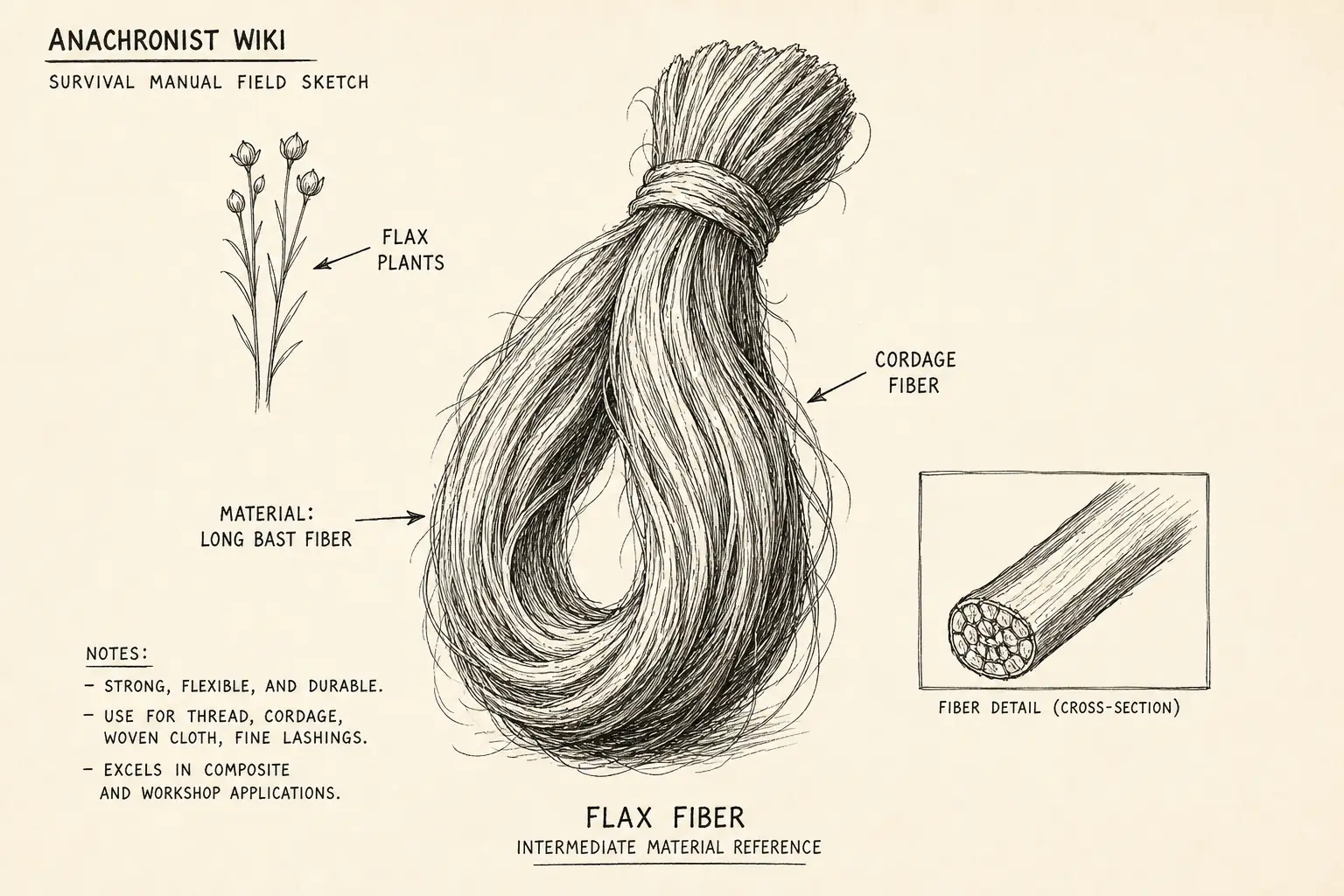
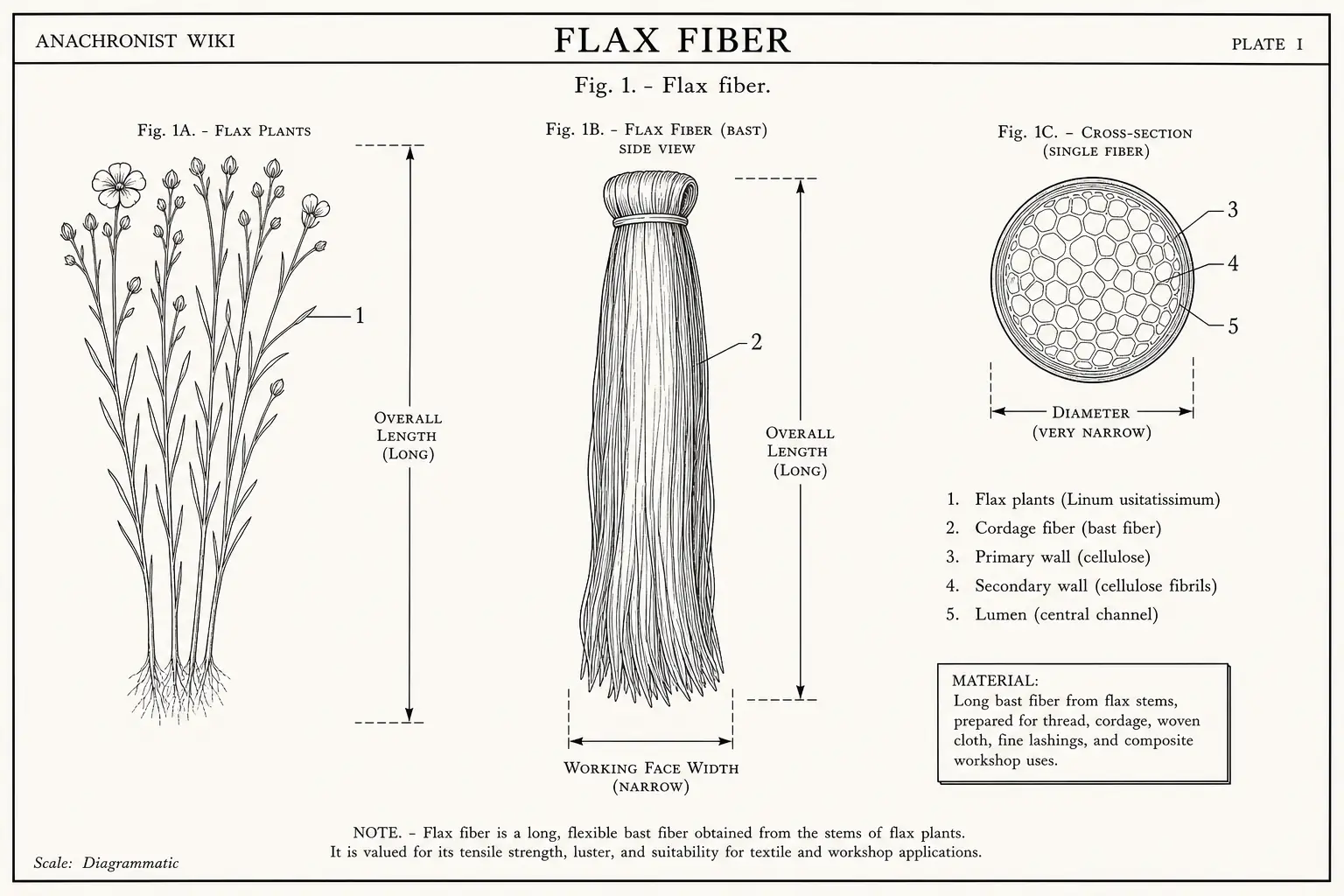
Flax fiber is a more specialized cordage fiber supply. It can produce strong fine thread for weaving, stitching, lashings, records, and bindings.
What you are trying to make
Turn flax stems into long, clean fibers that can be spun, twisted, or bundled without excessive breakage.
Minimum viable version
A basic version harvests stems, dries or softens them enough to release fiber, scrapes away woody matter, and twists a test thread.
Better versions
Better versions cultivate consistent plants, process stems in batches, comb fibers by grade, and keep separate stocks for thread, cord, and rough tow.
Prerequisite tree
- Cordage fiber recognition and testing.
- Tensile testing for comparing grades.
- Counting and writing for batch records.
Materials and sourcing
The source is flax plants from cultivation, trade, or local growth. Recognition focuses on long straight stems and fiber that pulls out in strands rather than short fuzz.
Acquisition requires harvest rights, drying space, water or damp ground where softening is used, and labor for cleaning. Preparation includes drying, softening, breaking woody stems, scraping, combing, and sorting. Substitutes include nettle, hemp, wool, hair, bark fiber, or leather strips. In Arthurian Britain-like geography, flax is plausible but depends on farming knowledge, land, and seasonal labor.
Tools and workshop requirements
Useful tools include knives, drying racks, breaking sticks, scrapers, combs, bundles, labels, and storage away from damp and pests.
Procedure
- Harvest or acquire a small batch of stems.
- Dry and sort by length.
- Soften and break the woody parts.
- Scrape and comb out longer fibers.
- Twist or spin trial thread.
- Compare strength, smoothness, and waste.
Verification and quality control
Good flax fiber is long, pale to tan, flexible, and comparatively even. Trial thread should hold twist and survive handling without shedding too much short fiber.
Sources and provenance
Generated expansion for ANA-37. No source pack was used; specific historical and technical claims need human source review.