Field briefing
Basketry is lightweight infrastructure. Baskets move clay, fiber, fuel, food, tools, and waste; fine woven forms can strain, sort, dry, and protect materials.
What you are trying to make
Make a container or screen from flexible material that holds together under the intended load.
Minimum viable version
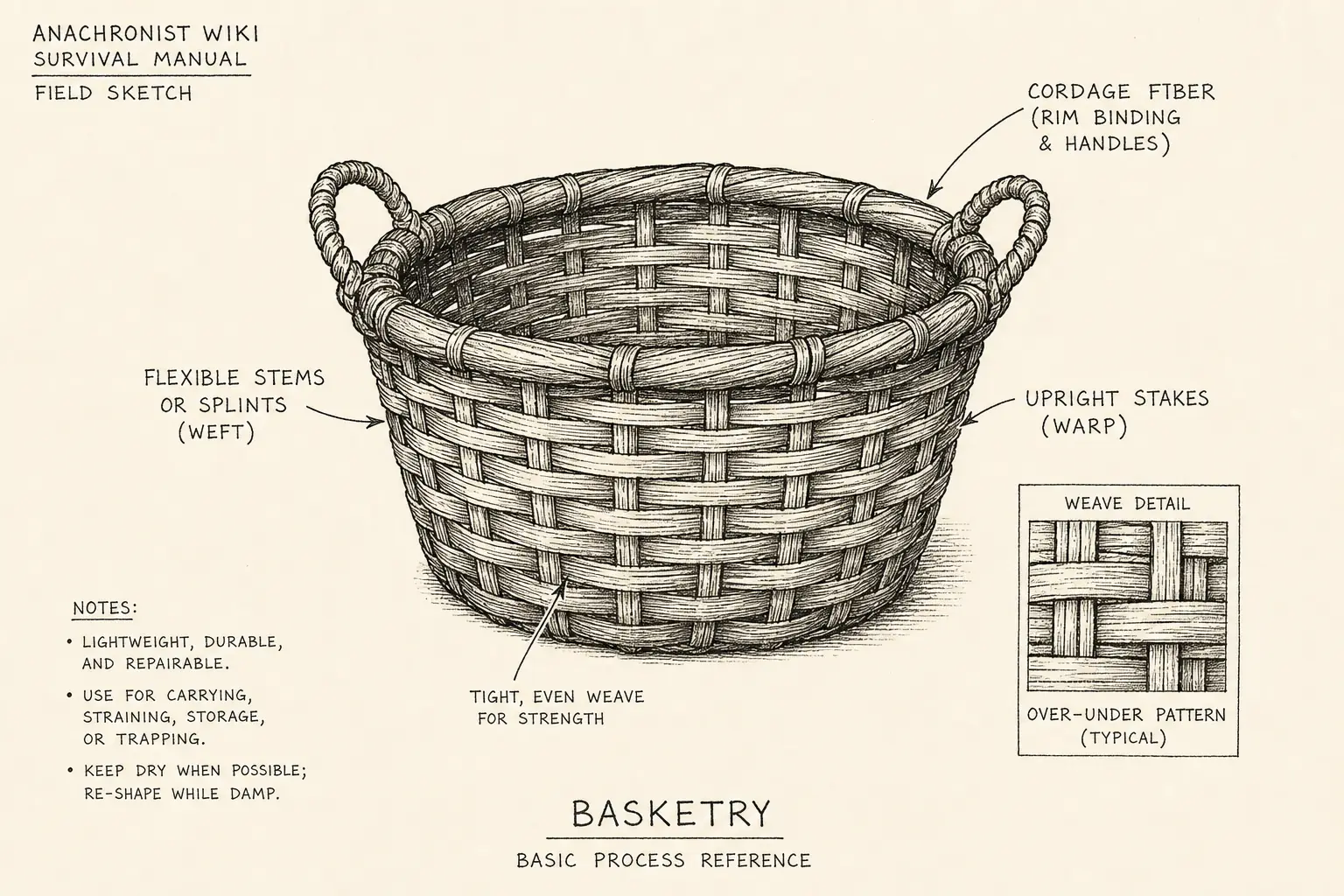
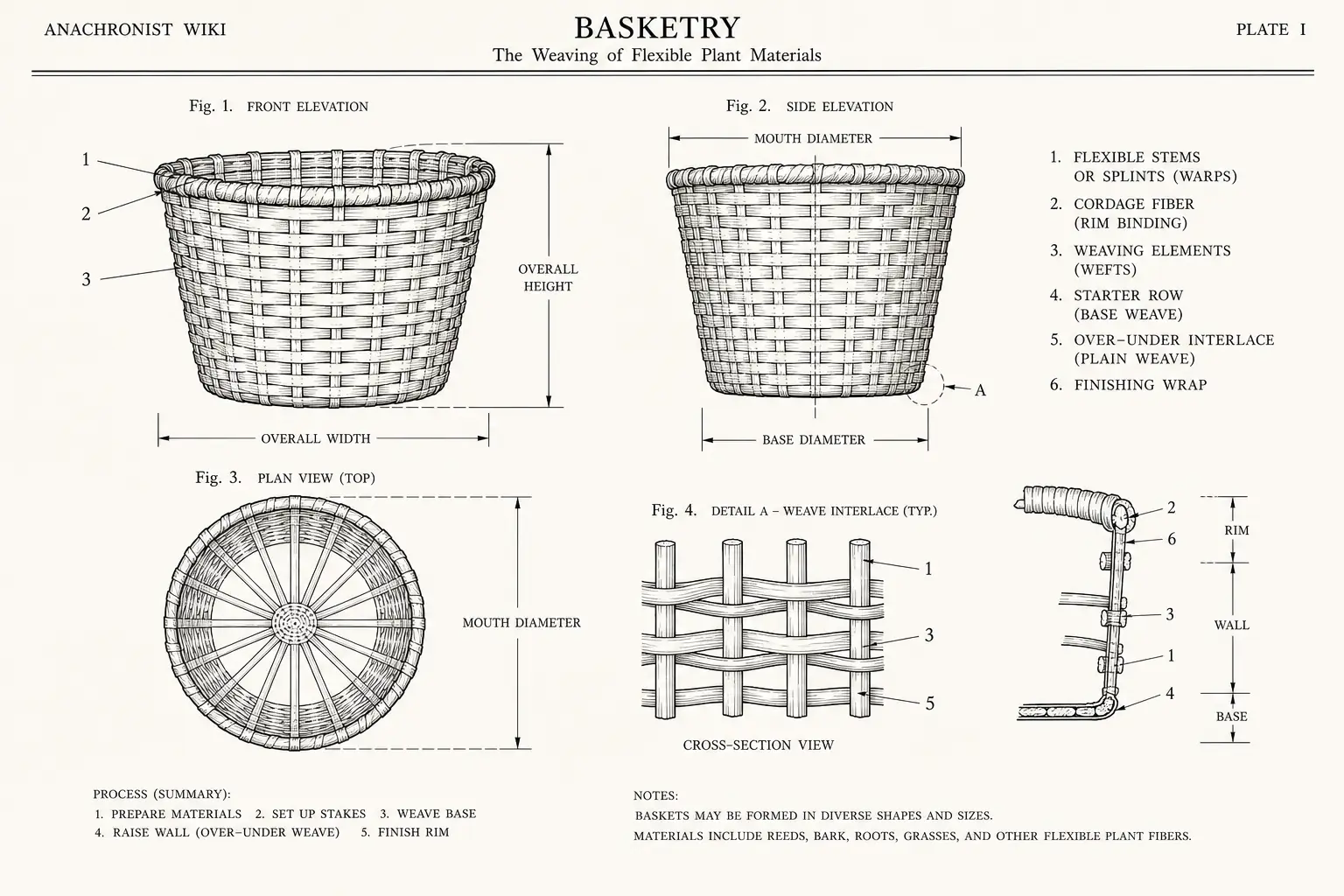
A basic basket uses flexible stems or strips interlaced into a simple mat, tray, or open container.
Better versions
Better versions sort materials by stiffness, soak or season them, use named patterns, add rims and handles, and line baskets when needed.
Prerequisite tree
- Cordage fiber recognition.
- Cutting edges for harvesting and trimming.
- Tensile testing for handles and load-bearing straps.
Materials and sourcing
Sources include willow, hazel, reed, rush, bark, roots, grasses, split wood, and trade. Recognition focuses on flexibility, length, split behavior, rot, and whether the material kinks.
Acquisition is seasonal: some stems bend best when fresh, while others need soaking or drying. Preparation includes cutting, sorting, peeling, splitting, soaking, and trimming. Substitutes include leather bags, pots, cloth sacks, wooden boxes, or nets. Wetlands and managed hedges can be more important than forests.
Tools and workshop requirements
Useful tools include knives, soaking troughs, weights, awls, gauges, forms, and drying space.
Procedure
- Select flexible material.
- Sort by thickness and length.
- Soak or dry to workable condition.
- Make a small test weave.
- Add rim and handle only after the body holds shape.
- Load-test before carrying valuable material.
Verification and quality control
Check gaps, broken strands, handle pullout, rocking base, and whether the basket sheds dirt into clean work.
Sources and provenance
Generated expansion for ANA-37. No source pack was used; specific historical and technical claims need human source review.