Field briefing
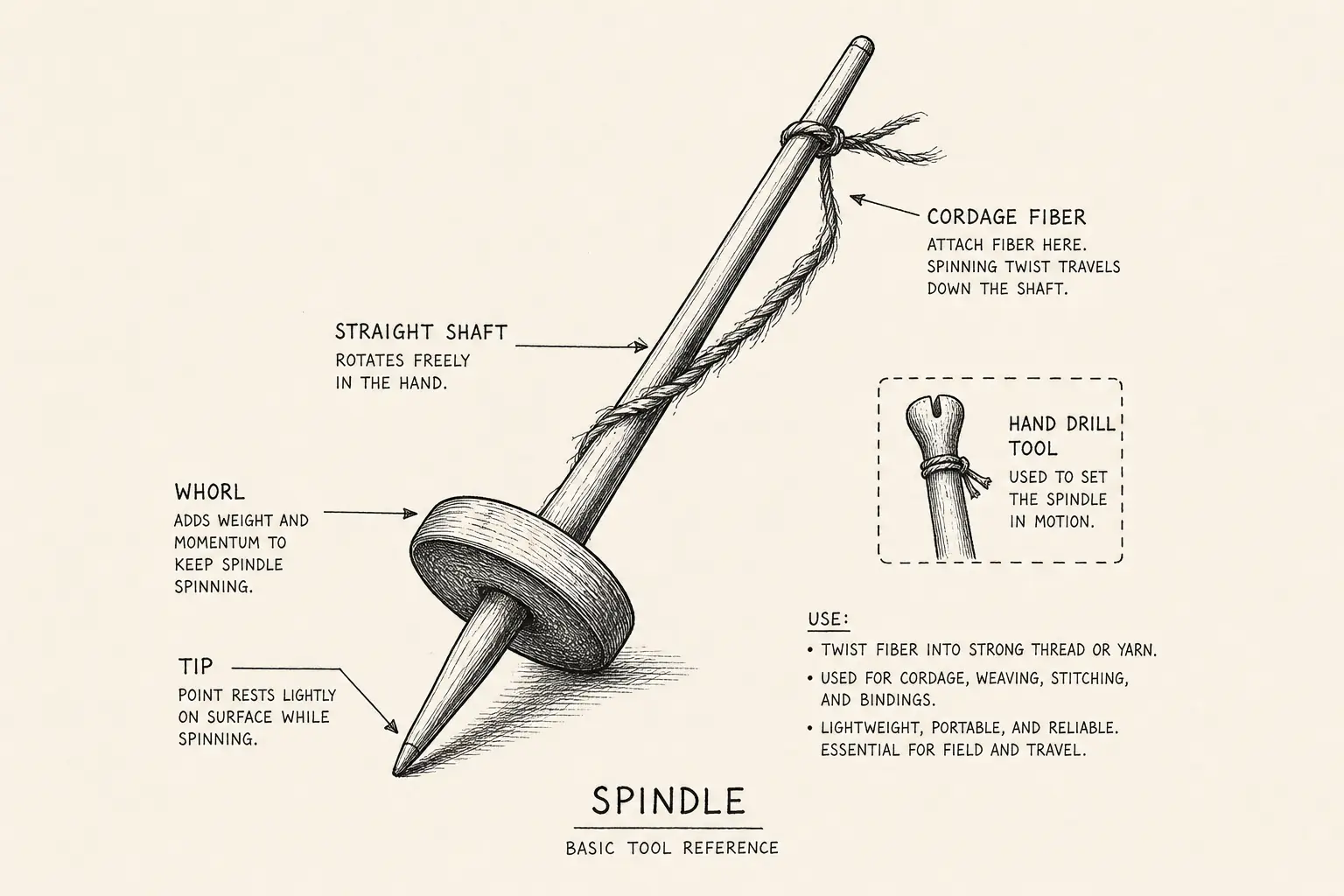
A spindle stores twist. It turns prepared cordage fiber into longer thread for weaving, stitching, binding, and fine cordage.
What you are trying to make
Make a shaft and weight that rotate smoothly enough to add twist without constantly breaking the fiber.
Minimum viable version
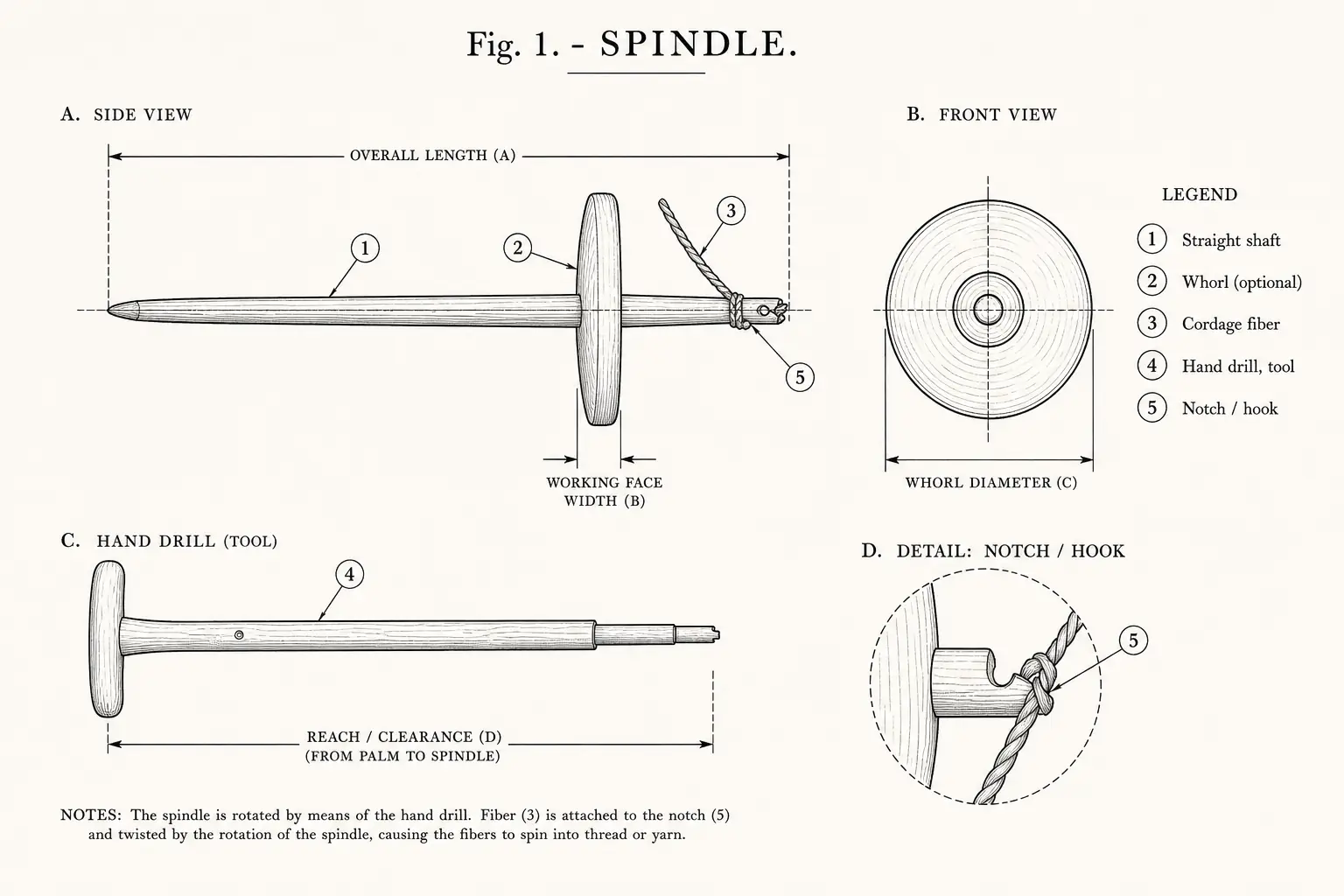
A basic spindle is a straight stick with a weighted whorl or thickened end, tested with rough fiber.
Better versions
Better versions balance the whorl, smooth the shaft, add a notch or hook, separate fibers by grade, and use storage that keeps thread clean.
Prerequisite tree
- Cordage fiber preparation.
- Hand drill or boring method for whorls.
- Measuring rod for repeat shaft and thread lengths.
Materials and sourcing
Sources include straight twigs, reeds, bone, fired clay, stone, antler, and trade. Recognition focuses on straightness, smoothness, weight, balance, and whether the fiber catches.
Acquisition is local and small-scale, but good spindles require patient fitting. Preparation includes smoothing, weighting, centering, notching, and testing with real fiber. Substitutes include thigh rolling, hand twisting, hooks, or later spinning wheels. Damp regions require clean dry storage for fiber and thread.
Tools and workshop requirements
Useful tools are a cutting edge, abrasive grit, hand drill, small weights, fiber combs, and storage sticks.
Procedure
- Select a straight shaft.
- Add or shape a weight.
- Smooth all fiber-contact surfaces.
- Attach a small fiber bundle.
- Spin and draft slowly.
- Adjust balance, weight, or surface if thread breaks.
Verification and quality control
A good spindle rotates without wobbling badly, does not snag fiber, and produces thread that keeps twist after winding.
Sources and provenance
Generated expansion for ANA-37. No source pack was used; specific historical and technical claims need human source review.