Field briefing
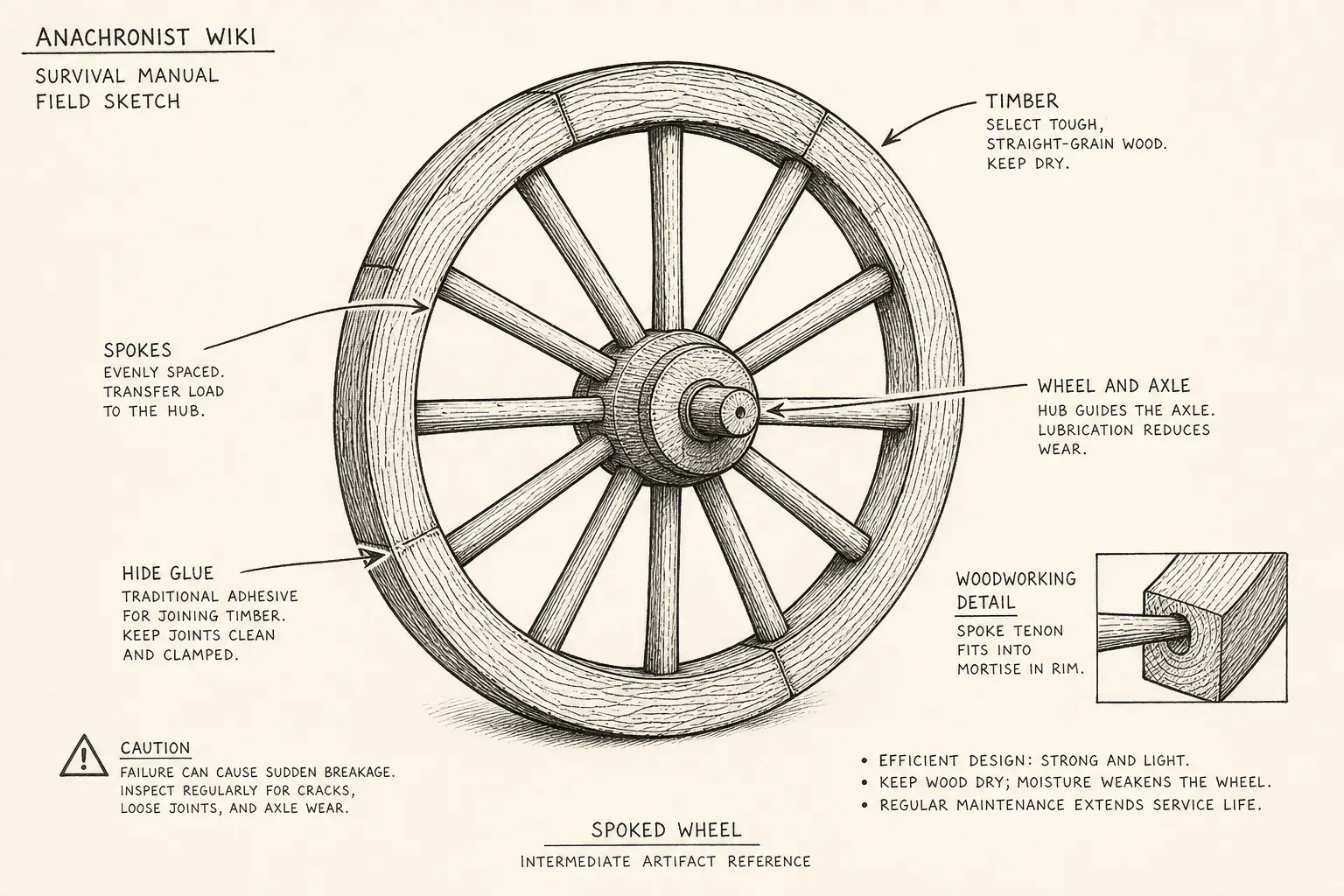
A spoked wheel solves the weight problem created by solid wheels. It keeps the rim large while putting material mainly where it carries load: hub, spokes, and rim.
What you are trying to make
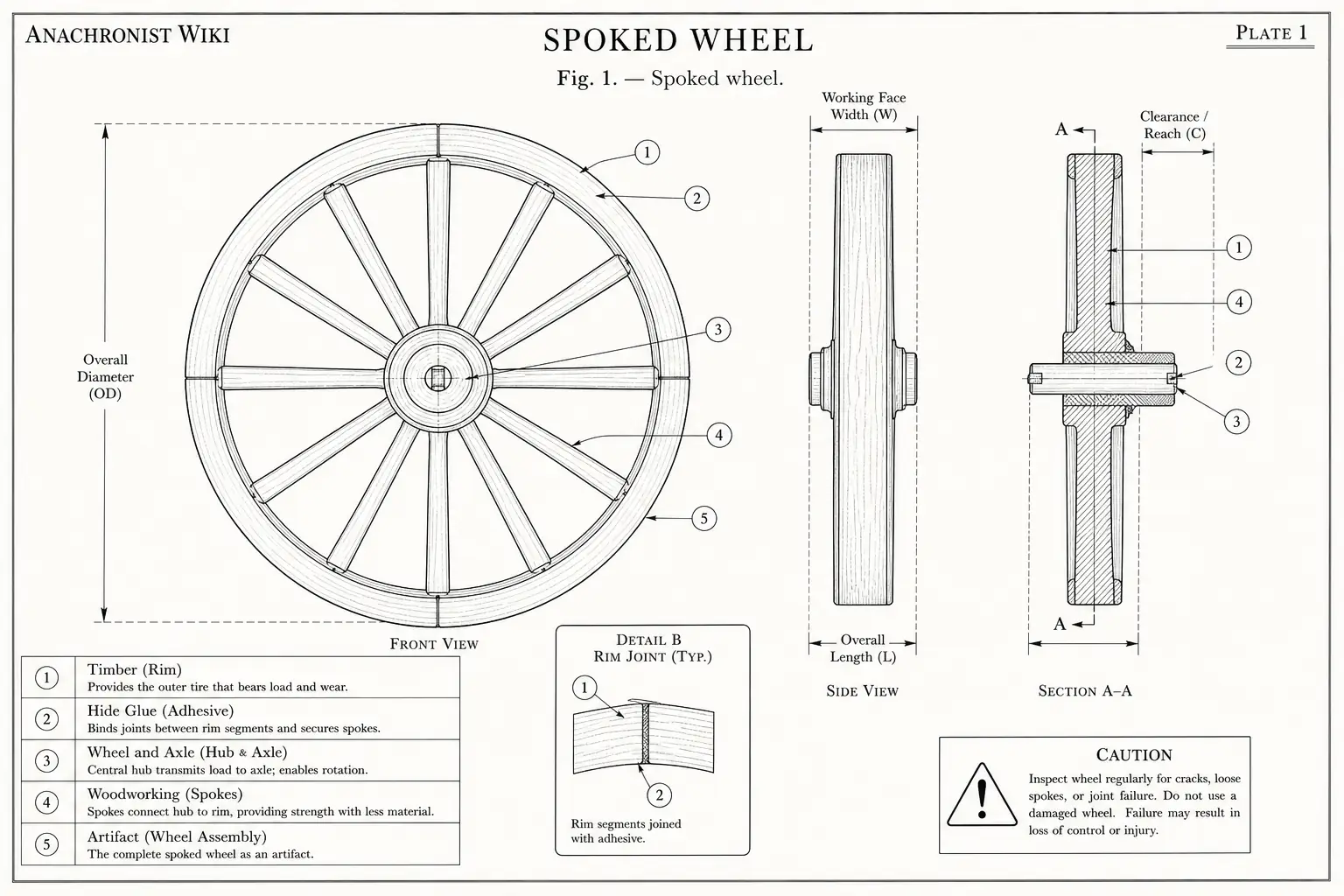
Make a wheel that is round, strong, and lighter than a solid disk, with a hub that accepts the axle and spokes that hold the rim in shape.
Minimum viable version
A first version can use a thick hub, several wooden spokes, and joined rim segments. It is not a modern tension-spoked wheel. It succeeds if it rolls under load without the hub splitting, spokes loosening, or rim wandering badly.
Better versions
Better wheels add more accurate spoke sockets, stronger rim joints, iron tires, replaceable hubs, and eventually tensioned wire spokes.
Prerequisite tree
- Wheel and axle for the basic rolling machine.
- Woodworking for hub, spoke, and rim construction.
- Alignment checking for truing and wobble checks.
- Tensile testing for lashings or later wire spokes.
Materials and sourcing
The hub needs tough stock that resists splitting. Spokes need straight grain and similar stiffness. Rim pieces should bend or join without opening under load. If metal strip is available, a tire can protect the rim, but it adds another fitting problem.
Tools and workshop requirements
Tools include boring tools, saws, chisels, marking cord, wedges, clamps, and a truing stand or temporary axle. The workshop must keep parts labeled so mismatched spokes do not produce a crooked wheel.
Hazards and controls
A failed wheel can drop a cart or rider. Test with low loads first, stand aside during load tests, and inspect the hub after each trial.
Procedure
- Shape the hub and mark spoke positions evenly.
- Prepare spokes from similar stock.
- Fit spokes before final rim assembly.
- Join rim segments around the spokes.
- Mount on a temporary axle and true the wheel.
- Test with light load before service.
Mechanism
The rim carries contact with the ground, the spokes transfer load to the hub, and the hub transfers load to the axle. Weight removed from the disk reduces the energy needed to start, stop, and steer.
Verification and quality control
Spin the wheel next to a fixed pointer. Check side wobble, up-and-down hop, loose spokes, hub cracks, and rim joint movement. Repeat after loading because a wheel can look true while unloaded and fail under stress.
Failure modes
| Failure | Likely cause | Fix |
|---|---|---|
| Hub split | Weak grain or tight spoke sockets | Use tougher stock and adjust socket fit |
| Rim opens | Poor joint or dry shrinkage | Improve joint and season stock |
| Spokes loosen | Uneven fit or load | Refit spokes and true wheel again |
| Wheel hops | Uneven rim | Shave high spots or rebuild rim |
Maintenance, repair, and iteration
Inspect spoke tightness and rim joints after each heavy use. Keep replacement spokes and wedges near vehicles.
Teaching it to local collaborators
Compare a solid disk and a spoked wheel of the same diameter. The lesson is that saved weight matters most at the rim.
Historical plausibility
Spoked wheels are ancient but require better woodworking than solid wheels. They become especially valuable for speed, human power, and draft efficiency.
What this unlocks
Spoked wheels unlock faster carts, chariots, lighter wheelbarrows, and early bicycles.
Open questions and uncertainties
- Future pages should split tension spokes, metal tires, rim bending, and wheelwright organization.
Sources and provenance
Generated expansion for ANA-34. No source pack was used; specific historical and technical claims need human source review.