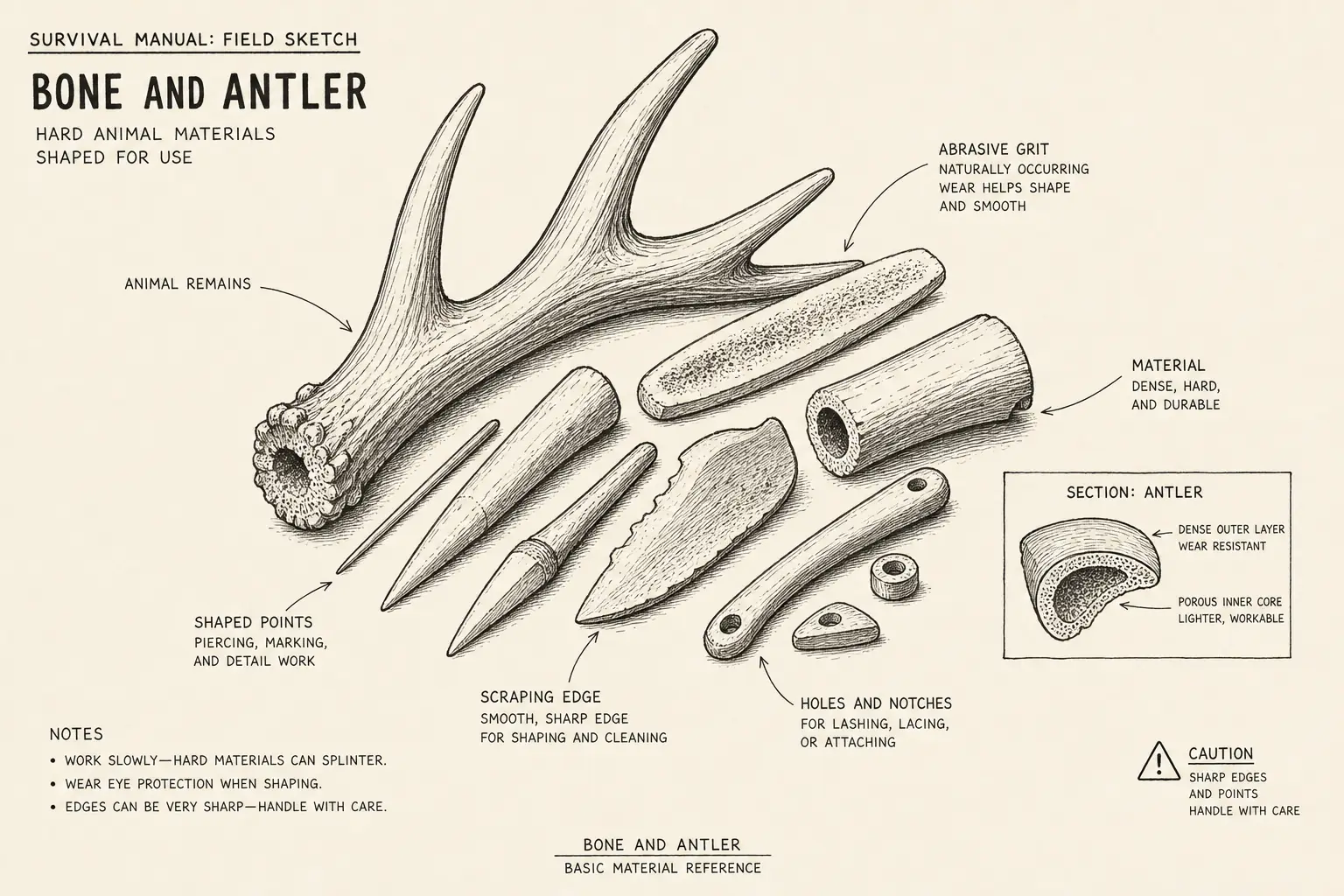
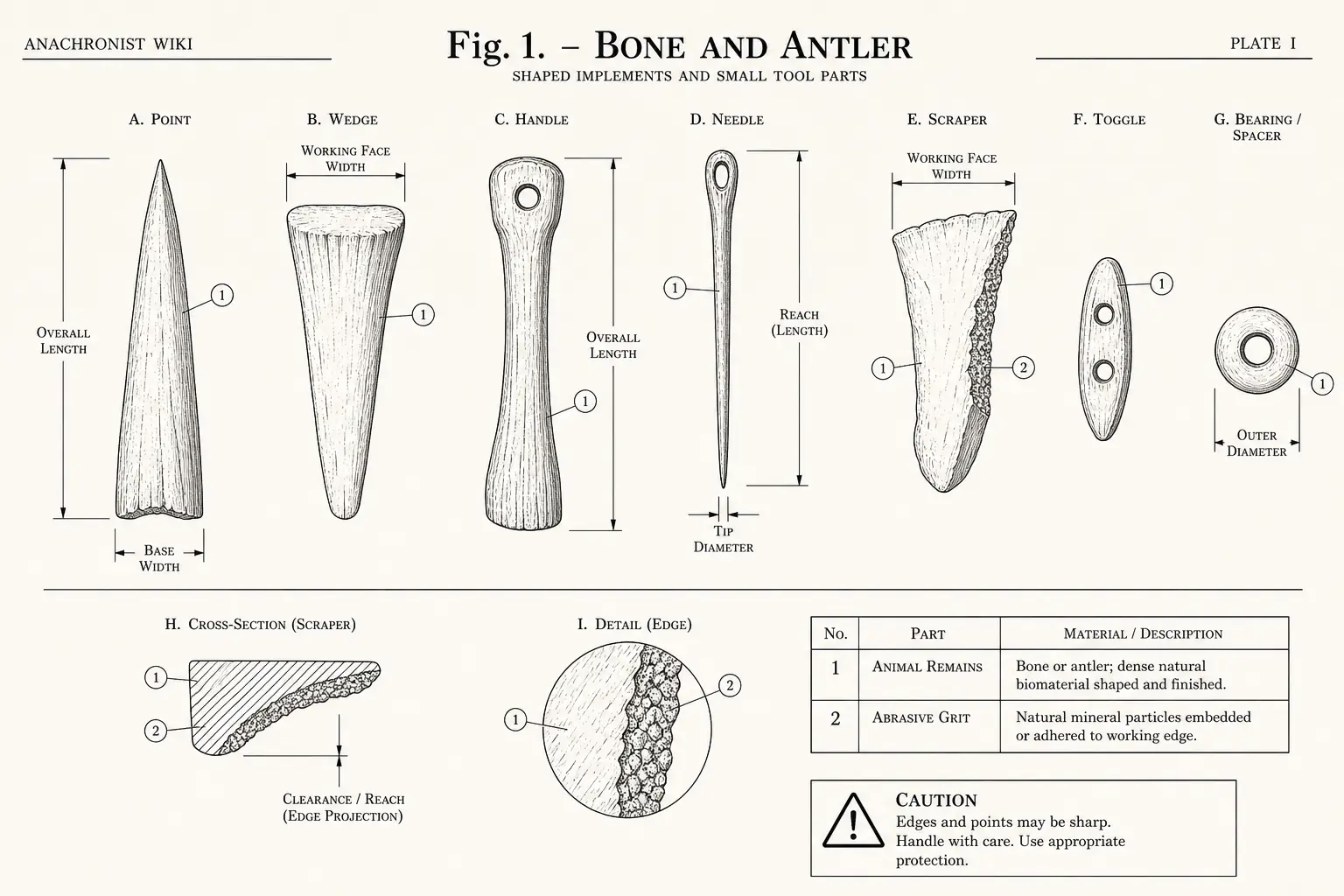
Field briefing
Bone and antler are hard, workable animal materials. They fill the gap between wood, stone, and later metal for small tools, sockets, wedges, toggles, and wear parts.
What you are trying to make
Select clean pieces that can be cut, scraped, drilled, polished, and tested without hidden cracks.
Minimum viable version
A basic version cleans a sound bone or antler piece, rough shapes it by scraping or abrasion, and tests it as a point, wedge, handle, or socket.
Better versions
Better versions separate dense outer material, avoid weak porous centers, polish working surfaces, and keep patterns for repeated small parts.
Prerequisite tree
- Abrasive grit for shaping and smoothing.
- Cutting edges for trimming.
- Tensile testing for toggles and hooks.
Materials and sourcing
Sources include butchery waste, hunting, scavenged remains, shed antler, and trade. Recognition means checking freshness, cracks, porosity, size, curve, and whether the piece smells rotten or chalky.
Acquisition depends on animal access and cleaning labor. Preparation includes cleaning, drying, splitting, scraping, drilling, smoothing, and sorting by density. Substitutes include hardwood, horn, shell, stone, or metal. Geography controls species, antler size, and how fast damp conditions damage stored material.
Tools and workshop requirements
Useful tools are scrapers, saws or notches, drills, grit, stones, water, clamps, and storage away from dogs, pests, and damp.
Hazards and controls
Sharp fragments cut, dust irritates, and rotten material can foul tools. Wet abrasive work where useful, keep dust away from food, and discard unsound pieces.
Procedure
- Select a clean sound piece.
- Remove soft tissue and dirt.
- Mark the part around cracks and porous sections.
- Rough shape with scraping, cutting, or abrasion.
- Smooth working surfaces.
- Test under the intended load or motion.
Verification and quality control
Check for cracks, delamination, splintering, and wear after trial use. A socket or bearing should polish rather than crumble.
Sources and provenance
Generated expansion for ANA-37. No source pack was used; specific historical and technical claims need human source review.