Field briefing
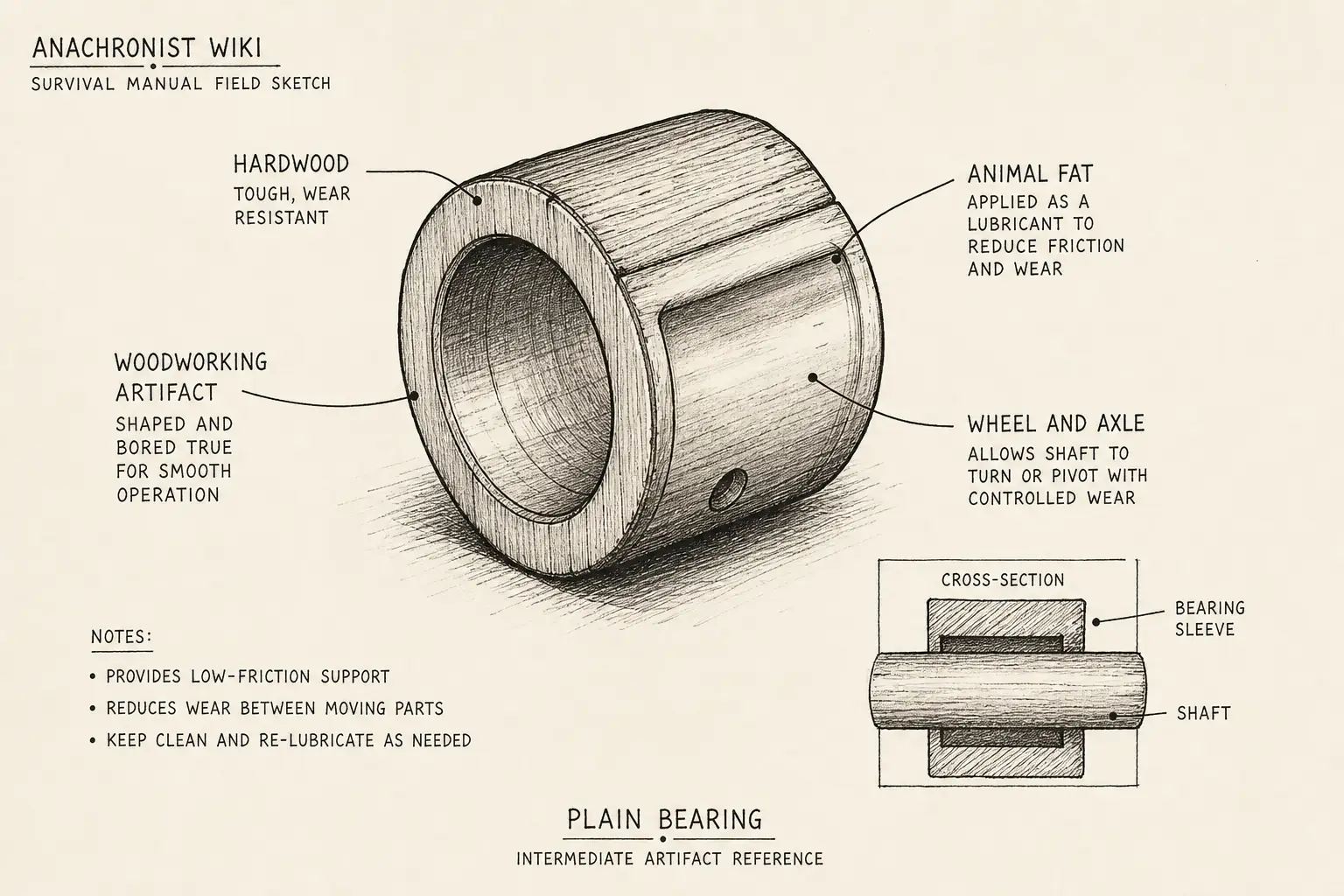
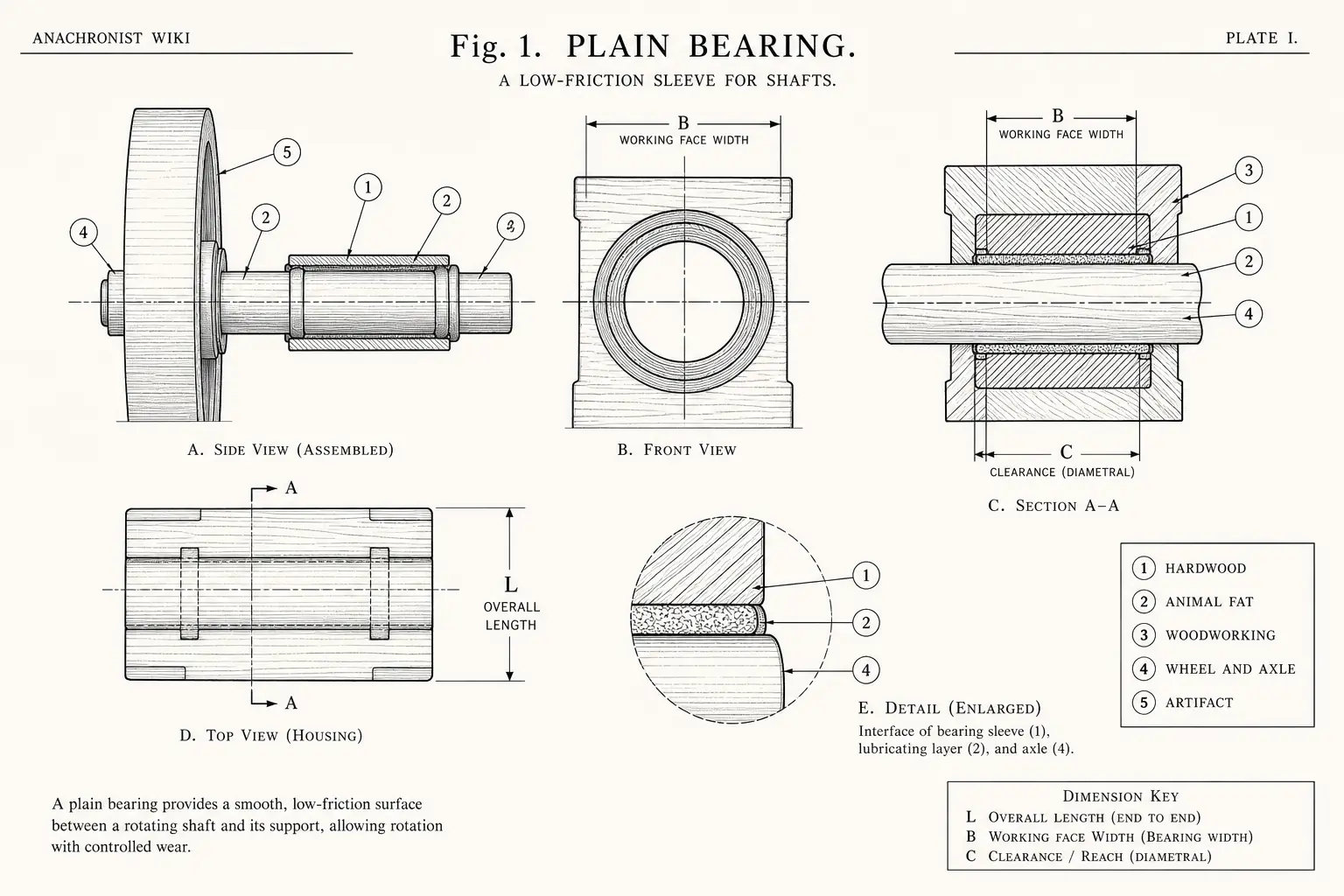
A plain bearing is the simplest answer to controlled rotation: let a shaft rub against a prepared surface that can be smoothed, lubricated, inspected, and replaced.
What you are trying to make
Make a hub, sleeve, or pivot surface that turns freely under load without quickly heating, binding, or destroying the surrounding frame.
Minimum viable version
A smooth wooden axle turning in a smoother wooden hole can work for light duty if aligned and lubricated. The improvement is making the rubbing part replaceable so the whole machine is not ruined by wear.
Better versions
Better versions use harder sleeves, cleaner lubricant, dust covers, larger bearing area, replaceable bushings, and more accurate alignment.
Prerequisite tree
- Wheel and axle for the rotating load.
- Woodworking for housings and shafts.
- Alignment checking because crooked shafts wear fast.
Materials and sourcing
Hard, close-grained wood is available earlier than metal and can be polished by use. Bone, horn, bronze, or iron sleeves may improve wear when available. Lubricants can be animal fat, wax, plant oil, or graphite-like mineral where locally known.
Keep grit out. Dirty lubricant acts like abrasive paste and can destroy a bearing faster than no lubricant.
Tools and workshop requirements
Tools include boring tools, smoothers, scrapers, marking cord, straightedge, wedges, and cleaning cloth. The workshop needs a habit of inspecting rubbing surfaces rather than treating them as hidden parts.
Procedure
- Bore the housing as straight as tools allow.
- Smooth the shaft and bearing surface.
- Fit with enough clearance to turn under load.
- Lubricate lightly and keep grit away.
- Test unloaded, then under working load.
- Inspect heat, dust, and wear marks.
Mechanism
The bearing concentrates sliding friction in a chosen place. A larger, smoother, cleaner, lubricated surface spreads load and slows wear.
Verification and quality control
Spin the shaft by hand, then load it and repeat. Check for heat, dark dust, squeal, tight spots, and one-sided wear. A good bearing wears evenly and predictably.
Failure modes
| Failure | Likely cause | Fix |
|---|---|---|
| Binding | Tight fit or misalignment | Refit and check the shaft line |
| Heat | Dry, dirty, or overloaded bearing | Clean, lubricate, widen, or reduce load |
| Oval hole | Soft housing material | Add a sleeve or harder insert |
| Grit wear | Poor cover or dirty lubricant | Clean and shield the bearing |
Maintenance, repair, and iteration
Clean and relubricate on a schedule. Replace sleeves before the shaft or frame is damaged.
Teaching it to local collaborators
Let apprentices compare a dry rough pivot with a smoothed lubricated one under the same small load. The difference makes friction visible.
Historical plausibility
Plain bearings are plausible wherever wheels, pivots, mills, or potter’s wheels are maintained. The hard part is not the concept; it is keeping alignment and grit under control.
What this unlocks
Plain bearings unlock smoother carts, potter’s wheels, pulleys, windlasses, and early bicycle experiments.
Open questions and uncertainties
- Local lubricants and bushing materials need source review.
- Future pages should split ball bearing, sleeve casting, and dust seals.
Sources and provenance
Generated expansion for ANA-34. No source pack was used; specific historical and technical claims need human source review.