Field briefing
Weaving turns many weak strands into sheet, strap, screen, or belt. It is a material multiplier for fiber economies.
What you are trying to make
Create interlaced material that keeps shape, spreads load, and can be repaired or reproduced.
Minimum viable version
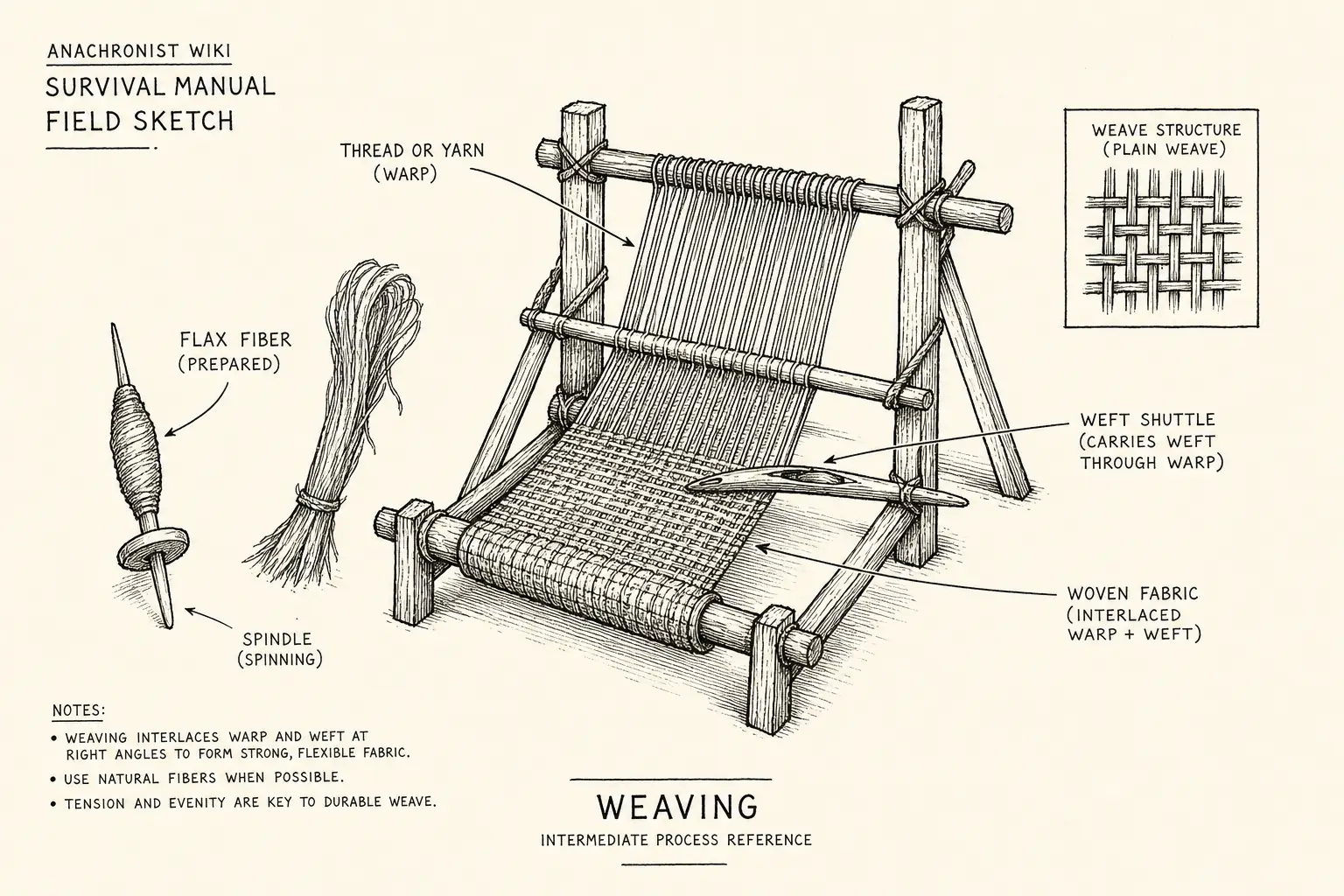
A basic version uses a simple frame or weighted setup to interlace coarse threads into a strap, mat, or small cloth.
Better versions
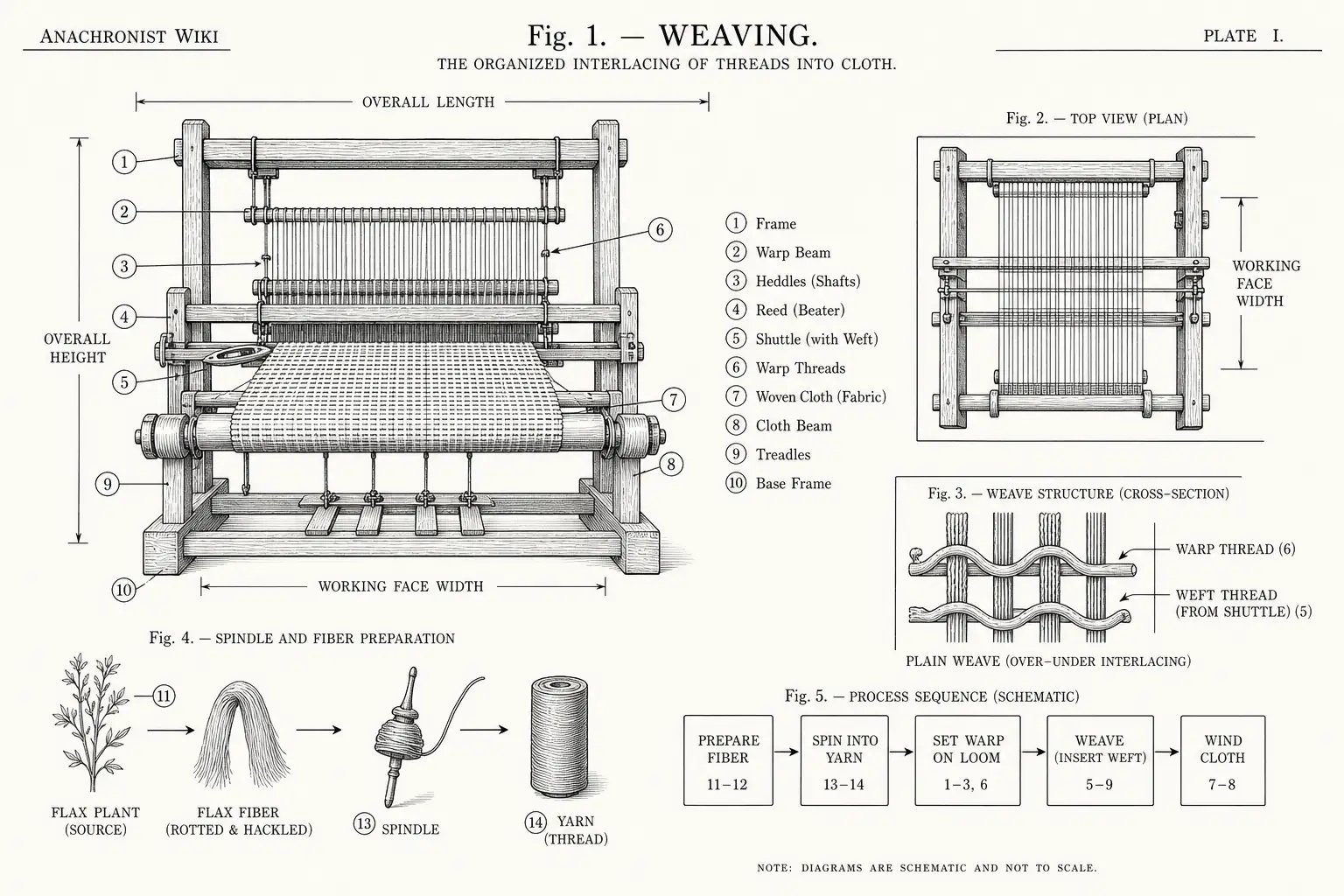
Better versions add looms, tension control, pattern memory, edge finishing, standard widths, and specialized fibers for different jobs.
Prerequisite tree
- Flax fiber or another prepared fiber.
- Spindle or twisting method for thread.
- Workshop records for patterns and batch quality.
Materials and sourcing
Sources include flax, wool, nettle, hemp, hair, bark fiber, and trade yarn. Recognition focuses on thread evenness, twist, abrasion resistance, and whether the material stretches or breaks under tension.
Acquisition is agricultural, pastoral, or trade-based. Preparation includes spinning, winding, sizing where useful, sorting by strength, and protecting from damp and pests. Substitutes include leather, basketry, nets, rope, or felt-like mats. Geography and social organization matter because textile production consumes coordinated labor.
Tools and workshop requirements
Useful tools are spindles, weights, frames, shuttles, beaters, combs, measuring rods, and clean storage.
Procedure
- Make or acquire consistent thread.
- Set up parallel warp strands.
- Pass weft strands through in a repeatable pattern.
- Keep tension even.
- Finish edges before removing from the frame.
- Test under the expected load or wear.
Verification and quality control
Check evenness, holes, edge stability, stretch, abrasion, and whether repairs are possible without unraveling the whole piece.
Sources and provenance
Generated expansion for ANA-37. No source pack was used; specific historical and technical claims need human source review.