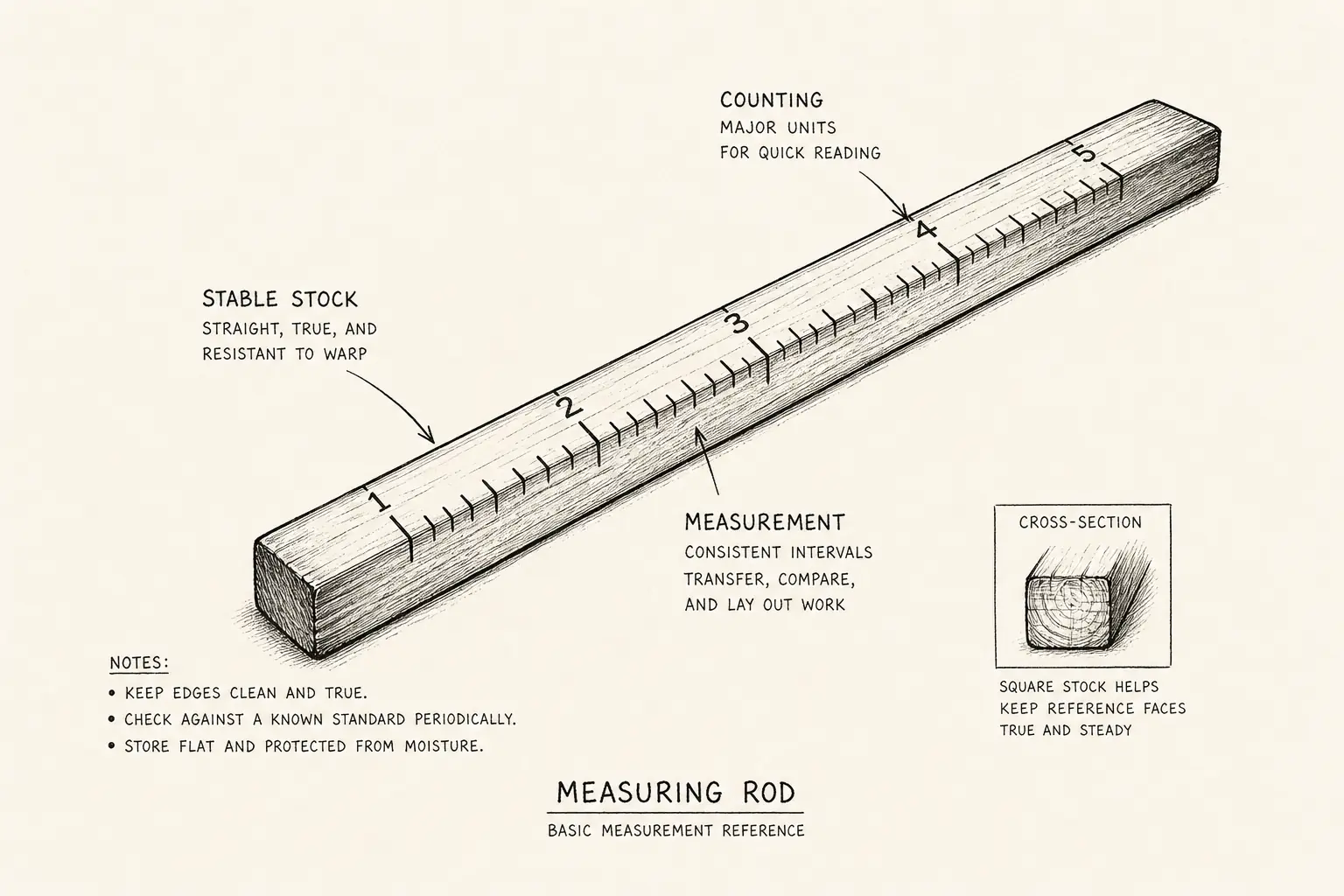
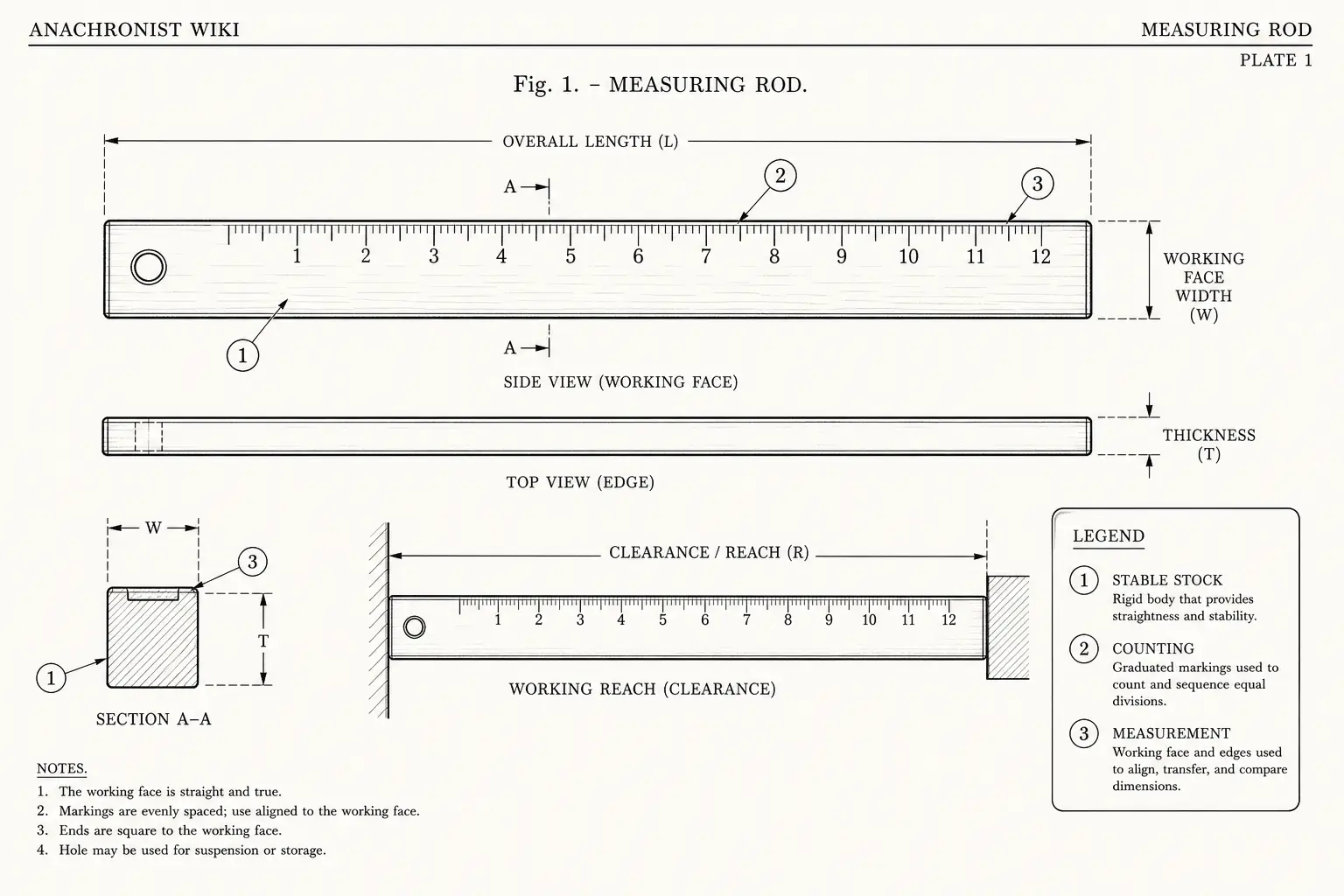
Source from straight wood, bone, antler, metal, or stone. Recognition means looking for stability, straightness, low swelling, and marks that remain legible.
Acquisition is simple for a rough rod but harder for a shared standard. Preparation includes straightening, smoothing, marking, protecting, and storing away from damp and heat. Substitutes include cords, body measures, templates, and paired story sticks. Geography matters mostly through material stability and humidity.
Tools and workshop requirements
Useful tools are a cutting edge, scraper, marking point, soot or ink, storage hooks, and comparison marks.
Procedure
Choose straight stable stock.
Mark the master length.
Add only divisions the workshop can use reliably.
Make a working copy if the master is valuable.
Store the rod consistently.
Compare copies before precision work.
Verification and quality control
Compare rod to rod, end to end, and against known parts. A rod that bends, swells, or loses marks should be demoted to rough layout.
Sources and provenance
Generated expansion for ANA-37. No source pack was used; specific historical and technical claims need human source review.