Field briefing
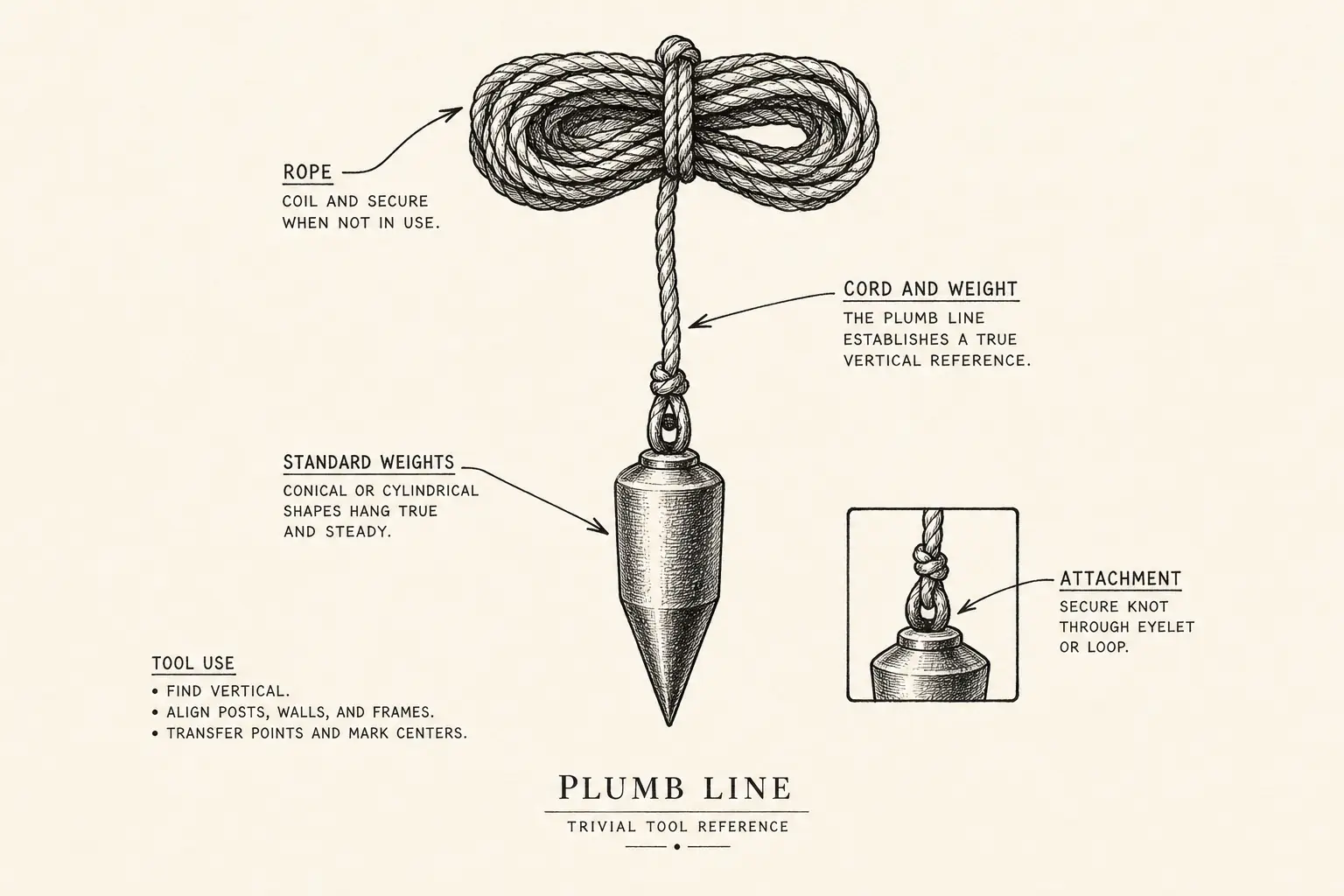
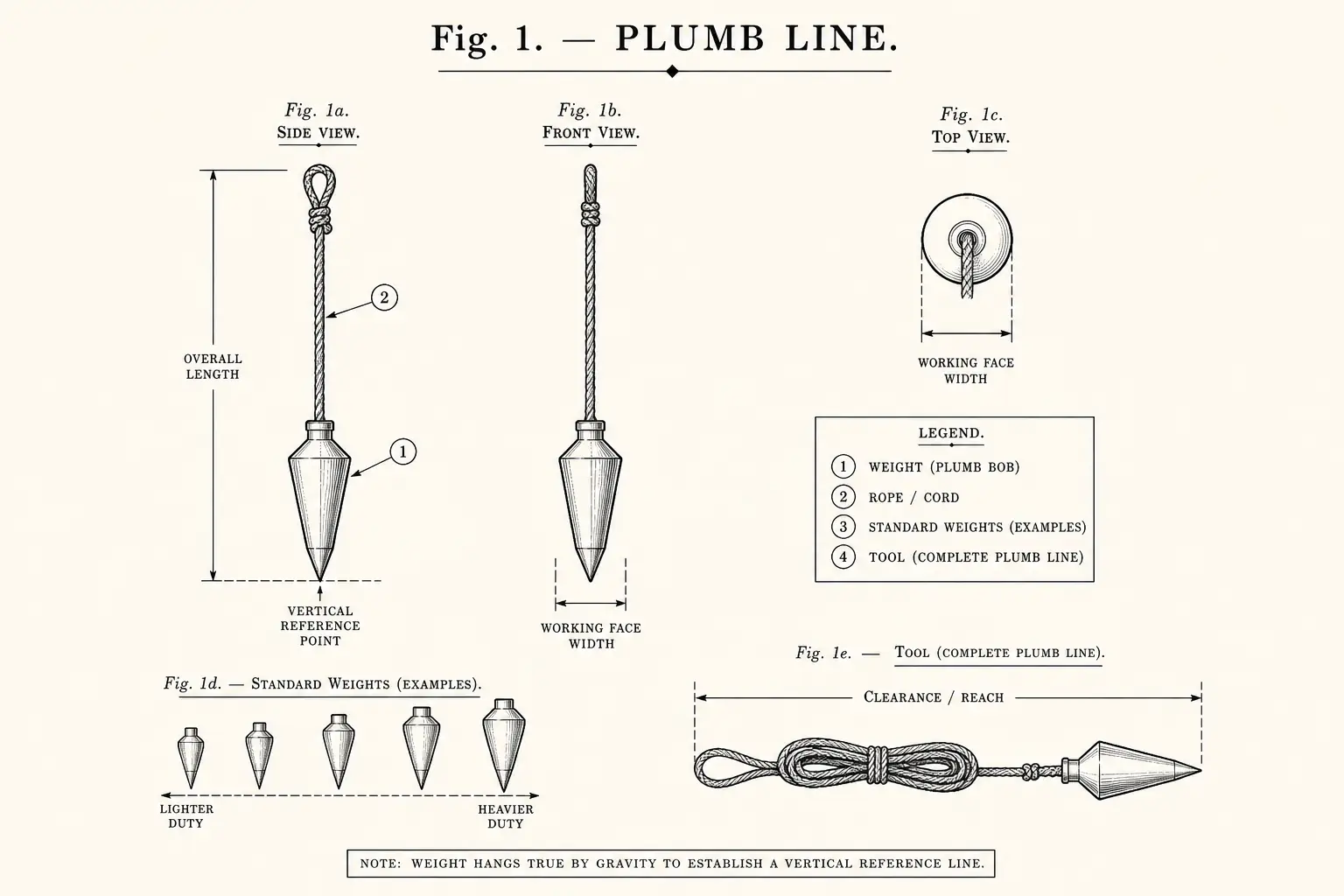
A plumb line is a gravity reference. It helps align posts, walls, wheels, drill centers, and drawings without needing complex instruments.
What you are trying to make
Make a line and weight that hang freely, settle repeatably, and mark vertical clearly.
Minimum viable version
A cord tied to a stone, clay weight, metal scrap, or dense wood piece gives a usable vertical reference.
Better versions
Better versions use a centered weight, low-stretch cord, protected storage, inked snap lines, and paired marks for repeated layouts.
Prerequisite tree
- Rope or fine cord.
- Standard weights if the tool is part of a broader measurement kit.
- Technical drawing for recording reference lines.
Materials and sourcing
Source cord from plant fiber, leather thong, hair, or trade. Weights can be stone, fired clay, bone, lead, iron, or any compact dense object. Recognition focuses on low twist, secure tying, and whether the weight hangs centered.
Preparation includes smoothing the cord, tying securely, protecting the point or center mark, and keeping dirt out of the line. Substitutes include water levels, sighting, or repeated measurement from a known frame.
Tools and workshop requirements
Useful tools are cord, weight, marking material, a sheltered place from wind, and a surface where the line can be compared.
Procedure
- Tie a compact weight to a flexible line.
- Let it hang freely.
- Wait until swinging settles.
- Mark the line or compare the work to it.
- Store without kinks or frays.
Verification and quality control
Flip or rotate the work and recheck. A reliable plumb line gives the same vertical reference when hung from nearby points and does not creep because of stretching knots.
Sources and provenance
Generated expansion for ANA-37. No source pack was used; specific historical and technical claims need human source review.