Field briefing
Sanitation norms are rules that make invisible risks visible enough for a group to act. They are a technology of habits, boundaries, and enforcement.
What you are trying to make
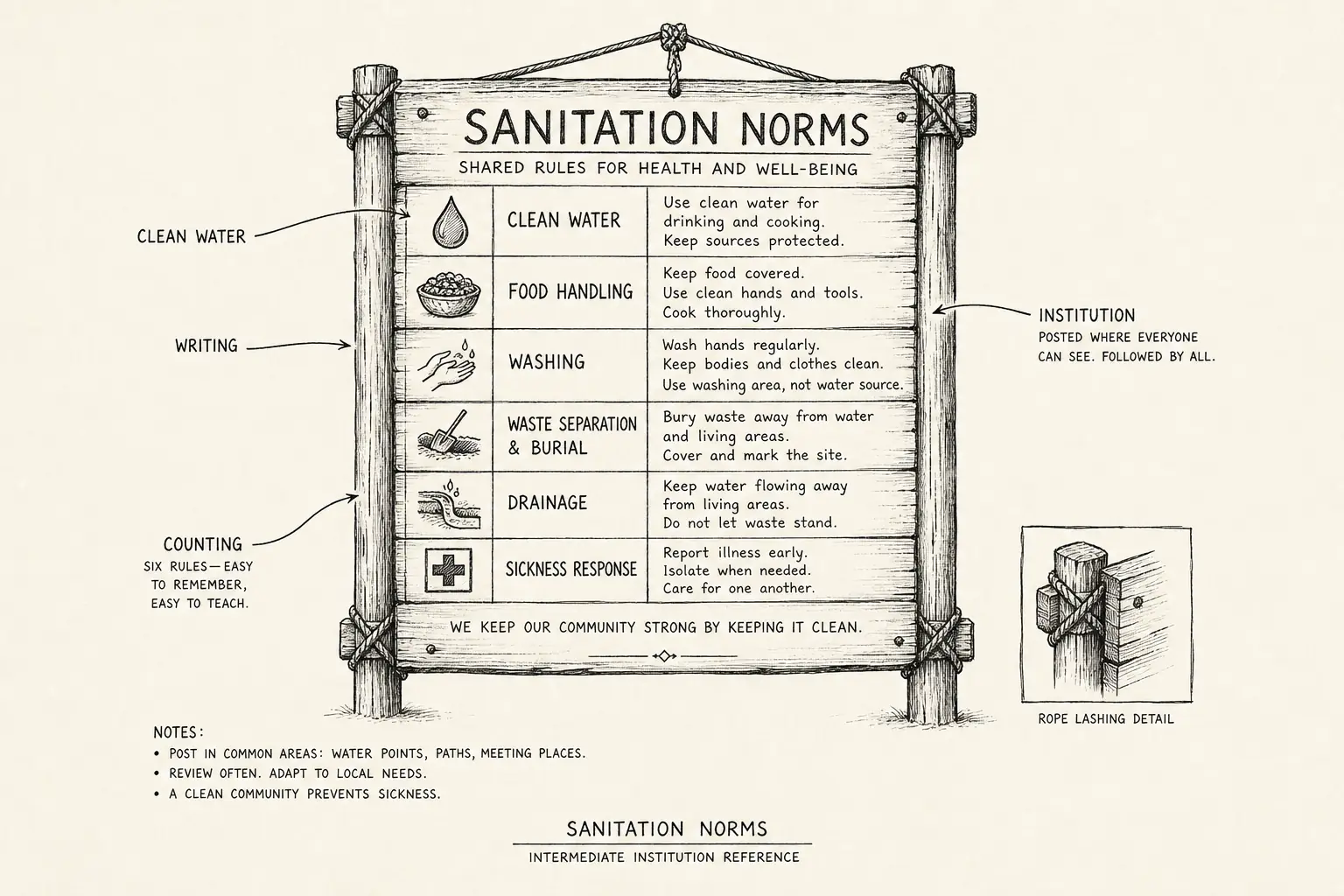
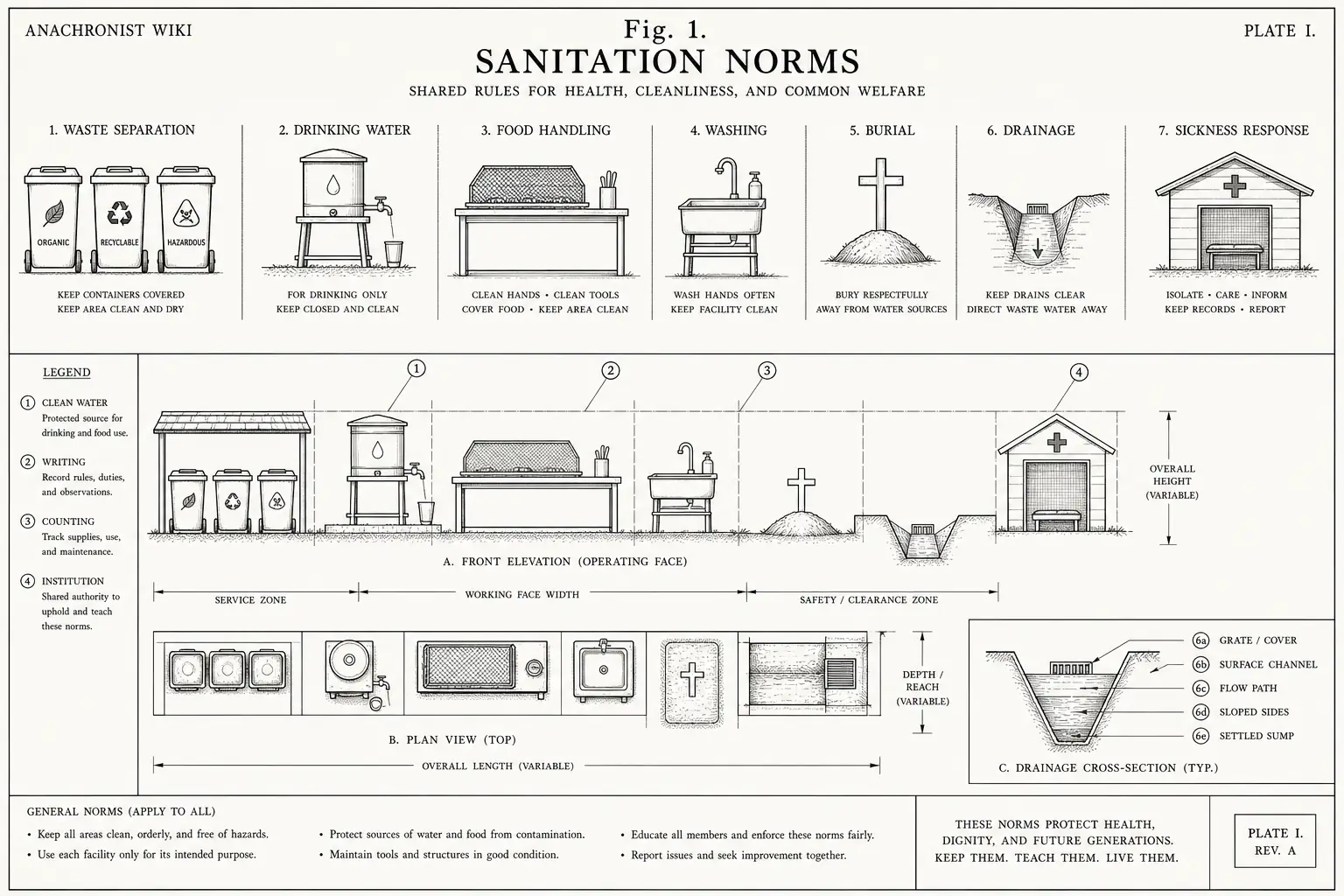
Create shared practices that keep waste away from drinking water, reduce food contamination, and make sickness response predictable.
Minimum viable version
A village can start with protected water points, separate waste areas, hand-washing routines for food and care work, and isolation customs for obvious illness.
Better versions
Better norms include drainage maintenance, inspection roles, written rules, apprentices taught by routine, and records of outbreaks or water failures.
Prerequisite tree
- Social authority to make shared rules.
- Counting for inspection and illness tallies.
- Writing where rules and logs must outlive individual memory.
Materials and sourcing
This is not material-free. It needs water access, ash or soap substitutes, latrine tools, covered storage, drainage materials, signs or markers, and labor time. Geography matters: marshy ground, shallow wells, crowded settlements, and livestock proximity change the rule set.
Tools and workshop requirements
Tools include digging tools, buckets, covers, drainage channels, markers, and record media. The social tool is assigned responsibility: someone must inspect and correct failures.
Procedure
- Map drinking water, waste, animals, food storage, and washing places.
- Separate clean and dirty routes where possible.
- Assign maintenance roles for water points and drains.
- Teach rules through repeated work, not slogans.
- Record failures and illness clusters when records are available.
Mechanism
Sanitation norms reduce contact between people and harmful waste or spoiled material. Even without germ theory, repeated separation and cleanliness can lower risk.
Verification and quality control
Check whether waste appears near water, whether washing supplies are present, whether food areas are protected, and whether people know who fixes a problem.
Failure modes
| Failure | Likely cause | Fix |
|---|---|---|
| Rules ignored | Too costly or unclear | Tie rules to daily roles |
| Clean water recontaminated | Dirty vessels | Separate water containers |
| Drains fail | No maintenance owner | Assign inspection schedule |
| Sick households hidden | Punitive response | Make reporting useful and practical |
Maintenance, repair, and iteration
Review norms after storms, crowding, animal movement, and outbreaks. Retire rules that nobody can follow and replace them with enforceable ones.
Teaching it to local collaborators
Teach by walking routes: water source to vessel, vessel to cooking, waste to disposal. Make contamination a path problem people can see.
Historical plausibility
Many sanitation practices predate modern microbiology, but consistency requires authority, labor, and social trust.
What this unlocks
Sanitation norms support denser settlements, workshops, food storage, apprenticeships, military camps, and public works.
Open questions and uncertainties
- This page needs review from historical public-health sources.
- Future pages should cover soap, wells, latrines, drainage, and quarantine customs.
Sources and provenance
Generated seed draft for ANA-13. No source pack was used; specific claims need human source review.